



| HEADLINE |

|
Travel Story
Echoes from the 'Ghost city'
Published : Saturday, 17 February, 2018 at 12:00 AM
Shahriar Feroze


(Continuation from previous week)
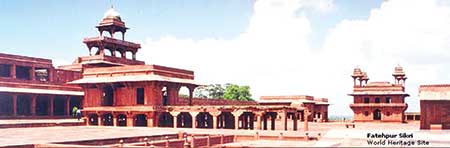 An hour of stroll beginning from the spacious courtyard inside the Buland Darwaza led me along the imperial complex's inner chambers. Set around the enormous courtyard is the palace of Hindu wife Jodh Bai - believed to be Emperor Akbar's favourite. However, this relationship up until now is debated. Jodh Bai's palace is also the biggest within the complex.
I wasn't amazed, since romantic escapades of the Mughal rulers had resulted in building gigantic ornate structures as their wives and concubines became more imperative than systematic- ruling of the empire.
What followed next were the Sikri's visitors, and not its architecture or history that had fascinated the writer.
Tourism and sightseeing never seemed so much 'digitally' and 'mechanically' inspired as now. The common notion of tourism had picnic-hampers and occasional 'say-cheese' snapshots and tourists carrying guide-books, but that has changed for good.
Europeans to Asians to Americans - almost all - looked meticulously busy video recording and photographing each and every single inch of the palace complex. It felt like the Mughal heritage site was under a massive scanning spree.
A Spanish tourist was even a step ahead in terms of mixing business with pleasure. He sealed a deal worth quarter of a million through his smart-phone while his companion was being lectured by a guide.
I mockingly labelled Sikri along with other Mughal sites of the golden triangle (Delhi-Agra-Jaipur) as MMGU (mini-Meccas for gadget users). Inside any Gadget shop you'll find a limited range of brands but here the brands and types of E-equipment carried were as diverse as one can maximum think of. From Laptops to tablets; I-phones to I-Pads; Canons to Leicas, and from Apple to unknown brands - you name it and the tourists had it.
The Europeans and Americans surrounding me from left and right donning summer outfits seemed engrossed in awe, busy taking snaps and videotaping while relentlessly pursuing historical facts and figures. The self-announced tour guides were heard delivering readymade speeches mixed with true and inspired folk-tales.
As I reverted back to a biryani seller for a quick lunch in the left facing the Buland Darwaza I came across one Jasimuddin Sheikh. The Biryani seller - who was no other than a Bangladeshi from Faridpur, and he was also a victim of our much sinister manpower recruiting trade. Sheikh was promised a Cook's job in Delhi. But neither did he get the job nor could he locate his 'would-be' employer. It was sometime in the winter of 2005 Jasimuddin landed in the failed city as a member of a Tabligi Jamaat group dispatched from Delhi's Jama Masjid and never returned. Probably he will never return anywhere again.
Sheikh in spite of having a profitable take-away small Biryani shop in the suburbs of Faridpur had gambled everything he owned. Luckily he was not married and only had a father to take care of. Now married for 5 years with a daughter he had an eerie tone as he spoke while leaving his destiny in the hands of God almighty.
However, Biryani in this part of the sub-continent is served on dry leaves with barely 3 tiny pieces of beef in the midst of a small portion of well- cooked oily rice. I had to rush as noon was fast reaching its limits. the time had come to close the day trip.
The failed city is one of the finest examples of Mughal ruins during the time of its height too. Though the ruined-city is a deserted tourist-spot today, it's a must visit for history and architecture lovers.
From the writer's lenses, Fatehpur Sikri is an historic site where one is expected to witness a failed city built on fancy amidst the grandeur of the Mughal era.
By quarter past 5 a misty blush of grey, orange and blue had shrouded over the horizons of the failed city. The sunset over the ruins was a much cherished one, and especially for a Dhaka-dweller; whose skylines thinned fast amidst concrete shoot-ups.
As my auto rickshaw sped-past - Fathepur Sikri seemed to rekindle its sorrows in the mounting darkness.
Getting there:
Tour buses usually stop for 1� hours, which is not long enough. Make a day of it by catching a bus (Rs 25, an hour and half) from Agra's Idgah bus stand; buses depart every 30 minutes between 7am and 7pm.
For the budget tourist get on a small bus direct to Fatehpur Sikri town rather than one of the big buses going to Bharatpur that will drop you near Agra Gate, a 1km walk from the monuments. The last bus back to Agra from the bazaar bus stand leaves at 7pm.
Auto rickshaws are not allowed to make the Agra to Fatehpur Sikri trip, but a taxi during the time of travelling cost Rs 850 return including waiting time. Since, the Taxi and auto rickshaw fare varies from season to season but even then the fare should never exceed the 1000 mark.
Buses from the bazaar bus stand leave regularly for Bharatpur (Rs 15, 30 minutes) and Jaipur (Rs 80, 4� hours).
The writer is Assistant Editor of The Daily Observer, and can be reached at [email protected]
An hour of stroll beginning from the spacious courtyard inside the Buland Darwaza led me along the imperial complex's inner chambers. Set around the enormous courtyard is the palace of Hindu wife Jodh Bai - believed to be Emperor Akbar's favourite. However, this relationship up until now is debated. Jodh Bai's palace is also the biggest within the complex.I wasn't amazed, since romantic escapades of the Mughal rulers had resulted in building gigantic ornate structures as their wives and concubines became more imperative than systematic- ruling of the empire.
What followed next were the Sikri's visitors, and not its architecture or history that had fascinated the writer.
Tourism and sightseeing never seemed so much 'digitally' and 'mechanically' inspired as now. The common notion of tourism had picnic-hampers and occasional 'say-cheese' snapshots and tourists carrying guide-books, but that has changed for good.
Europeans to Asians to Americans - almost all - looked meticulously busy video recording and photographing each and every single inch of the palace complex. It felt like the Mughal heritage site was under a massive scanning spree.
A Spanish tourist was even a step ahead in terms of mixing business with pleasure. He sealed a deal worth quarter of a million through his smart-phone while his companion was being lectured by a guide.
I mockingly labelled Sikri along with other Mughal sites of the golden triangle (Delhi-Agra-Jaipur) as MMGU (mini-Meccas for gadget users). Inside any Gadget shop you'll find a limited range of brands but here the brands and types of E-equipment carried were as diverse as one can maximum think of. From Laptops to tablets; I-phones to I-Pads; Canons to Leicas, and from Apple to unknown brands - you name it and the tourists had it.
The Europeans and Americans surrounding me from left and right donning summer outfits seemed engrossed in awe, busy taking snaps and videotaping while relentlessly pursuing historical facts and figures. The self-announced tour guides were heard delivering readymade speeches mixed with true and inspired folk-tales.
As I reverted back to a biryani seller for a quick lunch in the left facing the Buland Darwaza I came across one Jasimuddin Sheikh. The Biryani seller - who was no other than a Bangladeshi from Faridpur, and he was also a victim of our much sinister manpower recruiting trade. Sheikh was promised a Cook's job in Delhi. But neither did he get the job nor could he locate his 'would-be' employer. It was sometime in the winter of 2005 Jasimuddin landed in the failed city as a member of a Tabligi Jamaat group dispatched from Delhi's Jama Masjid and never returned. Probably he will never return anywhere again.
Sheikh in spite of having a profitable take-away small Biryani shop in the suburbs of Faridpur had gambled everything he owned. Luckily he was not married and only had a father to take care of. Now married for 5 years with a daughter he had an eerie tone as he spoke while leaving his destiny in the hands of God almighty.
However, Biryani in this part of the sub-continent is served on dry leaves with barely 3 tiny pieces of beef in the midst of a small portion of well- cooked oily rice. I had to rush as noon was fast reaching its limits. the time had come to close the day trip.
The failed city is one of the finest examples of Mughal ruins during the time of its height too. Though the ruined-city is a deserted tourist-spot today, it's a must visit for history and architecture lovers.
From the writer's lenses, Fatehpur Sikri is an historic site where one is expected to witness a failed city built on fancy amidst the grandeur of the Mughal era.
By quarter past 5 a misty blush of grey, orange and blue had shrouded over the horizons of the failed city. The sunset over the ruins was a much cherished one, and especially for a Dhaka-dweller; whose skylines thinned fast amidst concrete shoot-ups.
As my auto rickshaw sped-past - Fathepur Sikri seemed to rekindle its sorrows in the mounting darkness.
Getting there:
Tour buses usually stop for 1� hours, which is not long enough. Make a day of it by catching a bus (Rs 25, an hour and half) from Agra's Idgah bus stand; buses depart every 30 minutes between 7am and 7pm.
For the budget tourist get on a small bus direct to Fatehpur Sikri town rather than one of the big buses going to Bharatpur that will drop you near Agra Gate, a 1km walk from the monuments. The last bus back to Agra from the bazaar bus stand leaves at 7pm.
Auto rickshaws are not allowed to make the Agra to Fatehpur Sikri trip, but a taxi during the time of travelling cost Rs 850 return including waiting time. Since, the Taxi and auto rickshaw fare varies from season to season but even then the fare should never exceed the 1000 mark.
Buses from the bazaar bus stand leave regularly for Bharatpur (Rs 15, 30 minutes) and Jaipur (Rs 80, 4� hours).
The writer is Assistant Editor of The Daily Observer, and can be reached at [email protected]
Loading...
Loading...




Editor : Iqbal Sobhan Chowdhury
Published by the Editor on behalf of the Observer Ltd. from Globe Printers, 24/A, New Eskaton Road, Ramna, Dhaka.
Editorial, News and Commercial Offices : Aziz Bhaban (2nd floor), 93, Motijheel C/A, Dhaka-1000.
Phone: PABX- 41053001-06; Advertisement: 41053012; 01793317829, 01550707291, E-mail: [email protected], [email protected] Online: email: [email protected] 41053014; 01550707297 Advertisement: 01550707296
Published by the Editor on behalf of the Observer Ltd. from Globe Printers, 24/A, New Eskaton Road, Ramna, Dhaka.
Editorial, News and Commercial Offices : Aziz Bhaban (2nd floor), 93, Motijheel C/A, Dhaka-1000.
Phone: PABX- 41053001-06; Advertisement: 41053012; 01793317829, 01550707291, E-mail: [email protected], [email protected] Online: email: [email protected] 41053014; 01550707297 Advertisement: 01550707296


