The ruling Awami League is focused, as natural, on retaining the state power for which they are leaving no stone unturned. Thus the party is moving into top gear to woo the voters much ahead of the next national polls, on the one hand, and to maintain close relations with the key players of the regional and world politics to evade untoward difficulties, on the other hand.
In its election campaign, the ruling party is exploiting the advantage of the state power they secured for the second consecutive time. Prime Minister Sheikh Hasina, also the Awami League President, is leading the campaign from the front as she has already visited major cities seeking votes for the party symbol 'boat'. She has apparently taken the strategy to gear up polls campaign at all the major places before the announcement of election schedule to evade movement restriction. Besides, the party started invigorating the party men and mitigating the infightings, groupings, and the programme is still being continued.
The Awami League is taking preparation on all fronts to remain in power for the third time in a row. It is apparent that the ruling party will station Jatiya Party led by former military ruler HM Ershad as 'domestic opposition party' like what they did after the January 5 elections in 2014 if the virtual opposition BNP skips the parliamentary polls again. On the other hand, other political parties including leftist coalition are not strong enough to create obstacle in the way of retaining power by the incumbent government while there is an absence of a real proletarian party in the country.
The Awami League government chief Sheikh Hasina has already made it crystal clear that the upcoming national elections will be held under the elected government, not under the caretaker government system that has already been abolished from the Constitution. Against the backdrop of the changed situation, she also categorically stated that there is no room for political dialogue now.
What the Awami League leadership say they would win the next national elections capitalising on the development campaign in its tenure from 2009. However, anti-incumbency factor is feared in the country as no party could secure power for second consecutive term through inclusive or participatory elections after the 'restoration of democracy' in 1991.
Bangladesh is a backward capitalist country tied up under the yoke of neo-colonialism in the capitalist world.
Prime Minister and Awami League chief Sheikh Hasina often states that they could not retain power in 2001 as they did not agree to selling gas to India. The statement is self evident and gives a glimpse regarding power politics in Bangladesh.
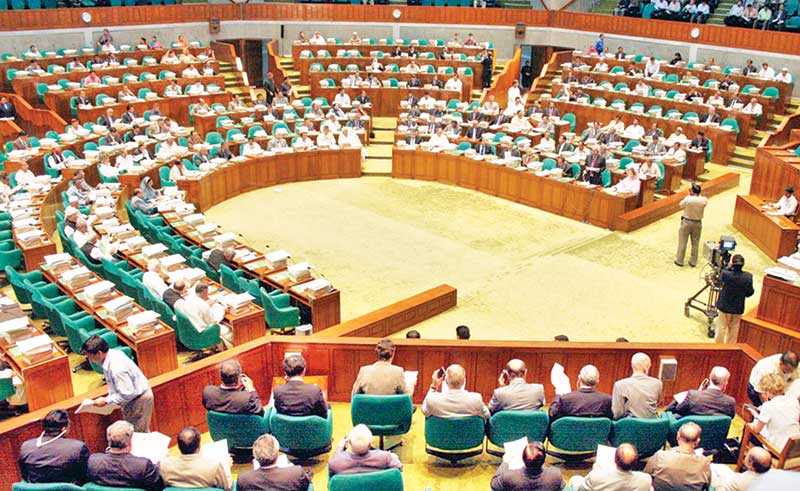
The Awami League led government of Bangladesh is now walking a difficult tightrope in the capitalist world as the ruling party does not want, as natural, to let anyone to power. Against the backdrop of the current situation, Awami League is perceived to secure power for the third consecutive term as the BNP has become organizationally weak in the face of the iron hand of the incumbent government. However, the ruling party still considers BNP as the main concern in the way of securing power which is apparent from the statements of the party leadership and there is no reason to deny it.
The Awami League government thinks they can manage the world again if the BNP does not take part in the national elections again. However, what political situation lies ahead, nobody can tell.
It is to be noted that both the ruling Awami League and the BNP -- the two major political parties in the country -- are the two sides of the same coin with regard to the issues of the working class. Because the two parties alongside Jatiya Party and Jamaat-e-Islami actually represent the capitalist class, not the working class. During their regime, the working people received harsh treatment from the state apparatus even when they took to the street or went on strike for an increase in their wages or for other reasonable demands.
It cannot be denied that the working class is strategically confined to factories to earn their livelihood with great hardship so that they cannot get scope to think about changing their fate by taking the state power at their hand through forming their own proletarian party and taking up the cudgel for communism. However, the rule of history heralds that the proletariat is destined to shatter the shackles of exploitation, oppression to make sure of the emancipation of the entire humanity.
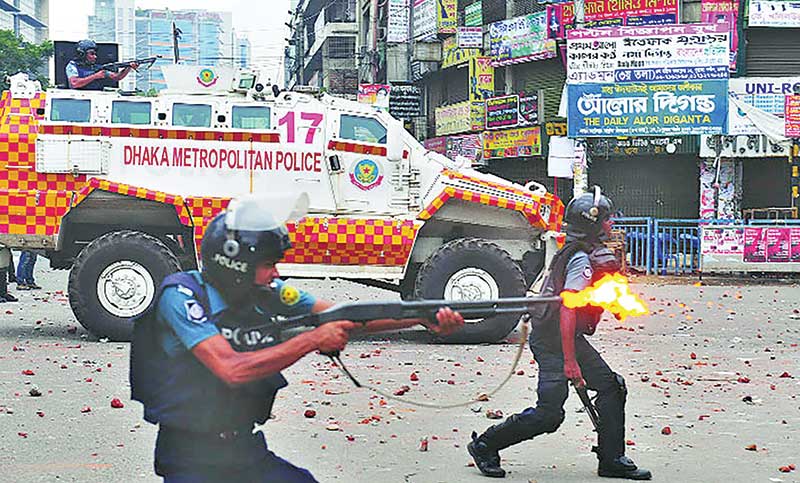
Now, the ruling Awami League is dominating the street using the state power and its organizational strength, the lifeline of the party. It has not given an inch to the archrival BNP in this regard and will not do so.
Power is the ultimate target of political activities in any country. The ruling Awami league and its archrival BNP, that got the taste of power earlier, will try diehard definitely to capture the state power.
If the ruling party is able to remain at the helm of the government during the national elections, it may become a sure shot for the party but it will certainly demoralise the BNP and other opposition parties at the same time.
At present, the political situation is seen to be under the grip of the ruling Awami League. However, we have to wait more to see what fate awaits for Bangladesh.
The writer is a journalist