



| HEADLINE |

|
Yalta Forum 2018
Yalta links Russia with the Islamic world
Published : Saturday, 28 April, 2018 at 12:00 AM
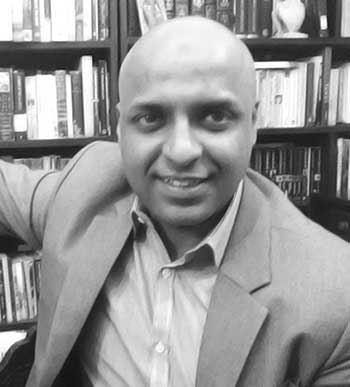
Shahriar Feroze


 Vladimir Putin is reported to have said, "In Russia, Islamic world will always find a reliable ally". If he genuinely means what he said -- he intends to build a strategic partnership with 24.1 per cent of the global population living in 49 Muslim majority countries worth more than USD 5.7 trillion in combined GDP growth. More than that, the partnership his Russia eyes today is to share the common grounds and thrive jointly despite all religious and ideological differences. However, the forum organised by the Russia-Islamic World Group (RIW) at Yalta on 23-24 April this year was a part of Russia's grand scheme.
 Upon receiving the invitation to participate at this year's forum titled "4th international media forum of journalists from Muslim countries for partnership of civilisations" -- the first question I asked myself was why Yalta and not Moscow?
Being fond of travelling and participating at international summits and conferences, I quickly responded by accepting the invitation, thus began my long list of queries and collecting information on the forum.
Having gone through whatever I could browse, at least one point became clear. Apart from holding the forum in the South Coast of the Crimean peninsula otherwise Yalta -- Russia perhaps also planned to open up and expose the Crimean reality to the journalists from Muslim countries, thus provide them with first-hand opportunity to draw lines between Western media reports and the real world.
Nevertheless, at first thought it appeared, President Putin was once more placing Yalta in the world map by reviving the spirits of the famous "Yalta conference". It was attended by Roosevelt, Churchill and Stalin for deciding the future and international relations of a post-war world. All three statesmen are dead. The Cold War has ended long ago, and today it is we, a handful of Muslim journalists who would replace them with a different agenda, at a different time but at the same scenic Black Sea resort town. Russia wants her Muslim friends to get closer and they joyfully responded.
Having arrived at the VIP terminal of the Simferopol airport at the capital of the Republic of Crimea, this writer wasn't sure exactly what to expect. The two hour flight from Moscow followed another couple of hours of taxi ride, and Crimea began to fast unfold.
Vast swathes of countryside, construction worksites and a smooth highway were leading us up to the mountains overseeing the Black Sea -- understandably , Yalta has all the potentials to become the next European Riviera. And as I and another Bangladeshi journalist Shuprova (working for the Dhaka Tribune) got out from the taxi a gigantic upscale spa resort set on the White Beach on the Black Sea stood before us.
Located some 13 kilometres away in the outskirts of Yalta the roaming clients inside the resort exposed a different Crimea under Russian rule where healthy living, wealth, status, power and beauty all blended in the same mould.
It was an eye-opener for nostalgic people like us who were accustomed to the communist depiction of the old USSR. Briefly it felt like I was somewhere in Western Europe until the signs and the language barrier erupted.
However, this year's forum was attended by more than 50 journalists from Russia, Bahrain, Egypt, Iraq, Iran, Kazakhstan, Kuwait, Bangladesh, Morocco, Algeria, Qatar, Saudi Arabia, Sudan, Syria, Lebanon, Turkey, Uzbekistan, Albania, Indonesia, Jordan and the UAE.
Even though we were not introduced to other journalists, but a peculiar trait about a journalist is that he or she is someway easily identifiable. Based on personal observations, I would say, in a foreign land they are usually restless and nervous until they check in their rooms; looks at every one with suspicion, likes to keep their luggage close to them and are shabbily dressed. They move from one place to another rather hesitantly and these traits become starkly noticeable at plush resorts like at the Mryia since they don't fit in it, and I am one of them.
That having said -- when it comes to raise voice against injustice, shaping public opinion, speaking a thousand words through a single photo and penning the truth -- none is above a journalist.
It was, however, a fascinating experience for me to come under a single umbrella to unite and deliver our speeches in accordance with the topic of this year's forum. The speeches lasted for nearly 12 hours and despite the speakers frequently going beyond their topic and time limit -- they repeatedly stressed on the importance of strong bilateral and strategic relations with Russia. The speeches of participants covered vital information on historical ties between Russia and Muslim countries, current affairs, and geopolitical issues. An award was handed over to a luminary scholar.
Many had spoken about the political situation and ongoing crises in their respective countries. The Bangladesh team specifically mentioned the ongoing Rohingya crisis.
To cut a long story short, my understanding was, we the participants, eagerly awaited to see Russia in the seat of a global leader -- leading the road to peaceful and harmonious co-existence despite all differences. Russia's Middle Eastern policy to its engagement in the Syrian crisis, the close relationship between Islam and Orthodox Christianity, revival and expansion of Tatar Muslims under the Putin government to renovation and reconstruction of Islamic heritage sites in Crimea - all of these realities had turned the forum into a very deeply meaningful conference.
In particular, forums in the like of the journalists' forum at Yalta has become crucially important for exchange of ideas and information and promoting dialogues between Russia and the Islamic world. Such platforms also help to resolve bilateral disputes, since I believe the UN should always not be the global platform where nations should take up their conflict issues. It's right on this point, where such forums can hugely contribute in arranging dialogues amid a friendly atmosphere.
On the last day we had the opportunity to interact with journalists from other countries for a limited time while visiting a couple of Islamic heritage sites at Crimea. A separate day for interacting with them and the Crimean Muslims would have only done us good to get a deeper understanding of the local Islamic culture and customs.
Regarding the modality of the Yalta forum, the organisers, and especially the Group for Strategic Vision must acknowledge some of its existing flaws and weaknesses. Other than just delivering speeches there should be some open room for cross-cultural dialogue between the host and guest journalists. In case of too many speeches the conference should be divided in two days. A lengthy session, even with intervals often becomes exhausting. Also the language barrier should be taken care by engaging more interpreters on various languages.
On the point of selecting topics, we mustn't forget it is the age of radicalisation of beliefs and political ideologies, I request it is high time Russia introduces a similar forum for clerics and scholars in order to wipe-out prevailing misperceptions and misinterpretations of Islam and other religions. A clergy exchange programme could be effective in this regard. The forum should also engage the non-Muslim Russian public in various capacities.
Markedly, it is an established fact that Islam is the second most widely professed religion in Russia. It is also considered as one of Russia's traditional religions, legally a part of Russian historical heritage, and is subsidized by the Russian government under Vladimir Putin.
While the Western World deliberately keeps tarnishing the global image of Islam, Russia stands defiant to protect Muslim interests at home and abroad. When the emergence of populist and extreme-nationalist regimes prevents Muslims from migrating and seeking jobs -- Russia arranges international forums to embrace its Muslim friends.
The message: in today's world of growing intolerance suffering from a leadership crisis the Islamic world looks up to Russia with a lot of hope. It was once more echoed at Yalta this year.
Yet, we hugely missed Russia's pro-active engagement in resolving the Rohingya crisis. Whatsoever, millions in Bangladeshi still believes it can still play a greater role in repatriating the Rohingya refugees by getting involved formally or non-formally with Bangladesh and Myanmar.
Can't we envision of a Rohingya forum held between Myanmar, Bangladesh and other Muslim countries arbitrated by Russia? We surely can.
Last but not least, conferences, forums or symposiums must make a positive impact on decision and national policy making, and the forum which has just ended in the picturesque Yalta will most likely bridge the gaps between Russia and the Islamic world.
The writer is the Assistant Editor, The Daily Observer
Loading...
Loading...
Also read



Editor : Iqbal Sobhan Chowdhury
Published by the Editor on behalf of the Observer Ltd. from Globe Printers, 24/A, New Eskaton Road, Ramna, Dhaka.
Editorial, News and Commercial Offices : Aziz Bhaban (2nd floor), 93, Motijheel C/A, Dhaka-1000.
Phone: PABX- 41053001-06; Advertisement: 41053012; 01793317829, 01550707291, E-mail: [email protected], [email protected] Online: email: [email protected] 41053014; 01550707297 Advertisement: 01550707296
Published by the Editor on behalf of the Observer Ltd. from Globe Printers, 24/A, New Eskaton Road, Ramna, Dhaka.
Editorial, News and Commercial Offices : Aziz Bhaban (2nd floor), 93, Motijheel C/A, Dhaka-1000.
Phone: PABX- 41053001-06; Advertisement: 41053012; 01793317829, 01550707291, E-mail: [email protected], [email protected] Online: email: [email protected] 41053014; 01550707297 Advertisement: 01550707296


