But all is well that ends well. In a few months' time the outsiders too were absorbed in the system and bases were strongly laid for friendship that stood the exacting test of time. One last incident: when in class X, in 1956, I lost my bicycle. My eldest maternal uncle, Mr Abdur Rahim, had presented me that lovely Raleigh. I felt like a king cycling all the way from Azimpur to Luxmi Bazar. Someone stole it breaking the weak lock. I felt disarmed and totally reduced. I wept all alone.
A case was registered at the nearest police station. Good friend Abu Shams Mohammad Faruq even tried to identify the thief with the help from Bengali version of a 'witch-doctor' -- all in vain. I never got back the cycle. In fact, I never owned another cycle until I was a student of BA honours at Dhaka University in 1959-60.
When I lost my cycle from the school I loved, for a moment I wished that I had never come to study in St Gregory's School. Now, after four and a half decades, I know better. I would gladly give away a million bicycles, if I had the means only to go back to my school as the young person I was in the halcyon days of mid-1950s. But then how can one buy something that neither Allah the Almighty nor the life he has given us ever permit to be on sale?
St Gregory School was the principal arena of my life from 1953 to the beginning of 1957 when I appeared at the matriculation examinations. But before that, in fact, from 1949 for full seven years, the Azimpur colony was our habitat and, therefore, the centrepiece of our existence.
Every morning was radiant with wonderful light and fragrant with the enduring scent of bakul flowers. A row of bakul trees stood at the end of a narrow street of green, grassy land in front of building No 1. We, the children of the neighbourhood, boys and girls, eagerly picked up the fallen bakul flowers. Garlands were made with those flowers whose fragrance remained fresh as they grew old. That was the essence of bakul's nature.
One can hardly forget all the varied and memorable things that happened within the confined of our two-and-a-half-room apartment at Azimpur. That was the place where we, six of us, brothers and sisters, grew up in the shade of love and affection of our parents. Apa, I, Khokon, Nazma and Rousseau were already there. Later came Ruskin (Manzur-ur-Rahman), Tipu (Mahmudur Rahman), Toy (Mokhlesur Rahman) and younger sister Shaki (Syeda Nahrin). We were not alone. Our cousins, Aminul Islam Tuku, Nurul Islam Nantu and Mujibur Rahman Togo came from our village home, to reside temporarily in the round pump house, adjacent to building No 1. They studied in Dhaka and subsequently found their niche in career, either in government agencies or banks and business concerns. Those two and a half rooms were in a sense much more spacious and expansive than the eyes could see and even broader was the generosity of our parents' hearts.
We had no separate study rooms. I recollect the small hours of the mornings before our yearly examinations, when our aunt (father's cousin) used to wake us up. Apa and I sipped the steamy tea she prepared and studied in a corner of the outer room. Then the red sun rose in the eastern sky and the nearby cemetery became awash with mallow light like softly evolving and wondrous life.
Then we went out for morning walk, friends of childhood: Makhon, Milon, Ratan, Mintu, Matin, Latif, Aftaf, Manik, Padma and Champa. Rapid footsteps took us northwards across paddy lands and green orchards of mango, black berry and amloki tree. That open space is no more there. In its state now stand the new buildings of Azimpur Estate, the New Market, Dhaka College, Teachers' Training College and houses of Dhanmondi residential area.
School began at ten in the morning. Government office hours also started at 10:00am and closed at 5:00pm. Ma used to prepare a meal of hot rice, egg curry and daal by nine in the morning. We used to leave for school with our father after having our meal. At the end of school hours it was back home at Azimpur again. Late afternoon was a time for games in the field between buildings No 1 and 3. During summer, it was football and come winter it was badminton. Rural games dariabandha, gollachhut and wrestling added variety. Winter was the time, when young students of the area organised annual sports events in various corners of the colony. Sometimes amateur plays and variety shows were held on improvised stages.
During long summer vacations, the surrounding abundant and almost wild stretches of land became our theatres of adventure. Building No 2 stood at an angle from other ones. Skirting it was a low brick wall, across which lay a forbidden land of wonders. It was known as Shah Shaheb's Garden. Today most of it is covered with buildings, while one part has been converted into the new cemetery of Azimpur. During our childhood and adolescent, these stretches were the abodes of thick bushes, bamboo clumps, old and shady trees and wildly growing deep green grass.
During holidays, our leisure hours were filled with unparalleled and ever fresh excitements and thrill of adventure as we explored the 'forbidden garden'. Birds used to flutter and fly away from trees, tranquil pools of fishes became restive in silent ponds. Each one of us became a hero, Marco Polo, Ibne Batuta, Columbus and Vasco da Gama, full of the thrill of new and exciting discoveries. During the Second World War, British troops (Tummies) had a barrack near the Shah Shaheb's Garden. They left behind old worn-out empty food cans rusting with age and torn pieces of silvery parachute cloth. As we discovered these relics we were filled with the invaluable pleasure and happiness that childhood enjoy in finding something apparently useless and without value.
Another game that charmed us in those early days was playing with marbles. It was a delightful experience handling and collecting marbles of attractive and varied colours. Holiday morning, midday and afternoon were often busy with 'gambling', with marbles. Those who lost had to hand over their marbles to those who won. The pleasure of winning was often drowned in the sorrow of losing. The victorious sometimes took shelter in subterfuge and cunning. Obedient brothers or sisters conveyed a sham summons from mother. Sometimes, they were advised to say, 'come home quickly, uncle has just arrived in Dhaka'. The ruse initially worked. Gullible friends let the winning ones return home with their booties, but they became wiser subsequently and compelled the victors to play on.
One day my younger sister Nazma came running with shocking news. Breathless, she said, 'Shelley dada, please come home right away, Ruskin has fallen from the first-floor balcony.' Friends thought that this was a new cunning move on my part. But I recalled giving no prior instruction to Nazma to give me such a message. So, I brushed aside friends' attempts to stop me and ran towards our place. I found that three-year-old Ruskin had indeed fallen from the first-floor balcony as he tried to lean over the railing. Miraculously, Ruskin, a plump and innocent child fell on a heap of freshly mowed grass and escaped unhurt. Needless to say, after this incident no child was allowed to go out on the balcony.
The charm of marbles was irresistible. Even as we grew older and became students of class IX or X, we could not free ourselves from the virtual intoxication of the game. Our elder partners were only a year or two senior to us. Among them were Golap (Manzurul Haque, later an engineer and resident in the US) and Hedayet Hossain Murshed who in later life became a popular journalist. Both of them were close friends despite slight seniority in studies and age. Golap's younger brother Bakul also was an enthusiastic co-player in marbles, he later became a reputed cricketer and lived and worked in Germany.
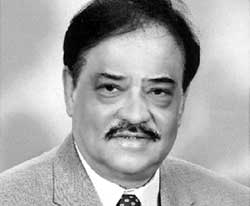
The author, founder Chairman of Centre for Development Research, Bangladesh (CDRB) and Editor quarterly "Asian Affairs" was a former teacher of political science in Dhaka University(1964-1967) and former member of the erstwhile Civil Service of Pakistan (CSP) (1967-1980) and former non-partisan technocrat Cabinet Minister of Bangladesh (1990).
Published by the Editor on behalf of the Observer Ltd. from Globe Printers, 24/A, New Eskaton Road, Ramna, Dhaka.
Editorial, News and Commercial Offices : Aziz Bhaban (2nd floor), 93, Motijheel C/A, Dhaka-1000. Phone: PABX- 41053001-06; Online: 41053014; Advertisement: 41053012.
E-mail: district@dailyobserverbd.com, news@dailyobserverbd.com, advertisement@dailyobserverbd.com, For Online Edition: mailobserverbd@gmail.com