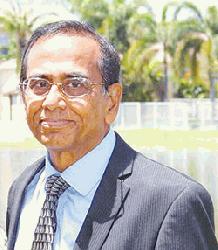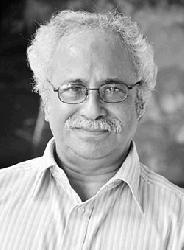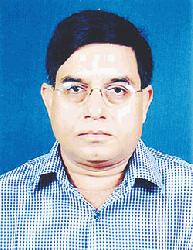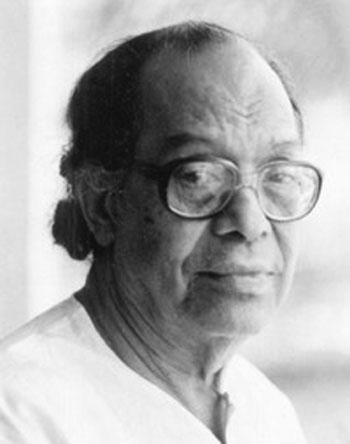
A most misunderstood personality in our socio-cultural arena of our time was Dr Ahmed Sharif, who was a towering scholar, researcher of Bangla literature and a forerunner of free thought movements in Bangladesh. A man with a deep sense of dignity who was a true nonconformist and an atheist, a former Chairman and Professor of the Bangla Department, University of Dhaka, was born on February 1921 and died on February 24, 1999. The colourful life of Dr Ahmed Sharif can be divided into two broad lines, one is his literary and intellectual side and another one is his socio-cultural and philosophical side. Before describing these two sides, I am tempted to give a very brief life sketch of Dr Sharif.
On December 18, 1950 he joined as Research Assistant in the Bangla Department, University of Dhaka and retired as Chairman and Professor in 1983. During his teaching life in the University he was elected a member of the senate, Syndicate, President, Teachers Association and the University Teachers Club and even today, Dr Sharif is the only person who was elected the Dean of the Faculty of Arts for three consecutive terms. After his retirement from the Dhaka University, he was offered to join as first "Kazi Nazrul Islam Professor" at the University of Chittagong, where he served for two years from 1984 to 1986.
He was the recipient of many honours and awards for his outstanding contributions in the field of medieval Bengali literature and contemporary socio-cultural-political essays, the BangIa Academy Literary Award (1968), Daud Literary Award (from Pakistan, 1969), Bangladesh Women Writers Association Literary Award (1980), Alakta Literary Council Award (1989) and the Ekushe Padak (Martyr Day Medal) in 199. A major recognition carne from the Rabindra Bharati University, India, which conferred upon him the Doctor of Literature in 1995 for his outstanding contribution to Bangla literature.
In his lifetime, he was the lone authority on ancient and medieval Bengali literature, the discussions of which he enriched with many original contributions. He was the author of more than 100-research publication in the form of books on history, philosophy, and socio-cultural and contemporary political issues. He edited with long introductions 46 manuscripts of ancient and medieval Bengali literature and a number of others were in joint collaboration. It is rated by the sub-continental scholars that two volumes of his Bangaiee and Bangia Shahitya (Men and Literature of Bengal) published between 1978 to 1983 are masterpieces.
It may be mentioned here that during his lifetime he wrote more than 34611 pages in total and all his hand written pages stand at 13844 pages in print. Never did he care for appreciation or publicity for his massive scholarly works. During his lifetime a bulk of sycophants and a large section of the so-called liberal democrats and secular intellectuals of the country continuously denied his scholarly contribution and suppressed his free thoughts; moreover, even after his death they are doing the same till today but no one has ever questioned his intellectual honesty.
However, many believe that one of his major achievements was that, he unlike many of his contemporary scholars and academicians had been able to extract the hatred and enmity of reactionary forces by the bold expression of his own views. The late scholar was universally regarded for his ability to say "no" to various material temptations; his dignity and self respect, never permitted him to be submissive to power. Among his Dhaka University Colleagues he was just an impractical man, a cynic seized with radical ideas who was never "clever" enough to work for his own mundane interests as he never took any undue advantage of his scholarship position and influence to become wealthy, famous and powerful.
The educated but ignorant people of Bangladesh are not aware of this misunderstood and controversial person who played a vital role to provoke our thoughts to make us conscious of our conscience. The following paper clippings on different national dailies would determine his sense of responsibility and love for the people:
* The Bengali Department of the Dhaka University arranged a meeting on the occasion of Language Day. The meeting was presided over by Dr Ahmed Sharif, where an ominous decision was taken against the Education Commission proposal for introduction and implementation of Roman Alphabet in the Bengali Alphabet (Ittefaq: February 27, 1959).
* In 1963, the "Temporary East Bengal Government" (in brief- Apurba Sangsad) was formed after the successful movement against the education policy of the then government and this "Apurba Sangsad" was the first organization which propagated very secretly for "Independent Bangladesh". Poet Sufia Kamal and Abdul Aziz Bagmar were the President and Secretary respectively and Dr Ahmed Sharif was one of the Advisers. In this connection, Justice Muhammad Habibur Rahman wrote that on October 1, 1965, Dr Ahmed Sharif wrote a secret document for Apurba Sangsad (Asthaee Purba Bangia Sarker - Temporary Government of East Bengal) and the document was known as 3rd Manifesto of the Sangsad, the title was: lttihasher Dharay Bangaiee (Historical Trends of Bengalees). Here he wrote the causes and ways for "Independent Bangladesh"; he also suggested the ways for socio-economic - political and cultural freedom for the Bengalees. Here he proposed the name of the then East Pakistan as "Bangladesh" and closed Rabindranath Tagore's "Sonar BangIa" as national anthem (Prothom Alo, February 04, 2000; also for detail see: Abdul Aziz Bagmar: Swadhinatar Swapna: Unmesh - 0 - Orjan (Dream of Independence: Inception and Achievement, December 1999, Dhaka).
* Dr Ahmed Sharif along with Dr Kudrat-e-Khuda, Dr Kazi Motahar Hossain Poet Sufia Kamal, Painter Zainul Abedin, Poet Sikandar Abu Zafar, Prof. Munir Chowdhury, Poet Hasan Hafizur Rahman and others vehemently opposed the reduction and boycott of Tagore's song in the national media (Dainik Pakistan: 25, 1967).
* Dr Ahmed Sharif along with Mr. Abul Hashim, Dr Muhammed Enamul Haq, Poet Jashimuddin, Poet Sufia Kamal, Prof. Muneir Chowdhury and Prof. Mufazzal Haider Chowdhury, the seven top intellectuals of (the then) East Pakistan demanded to the central government to rename East Bengal as "BangIa" because of the cancellation of one unit system in West Pakistan. In this regard, Dr Ahmed Sharif said, our identity is "BangIa" and we are using "BangIa" as our name in our poetry, literature, thoughts, speeches and every sphere of life (Writers Rights Protection Committee, 1969).
* The East Pakistan Student's League organized a seminar on "Traditional and Ever Lasting BangIa" which was presided over by Mr. Abul Hashim of Islamic Academy and the discussants were Ataur Rahman Khan, Dr Ahmed Sharif, Poet Jahanara Arzoo and Kazi Latifa Haq. Here Dr Ahmed Sharif in his speech publicly demanded and justified that the East Pakistan must be known as "Bangladesh" (Daily Sangbad: December 25, 1969).
* The Writers' Guild which was established by the Central Government of Pakistan for the liberation movement. On March 5, 1971 all the cultural activists and intellectuals went to "Shahid Minar" (Martyer's Memorial) and took solemn oath under the leadership of Dr Ahmed Sharif that "Even at the cost of our life we will continue our struggle for the rights of East Bengal (Pakistan) and through our writings we will inspire the struggling people. For the success of the movement, our writings will act as bayonet and bullet. Forgetting the differences of the past, we will be united with the general mass and proceed forward for the success of the struggle" (Rafiqul Islam: Ekattorer Osohojog Andolon-O-Buddijibira, 1982)
* For an independent and sovereign state, the Writers Action Committee arranged a meeting under the presidentship of Dr Ahmed Sharif and the meeting appealed to NAP leader Maulana Bhasani, Awami League Leader Sheikh Mujibur Rahman and other political leaders of East Pakistan to be united for the greater interest (Dainik Pakistan: March 15, 1971).
* Writers' Action Committee arranged a poetry session at the BangIa Academy premises, the session was presided over by Dr Ahmed Sharif and self composed revolutionary poems were read out by poets Ahsan Habib, Hasan Hafizur Rahman and Shamsur Rahman (Dainik Pakistan: March 22, 1971).
* Writers' Action Committee arranged a discussion meeting on "BangIa in Future" at the BangIa Academy premises where Dr Ahmed Sharif, Dr Serajul Islam Chowdhury, Dr Momtazur Rahman Tarafdar read out the papers and the meeting was presided over by Dr ABM Habibullah (Dainik Pakistan: March 23, 1971).
* At the National Press Club an organization was formed in the name of Civil Rights and Legal Aid Committee under the presidentship of Dr Ahmed Sharif. Journalist Abdul Gaffar Chowdhury, Poet Sikandar Abu Zafar, Sardar Fazlul Karim, AZM Enayetullah Khan and Badruddin Umar spoke on the occasion. In his presidential speech Dr Ahmed Sharif condemned the avoiding tendency of intellectuals for the national cause. Further he emphasized for self-criticism of the intellectuals (Dainik BangIa: February 1, 1974).
* At the two days long national convention of Bangladesh Lekhak Shibir (Writers' Guided) Dr Serajul Islam Chowdhury read out the main paper on "Social Responsibilities of a Writer" and it was presided over by Dr Ahmed Sharif. In the presidential speech Dr Ahmed Sharif said that, three types of intellectuals are in the country, one type is attached to the government, second type is afraid of the government and third type is against the government. (Dainik BangIa: May 16, 1977).
* At the press conference of the emergence of Mukti Juddha Chetona Bikash Kendra (Centre for Awakening the War of Liberation Idea) Dr Ahmed Sharif said that without united effort no one can survive and due to the activities of the Razakars (Pakistani Collaborators) people are in danger, therefore, people should be united against the anti-liberation forces (Sangbad: August 24, 1985).
* Wrishees Cultural Group gave a reception to Dr Ahmed Sharif at the Ramna Park and the function was presided over by Dr Anisuzzaman. At the reception, Dr Ahmed Sharif said that "Any individual can be happy and successful in his life, if he can apply his knowledge with intelligence, strength with courage and initiative with determination; all these three factors, whoever will apply in his personal life, family life and socio-political life, his success will be inevitable (Daily Sangbad: February 26, 1989).
* Swadesh Chinta Sangha (Homeland Thought Union) organized a seminar titled "Suppression on Culture" and the seminar was presided over by Dr Ahmed Sharif. Because of his controversial view on Islam, country-wide demonstrations were held. Fundamentalist of the country termed him as "Murtad" (One who leaves his own religion) and wanted to strangle him (Inquilab: October 22, 1992).
* As president of the Swadesh Chinta Sangha Dr Ahmed Sharif condemned the government for banning Dr Taslima Nasreen's book "Lazza" (Shame). (Ittefaq: October 14, 1993).
* On the occasion of 21 death anniversary of Charu Majumder a seminar was organized on "Naxilite Movement and Charu Majumder" and Dr Ahmed Sharif commented that NGOs are not allowing our people to be self-reliant. Economic emancipation won't come until we change the social system. (BangIa Bazar Patrika: July 26, 1993).
* Swadesh Chinta Sangha organized a seminar on "NGOs Thoughts on Election" at the Dhaka University TSC, where Dr Ahmed Sharif said that, half of the teachers of the University are fanatic and rest are pro-Awami League and BNP; mainly these teachers are purchasable. (Dainik BangIa: May 4, 1995).
Dr Tajul Islam Hashmi wrote: ......he could have become Vice-Chancellor of several Universities of this country, both during pre and post Bangladesh periods, as several other academies, even with lesser education and talent had done. He could have been an Ambassador, an ever present leader of delegations sent abroad by the governments of pre and post Bangladesh to represent the culture and literature (and what not!) of the region.
Dr Hashimi further wrote that: Even he could have become Chairman of the University Grants Commission or the Public Service Commission or at least a National Professor for his knowledge and very rich contributions to the field of Bangla language, literature and culture, both as a dedicated researcher and active writer. Alas! none of these happened to our Sharif Sir. Even having such rare qualities he had to retire in 1983, neither the Bengali Department nor the University took any serious initiative to continue his service and take advantage of his scholarship for national interest. Possibly, he knew the art of antagonizing the powerful people and different government agencies.
Moreover, his strong sense of dignity and self-respect did not permit him to be submissive to power.
Dr Nehal Karim is Professor of Sociology, University of Dhaka. He can be reached at: nehal.karim@yahoo.com