At the end of the first-year Intermediate started the vacation until July. Though we knew that the examination for promotion to the second year would be held after the vacation, no firm steps were taken for disciplined and systematic preparation. Rather, relatively more time was spent on participation in voluntary social services and cultural activities. Pallimangal Sangha was a significant part of these activities. I remember giving a lot of time to the planning and the executive meetings of Sangha at the Boliadi House. Our senior, Choudhury Tanveer Ahmed Siddiqi Napoleon, himself was a stalwart of Sangha.
The patron and the real architect of the organisation, our beloved teacher of the St Gregory's school days, RB Shaha introduced us to the countrywide voluntary organisation Pakistan National Youth Council (PNYC). This was an affiliating body recognised by the National Council of Social Welfare receiving yearly grants for distribution among its own member-NGOs. I was sent to the PNYC, Dhaka as the representative of the Pallimangal Sangha. The other organisations were the Workcamp Association, the Paril-Noada Majlish, the Boy Scouts, the Sabuj Sena, etc. The secretary general of the East Pakistan region in 1958 was tall, handsome and youthful Zohra Reza. Her residence at 14 Purana Paltan was the official headquarters and the drawing room served as the venue of the regular meetings.
In the annual elections of the PNYC, it was agreed by significant member organisations that I would be a member on the executive committee. However, as Napoleon wanted to be assistant general secretary and I supported him against the majority candidate Habibur Rahman, it cost me my EC membership and as majority group withdrew their support for me. I got the lowest vote and Napoleon also could not become assistant secretary general in the bargain. The defeat caused me a lot of hurt although I put up a smiling and brave face. That, perhaps, helped me to become assistant secretary general of the PNYC later.
While we the young students in the late 1950s were busy with our studies and extracurricular activities including social services, clouds were gathering in the political horizon of the then united Pakistan. It was not possible for us to comprehend the significance of the ominous distant thunder. Hindsight now tells us that those were the developments that led to the suspension of constitutional democracy and the promulgation of the martial law.
As the evolving history later revealed, the direct intrusion of the military in national politics and destruction of democracy eventually led to the dismemberment of Pakistan. Through the glorious war of liberation in 1971, the sovereign and independent Bangladesh emerged.
On the June 18, 1958 occurred the event which was one of the political happenings that snowballed into the seminal event of the death of Pakistan in Bangladesh. The incident, though a bit jarring, did not seem to be very serious in the then unstable stage of Pakistan's tumultuous politics. As we were holding the meeting of the planning board of Pallimangal Sangha in Boliadi House, we received the news that the United Front government in East Pakistan led by chief minister Ataur Rahman Khan had fallen.
Khan's government was defeated in the provincial legislature on a cut motion on food. The scores were 138-126 for the ruling coalition. The stability of politics in East Pakistan was in jeopardy again making the future of democracy in Pakistan highly uncertain. Nevertheless, though receiving a mild jolt at the news, we continued our discussion on planning activities of Pallimangal Sangha.
As I look back, our juvenile indifference and carefree attitude at potent political changes at that juncture brings to mind an anecdote reportedly of 1757. That was the year of titanic historical change for Bengal and the sub-continent. The Battle of Plassey occurred on June 23, 1757. The last sovereign and independent ruler of Bengal, Bihar and Orissa Nawab Sirajuddaula was defeated by the East India Company and the treachery of a section of his own commanders and courtiers among whom were Mir Zafar, Rai Durlabh, Jagat Seth, Urmichand and Latif.
But the story was not about the sad defeat of the monarch of Bengal. Rather, it was about the limited perception of the common man about epoch-making changes of the ruling classes. The anecdote of Plassey centred around a poor farmer busy ploughing immediately after the battle had ended. A messenger of the nawab was running fast from Plassey to Murshidabad, the capital of the defeated nawab. The farmer reportedly asked the fleeting messenger, 'Why do you run brother? What is the massage?'
'Haven't you heard?' replied the messenger without stopping. The nawab has been defeated at Plassey. The farmer asked, 'Who has become the nawab now?' 'The East India Company', said the bearer. It is said that on hearing this, the farmer looked up at the sky and exclaimed with a sigh, 'Oh Allah, this is the third nawab I have seen in my life' and went on ploughing!
Despite destructions such as the call of social services, reading books which were not the prescribed text and long hours of chatting with friends, I felt well prepared for the forthcoming examination for promotion to the second year. However, as the summer vacation ended with June, I developed fever and could not appear at all the examinations on account of illness. The college authorities were kind and on the basis of average records promoted me to the second year intermediate class. As second-year students, we became seniors of a sort.
The BA students were the actual seniors. Among them were the newly elected vice-president, the late Azizul Haque Khan, and later the illustrious major general, the late Manzur. They belonged to the dominant college students' party, 'The Pioneers'. That party dominated students' union wining the annual elections. It had its roots among the students who came from outside Dhaka. Its supporters were, therefore, more though seemingly unsmart and less urbanised. There were a few exceptions such as Manzur Bhai. The numerical majority of the pioneer of supporters ensured its victory in annual elections. By contrast, our party 'The Democratic Students' Front' was composed mainly of smarter students from Dhaka schools. The party, therefore, had fewer supporters and despite an intense and intelligent propaganda did not win the elections. Among its leaders were Anwar Ansari Khan, later major general and freedom fighter Nurul Islam Shishu, Osman Faruque, later minister of education, and others. They were our seniors in St Gregory's School. So we joined the Democratic Students' Front. A lot of our time outside the classroom was busy with 'party activities' such as group and general meetings, writing and distributing leaflets and posters containing partisan publicity.
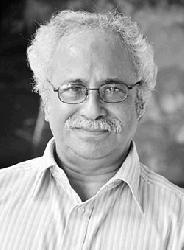
The author, founder Chairman of Centre for Development Research, Bangladesh (CDRB) and Editor quarterly "Asian Affairs" was a former teacher of political science in Dhaka University(1964-1967) and former member of the erstwhile Civil Service of Pakistan (CSP) (1967-1980) and former non-partisan technocrat Cabinet Minister of Bangladesh (1990)
Published by the Editor on behalf of the Observer Ltd. from Globe Printers, 24/A, New Eskaton Road, Ramna, Dhaka.
Editorial, News and Commercial Offices : Aziz Bhaban (2nd floor), 93, Motijheel C/A, Dhaka-1000. Phone: PABX- 41053001-06; Online: 41053014; Advertisement: 41053012.
E-mail: district@dailyobserverbd.com, news@dailyobserverbd.com, advertisement@dailyobserverbd.com, For Online Edition: mailobserverbd@gmail.com