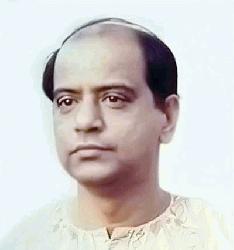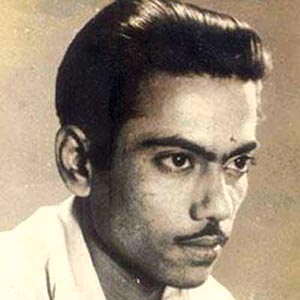
Zahir Raihan, having done some noteworthy amazing works and with the promise of further amazing work, died an untimely death before he had a chance to explore his full potential. Born on 19 August 1935, as Mohammad Zahirullah, in Majupur, (now Feni District, Bangladesh), Zahir Raihan's short stories, novels, movies and documentaries helped him earn critical acclaim and admiration in the Bengali Literary society. He was a novelist, journalist, writer and filmmaker, however he is chiefly remembered for his documentary Stop Genocide, made during the Bangladesh Liberation War. A graduate in Bengali Literature, his prolific career began with his first collection of short stories, titled Suryagrahan, which got published in 1955. After assisting several directors in their films, in 1960 revealed himself as the director of Kokhono Asheni which was released in 1961. He made Pakistan's first colour movie, Sangam in 1964 and completed his first CinemaScope movie, Bahana, the following year. An active supporter of the Language Movement of 1952, his film Jibon Theke Neya was critically acclaimed by Satyajit Ray, Mrinal Sen, Tapan Sinha and Ritwik Ghatak. He also actively participated in the Gano Obhyuthyan in 1969 and joined in the Liberation War of Bangladesh. Raihan never came back when he went out on 30 January 1972 trying to find his brother, the famous writer Shahidullah Kaiser, who was captured and killed by the Pakistani Army during the final days of the liberation war. It is believed that Raihan along with many others was attacked when they went to Mirpur, one of the existing strongholds for Pakistani/Bihari collaborators at that time.
In his early years, Zahir was attracted by the communist movement. When Communist Party was banned and the leaders of the party went underground, he worked as a courier to carry letters and messages for them from one place to another. He got the name Raihan from underground leaders and thus his original name Zahirullah was changed to Zahir Raihan. He took an active part in the language movement. He was one of the first 10 students to go out in a procession on 21 February 1952 despite there was a ban on such activities. He and many others were arrested and then taken to prison.
In his student life Zahir devoted himself to literature. His first book Surya Grahan, a collection of stories, was published in the 1362 BS. Other books written by him are Shesh Bikeler Maya, Hajar Bachhar Dhare, Arek Falgun, Baraf Gala Nadi and Ar Kata Din. He was one of the initiators in publishing the English Weekly Express in 1970. He was also associated with some other journals of literature. Zahir was honoured with the Adamjee Literature Award for his novel Hajar Bachhar Dhare and the Bangla Academy Award in 1972.
In 1952, Zahir went to Calcutta to learn photography and was admitted to Pramatesh Burua Memorial Photography School. He entered the film world in 1956. Kakhono Asheni, the first film directed by him, was released in 1961. Then came, one after another, his other films Kajal, Kancher Deyal, Behula, Jiban Theke Neya, Anwara, Sangam and Bahana. Jiban Theke Neya depicted the autocratic rule of Pakistan and inspired the people to protest against the Pakistani rulers. He started making an English film Let There Be Light, which he could not finish because of the break out of the war of liberation. After 25 March 1971, he went to Calcutta and produced a documentary film Stop Genocide highlighting the massacre done by the Pakistani Army. This film created a sensation all over the world.
The writer is a freelance contributor.