



| HEADLINE |

|
Ode to a mysterious poet, Jibanananda Das
Published : Thursday, 24 October, 2019 at 12:00 AM
Hasan Al Mahmud


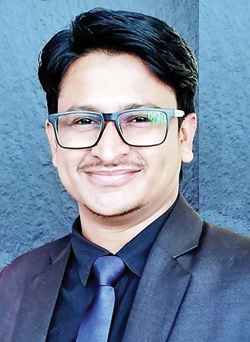
Hasan Al Mahmud
"All the birds come home--all the rivers", but Jibanananda can't. He, along with his magical words, walked alone in the lonely cycle of Bengali poetry. Until the Kolkata city's tramline pulled his two legs--those two terrains, Barisal and Kolkata, had once been imprinted on each other, sometimes in unison with each other. This absent-minded poet was able to create a different flow in Bengali literature, 'Jibanananda-Bhuban'. Until today, Jibanananda Das has become one of the leading modern Bengali poets of the twentieth century. In this area, he was one of the pioneers as well.
Born in Barisal in 1899, he got admitted to Brajmohan School. Later he got admitted to Presidency College of Kolkata for his Honours in English, and he completed his Masters in English too. He started his teaching career at City College, later he roamed around this sector very mysteriously. Although he had many opportunities to work and even worked in different reputed institutions in Kolkata, still he had a troubling career and suffered financial hardship throughout his life. This mystery is yet to be cleared. Even he was not happy with his married life. But, why? It's almost impossible to reach the wilderness of Jibanananda if we continue this milestone in life.
But, in terms of poetry, he was quite successful. Some of his famous works are Jhara Palak (1927), Dhushor Pundulipi (1936), Banalata Sen (1942), and many others. According to his son, Amitananda Das, his father's 3,500 writings including poems were published in his lifetime and all the other trunk-filled writings were recovered after his death.
Jibanananda is considered as one of the best for his realistic works. He wrote the way he conceived his own style, and it was very natural for him. When something came to his mind, he designed it immediately with his own words, metaphors, and imagery artistic power. This practice made him different from others, and we can say--his poetry is to be felt, rather than merely read or heard. This is why Annadashankar Roy called him the "truest poet".
Writing about the poetry of Jibanananda, Joe Winter, a British educationist and poet, highlighted some characteristics of Jibanananda's writings: natural process, sophisticated usage of village-dialect words, etc. Clinton B. Seely, an American translator and a scholar of Bengali language and literature, has written a biography of Jibanananda where he mentioned, "he was extremely talented to produce words and use them in the local context".
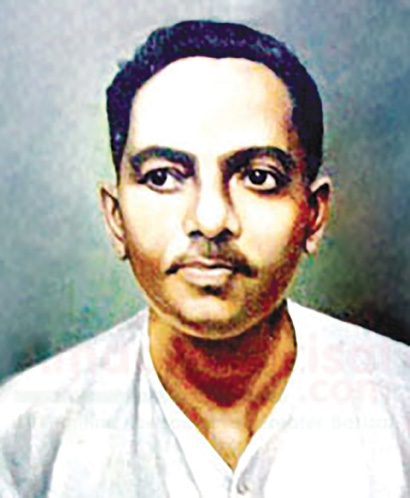 Faizul Latif Chowdhury is also a translator of Bengali poetry and has worked extensively on the life and works of Jibanananda Das. He considers Jibanananda as a poet with all signs of postmodern poetry. Jibanananda was different for another reason. He used to hide his writings in his personal trunk and when he would take them out for printing, his younger sister Sucharita, who was very close to him, only had access to see and read them. The rest didn't know anything in that sense. According to his son, "his father was able to create a separate world where he himself was an exception who didn't write to show his writings to others, rather he always wrote for himself".
Although he is primarily considered as a poet, he also authored and published several essays. He began to gain more popularity in the last phase of the twentieth century, especially after his accidental death in Kolkata. Recalling the incident, the then DC and the former Police Commissioner, Prasun Mukherjee once narrated the story in an interesting way.
If I say shortly what he said is, Jibanananda's daughter Manjushree Devi told him that some unpublished writings of her father's first life had been lost. She was on a local train from Mecheda. Many unpublished scripts of Jibanananda were in a suitcase placed under the train's seat. When she got to the Howrah station, she found that the suitcase was not there. The suitcase thief thought that there might be expensive jewelry or money.
After the loss of those papers, there was a huge struggle for finding them by the Kolkata police. Without wasting time, they formed a special team and started searching from College Street. Some scripts were found from an old bookstore, but that huge loss is still a regret. However, that police officer and his team tried their best, but couldn't collect everything because it was already sold as waste papers. Although some of the lost scripts were recovered, still an unknown portion of those miraculous words were lost forever.
It was very sad to know that the grocery store owner was selling corn with those lost pages. The shopkeeper bought that valuable bundle of papers weighing seven kilos for 12 and a half Taka only. However, what remained intact was rescued. Jibanananda's daughter was very happy to recover those and she cheerfully gave one of her father's books to that police officer.
On 13 October 1954, he recited the poem "Mohajiggasa" on a radio. The next day, 14 October, he had a discussion with friends about it and who knew that it was the last group discussion in his life. In the afternoon, he came out of his Lansdowne Road home for a regular walk. Walking from an early age was his habit and he used to share his thoughts with his brother that someday he will make "Manpawban Boat" through that he will lead himself in a mysterious journey. In his poem, "Banalata Sen", he said, "for thousands of years, I have walked the path of the world."
He used to look at the sky curiously while roaming around and used to look at birds while walking alone on the streets. Did Jibanananda even think of the "Manpawban Boat" watching the clouds in the sky that day? If not, why he didn't hear the sound of tramline's endless bells and the screams of its driver! He was lost in his thoughts before he died on 22 October-after an eight-day fight with himself. But, today he is still alive among his readers through his exceptionally powerful words. So, on this day, let us remember him as a true genius that he was.
The writer was a Fulbright TEA Fellow, Fall 2018, Montana State University, USA
Loading...
Loading...
Also read


Editor : Iqbal Sobhan Chowdhury
Published by the Editor on behalf of the Observer Ltd. from Globe Printers, 24/A, New Eskaton Road, Ramna, Dhaka.
Editorial, News and Commercial Offices : Aziz Bhaban (2nd floor), 93, Motijheel C/A, Dhaka-1000.
Phone: PABX- 41053001-06; Advertisement: 41053012; 01793317829, 01550707291, E-mail: [email protected], [email protected] Online: email: [email protected] 41053014; 01550707297 Advertisement: 01550707296
Published by the Editor on behalf of the Observer Ltd. from Globe Printers, 24/A, New Eskaton Road, Ramna, Dhaka.
Editorial, News and Commercial Offices : Aziz Bhaban (2nd floor), 93, Motijheel C/A, Dhaka-1000.
Phone: PABX- 41053001-06; Advertisement: 41053012; 01793317829, 01550707291, E-mail: [email protected], [email protected] Online: email: [email protected] 41053014; 01550707297 Advertisement: 01550707296


