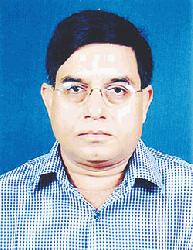
Syed Abu RushdMatinuddin, popularly known as Abu Rushdin theliterary world, was born in a respected Muslim family in Kolkata on December 25 in 1919. Today is his 100th birthday.
Abu Rushd was an academic, writer, freedom fighter, diplomat and eminent citizen of the country. Abu Rushd received his first job offer as an English lecturer at Hooghly Mohsin College even before his results of final term was published. He studied English in St Xavier's college and Calcutta University. Later on he went to pursue further studies in English Literature at Exeter College, Oxford. Upon returning, he taught English at Calcutta Islamia College, Dhaka College, Chittagong College, Rajshahi College, and retired as Supernumerary Professor of English from Jahangirnagar University. He had been a part time teacher as well as an examiner in the department of English at the University of Dhaka for a long time. Teaching was his passion. He taught Bongobondhu at Kolkata Islamia College.
He was a quintessential scholar and English was his passion as has been observed by Syed Badrul Ahsan in one of his writings in a national daily titled, "Remembering our wordsmith". He served the government in different capacities. He was nominated to UN as senior fellow from Pakistan in his early sixties and also worked as an education adviser to the central government of Pakistan. He was the first Director of Public Instruction (DPI) of the independent Bangladeshand at one time also served as the educational counsellor in London high commission. He was entrusted to translate the report of Kudrat-e-khuda education commission in English. He also discharged the duty of Chairman of Press Institute of Bangladesh in Mid 80s. He was the honorary chairman of Nijera Kori - a national NGO of the country.
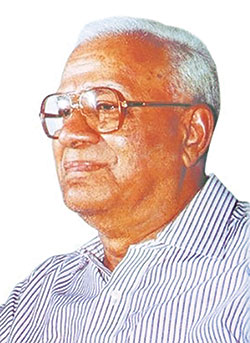
Abu Rushd's first published work "Atharbo" published in Bulbul - a monthly magazine, edited by HabibullahBahar in 1937, drawn huge attention of the educated society. His first book,"RajdhaniteJhor",was a collection of short stories, which was published in 1938 by Bulbul Publishing House.The price of the book was TK 1. He dedicated the book to HumayunKabirwhom he considered as his mentor and guide. In his autobiography, Abu Rushd also recalled the special role of academics HumayunKabir and HabibullahBahar in the evolution of his literary life.
After publishing of these works he had been considered as a rising Muslim intellectual of the time by the then intelligentsia. Eventually, he established himself in the fore front of Kolkata based intellectual society along with Syed Ali Ahsan, Farrukh Ahmed, Abul Hossain, and Syed Walliullah. The rise and development of literary lives of Syed Ali Ahsan, Shawkat Osman, Farrukh Ahmed, Abul Hossain are well presented in the autobiography of Abu Rushd.
He has six novels, 50 short stories, and a three-volume autobiography to his credit. Furthermore, he spent a considerable amount of time for the translation of literary works from Bangla to English and English to Bangla, including Shakespeare's poems.His notable works were Elomelo (This and That, 1946), SamneNotun Din (A New Day Ahead, 1951), DobaHoloDighi (Pool becomes Lake, 1960), Nongor (Anchor, 1967), OnishchitoRagini (The Unsure Tune, 1969) andSthagitaDwip (The Aborted Island, 1974). Rushdwas one of the firsts to translate thepoems and songs of LalonShah to English. His collections of translation, "Songs of Lalon" was published in 1964 by Bangla academy. He also translated the works of four poets of Bangladesh into English. He created a unique style of writing and was very apt in representing the socio-economic and political realities of his time.
He was one of very few writers who had successfully drawn a vivid picture of the socio-economic condition of the Muslim society in the pre-partition period. His novels thus carry a special tone of social history as noted by Abdul Gaffer Choudhury, in his tribute to Abu Rushd after his death,in a Bangla daily with the title "Amar Shahitto Guru".
Abu Rushdwas a freedom fighter.He defected on August 4, 1971,while serving as the Counsellor (Education & Cultural Affairs 1971 in the Pakistan Embassy in Washington DC along with other mission staffs, Second Secretary Ataur Rahman Chowdhury, Third Secretary Syed Muazzem Ali, Assistant Administrative Attaché A. M. SharfulAlam, and Assistant Press Attaché Sheikh Rustam Ali; and expressed allegiance to Bangladesh accepting a life full of uncertainty and anxiety. Later on they formed a solidarity group called 'Bangladesh Mission Washington' and contributed to the liberation movement significantly by creating public opinion in favor of the just cause of our liberation movement. He was in charge of publishing a weekly journal, Bangladesh Newsletter,on behalf of Mujibnagar government.
During that period he used to write in American newspapers like Christian Science Monitor, Washington Post and Baltimore Sun to promote the cause of our liberation war in the world forum. Interestingly, even after our victory in December 1971, the New York Times continued to show Dhaka asa part of the East Pakistan, Abu Rushd sent a rejoinder letter to the managing editor of the newspaper. In reply, the editor informed him that as the US government did not officially recognize Bangladesh yet, the newspaper could not change its editorial policy and use the name Bangladesh. Abu Rushd promptly replied pointing out that even during the war when the US government was opposing the liberation movement, the NewYork Timespublished news about the war without any reservations focusing on Bangladesh. After that, the newspaper started to address Dhaka as part of Bangladesh..
Abu Rushd started receiving recognitions for his literary works in the 60s. Tagma-e-Imtiaz was his first literary award. He was awarded with the Adamjee Literary award in 1963 and Bangla Academy Literary Award in 1964. His first recognition in independent Bangladesh was the EkhusheyPadak,which was awarded in 1981. He also received Habib Bank Award (1970),Nasiruddin Gold Medal (1992), Alakta Literary Award (1992), Bangla SahityaParisad Award (1993), Sher-e-Bangla Gold Award (1992)[2], Lekhika Sangha Award (1992), Rotary Club Award (1995), and ChattagramSangskritiKendroFarrukh Memorial Award (1999) for his outstanding contribution to Bengali literature. It is a pity that he didn't get the highest civilian award, the Independence awardinspite of his contribution to the liberation war, in the independent Bangladesh though his fellow intellectuals and even his juniors have received this state recognition long before.
Professor Abu Rushddied on February 26, 2010 leaving behind his wife Aziza Ismail Rushd, son Abu Kamal, and daughter ShaheenRushd.Abu Rushd married to Azizia Ismaal daughter of Abul Hasnat - former IG and winner of Independence award for literature. He was born to late Syed Abdul Karim-a deputy magistrate of erstwhile British Government and Syeda Amatuzzohra. Abu Rushd was the third amonghis nine siblings. His eldest brother, Professor AZ Abu Tayeb, was the chairman of West Bengal public service commission and pay commission, and his younger brothers were Rashid Karim - a novelist and Fazle Rashid - a journalist.
Dr. SSM Sadrul Huda is an Assistant Professor of East West University and a
freelance contributor.