



| HEADLINE |

|
Extradition Of Bangabandhu Killer
US Attorney Gen seeks opinion of amici curiae on Rashed Chy
Published : Monday, 27 July, 2020 at 12:00 AM
Shahnaj Begum


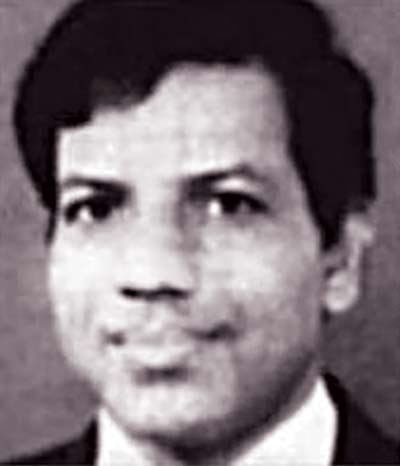
Rashed Chowdhury
the USA.
US Attorney General William Barr has asked all concerned with Rashed Chowdhury's Board of Immigration Appeals to submit their opinion/arguments' by September 29 for review of his (Rashed Chowdhury's) asylum in the USA.
As per demand of Rashed's legal team, William Barr extended the arguments submission date twice. However, Barr also sought opinion from Amici Curiae and decided to sit with the senior lawyers' panel to discuss the asylum issue, according to the US media report.
Attorney General William Barr on June 17, directed the Board of Immigration Appeals to send Rashed's case to him for review-making clear he would reopen the matter that had been decided more than a decade earlier, US media reports, earlier.
For almost 15 years, the case was closed. Bangladesh's government under Prime Minister Sheikh Hasina has for years been open about its efforts to persuade the US to extradite Rashed-whom it calls a cold-blooded assassin. Bangladesh is delighted by Barr's move.
Sheikh Hasina's government has been lobbying hard for Rashed's extradition. The New York Times even ran an op-ed on November 7, 2016, by Hasina's son (Sajib Wazed Joy) calling Rashed a "killer" and urging the US to extradite him so he could face the death penalty. It also said his trial was fair. For years, the Awami League government's efforts to extradite Rashed Chowdhury bore no fruit. But under the Trump administration, the government has sounded optimistic notes.
In 2018, Bangladeshi diplomats expressed hope to The Daily Caller (US Daily) that they had "received encouraging signs that the Trump administration will extradite Rashed to Bangladesh." Last November, Bangladesh's foreign minister said a senior US diplomat-Alice Wells, a career official who has since left government-asked him for documents related to Rashed's trial so the US could review them. In April, Bangladesh's foreign minister reportedly pressed the US ambassador in Dhaka Earl Miller on Rashed's case.
When Sheikh Hasina was first elected as Prime Minister in 1996, Rashed was the top diplomat at Bangladesh's embassy in Brazil-and was soon summoned home. Fearing reprisal, he fled to the United States with his wife and son. But the Awami League government didn't give up. Instead, it tried Rashed and 18 other people in absentia for crimes related to the coup in which the Father of the Nation was killed along with his family members, excepting Sheikh Hasina and her sister Sheikh Rehana, on August 15, 1975.
Rashed and his family arrived in the US in 1996 on visit visas. Within two months, they applied for asylum. Nearly 10 years after he arrived in the US, an immigration judge granted him asylum. But DHS, which handles US government arguments against immigrants' efforts to stay in the US, appealed the judge's ruling. DHS lawyers argued his participation in the coup should disqualify him from receiving asylum.
Loading...
Loading...
Also read


Editor : Iqbal Sobhan Chowdhury
Published by the Editor on behalf of the Observer Ltd. from Globe Printers, 24/A, New Eskaton Road, Ramna, Dhaka.
Editorial, News and Commercial Offices : Aziz Bhaban (2nd floor), 93, Motijheel C/A, Dhaka-1000.
Phone: PABX- 41053001-06; Advertisement: 41053012; 01793317829, 01550707291, 01550707296
E-mail: [email protected], [email protected]. [email protected], [email protected], [email protected], [email protected], Online-email: [email protected]
Published by the Editor on behalf of the Observer Ltd. from Globe Printers, 24/A, New Eskaton Road, Ramna, Dhaka.
Editorial, News and Commercial Offices : Aziz Bhaban (2nd floor), 93, Motijheel C/A, Dhaka-1000.
Phone: PABX- 41053001-06; Advertisement: 41053012; 01793317829, 01550707291, 01550707296
E-mail: [email protected], [email protected]. [email protected], [email protected], [email protected], [email protected], Online-email: [email protected]


