



| HEADLINE |

|
Wastes pollute Padma in Rajshahi
Published : Tuesday, 24 November, 2020 at 12:00 AM
Rafiqul Hasan Firoz


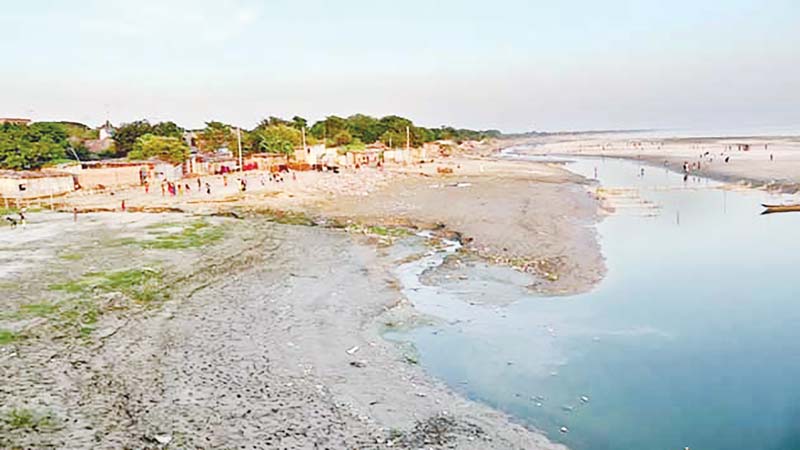 RAJSHARI, Nov 23: Solid and liquid wastes mixing with the Padma River water is polluting it.
As a result, flora and fauna of the river are being jeopardised.
According to the experts concerned, untreated sold and liquid wastes are contributing to the unabated pollution of the river. If this polluting trend continues, its biodiversity will be endangered.
Household garbage, generated mostly in Bulonpur, Keshabpur, Sreerampur, Kumarpara, Shekher Chak, Panchabati, Talaimari and Shyampur areas of Rajshahi City Corporation (RCC), is being dumped into the river.
Besides, plastic and polythene effluents are directly thrown into the river from different types of restaurants grown up in different points of the dyke linking Pathanpara, Dargabpara, Borokuthi and Sreerampur areas. Also, five sluice gates in the town are passing liquid waste to the river.
When asked, a woman said, "We all in Kumarpara Mahalla throw waste in dustbin. RCC vans take away the waste."
Subashi Das of Kumarpara area said, "RCC vans come in the evening or after 8pm. Besides, it does not enter lanes; so we have to dump waste ourselves into the river."
Plastic cup, bottle and polythene were found on the dyke in front of Keshabpur Police Line.
One betel leaf and cigarette trader Golam Rasul, who has been selling those for the last 10 years here, said RCC cleaners have stopped cleansing works for last six months. Now all plastic cups, bottles and paper poufs are thrown into the Padma.
The same picture was seen in Borokuthi, Pathanpara, Dargapara, Sreerampur and Talaimari areas, where unplanned restaurants are scattered.
The Ganga River in India is the Padma River in Bangladesh ending in Goalanda. According to a research by India's Uttar Pradesh Pollution Control Board, Ganga in India is the second most polluted river while Jamuna is in fifth position. Along the Ganga, more than thousand towns, industrial units and different pilgrimage spots have grown up. Effluents from these establishments are being thrown into the Padma River, it was noted.
A professor of Soil and Mineral Sciences Department at Rajshahi University (RU) Dr Chowdhury Sarwar Zahan said, the prevalence of harmful fragments in the discharged waste through the sluice gates is high in Dargapara area. It is increasing water pollution in the river. As a result, swamp biodiversity is being threatened.
He also said, already the town's waste is getting passed into the Barnai River and its biodiversity has been destroyed.
Chairman of Save the Nature and Life Mizanur Rahman said, for the Padma River the most dangerous pollutants are plastic waste and polythene bag. These are raising the pollution level of the river, and the biodiversity is being endangered.
"Our movement for reducing polythene use is not working," he pointed out.
Professor Mizanur Rahman of Geography and Environment Department at RU said, in a research few years back, he found high existence of pollutant in the waste passed by the sluice gates. It is increasing gradually.
According to him, for irrigation with Padma water, the health risk is also increasing. Metallic fragment is mixing with the soil.
Different institutions and factories are running without efuelnt treatment plants in Rajshahi. Yet it is not lone case that the Padma is being polluted in the Bangladesh territory. Rather it has been polluted ranging from its origin from the Himalayas in India to Goalanda in Bangladesh.
Deputy Divisional Engineer of Bangladesh Water Development Board in Rajshahi Asif Ahmed said, five sluice gates pass the city's waste. But when Padma swells in the rainy season, the gates remain closed.
RCC Chief Cleansing Officer Sheikh Md Mamun said, "I'll talk to ward councillors to know whether the vans go for collecting waste."
Loading...
Loading...
Also read





Editor : Iqbal Sobhan Chowdhury
Published by the Editor on behalf of the Observer Ltd. from Globe Printers, 24/A, New Eskaton Road, Ramna, Dhaka.
Editorial, News and Commercial Offices : Aziz Bhaban (2nd floor), 93, Motijheel C/A, Dhaka-1000.
Phone: PABX- 41053001-06; Advertisement: 41053012; 01793317829, 01550707291, E-mail: [email protected], [email protected] Online: email: [email protected] 41053014; 01550707297 Advertisement: 01550707296
Published by the Editor on behalf of the Observer Ltd. from Globe Printers, 24/A, New Eskaton Road, Ramna, Dhaka.
Editorial, News and Commercial Offices : Aziz Bhaban (2nd floor), 93, Motijheel C/A, Dhaka-1000.
Phone: PABX- 41053001-06; Advertisement: 41053012; 01793317829, 01550707291, E-mail: [email protected], [email protected] Online: email: [email protected] 41053014; 01550707297 Advertisement: 01550707296


