



| HEADLINE |

|
Time and Power
Christopher Clark
Published : Saturday, 26 December, 2020 at 12:00 AM


From the author of the national bestseller The Sleepwalkers, a book about how the exercise of power is shaped by different concepts of time...
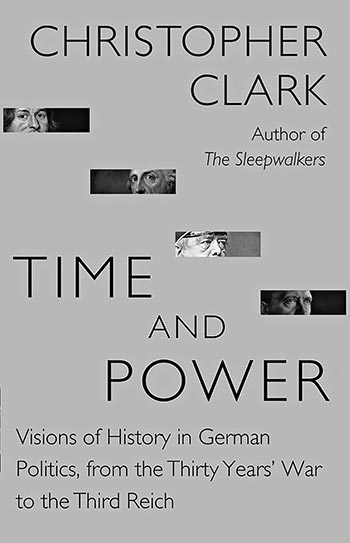 Based on a series of lectures delivered at Princeton University, historian Christopher Clark's "Time and Power" addresses the latest in the seemingly never-ending series of "turns" that have come to dot the landscape of contemporary historiography. Clark's volume is aimed at the "temporal turn," which endeavours to lay bare constructed perceptions of time.
Though the focus on time may be somewhat new, the temporal turn actually has a fairly deep pedigree, tracing its lineage back to the work of the sociologist Emile Durkheim and more recently to the eminent German conceptual historian Reinhart Koselleck, who famously identified a transformation of temporality as a hallmark of modernization. Current scholarship has since worked to learn more about the thorny relationship between time and modernity.
Clark enters this line of inquiry already well known both for taking on big questions, like the origins of the First World War, and for tackling long periods of time, as in the history of Prussia. So he certainly has the scholarly chops to address the central issue of temporality. Yet Clark comes at the issue from a fresh angle by asking equally elemental questions about the relationship between time and power. His reflections are remarkably astute and tell us a great deal, but they may ultimately say even more about the temporal turn itself.
"Time and Power" has a modest structure, comprising a mere four chapters, with each focusing on a single moment in German history and on the thought world of a single political figure. The featured leaders share common roots in the Prussian state, but they span a wide chronological range, from the mid-seventeenth to the mid-twentieth centuries.
Fourth chapter is ostensibly focused on Adolf Hitler but in practice entertains a larger discussion about the ideological rhetoric of the upper echelons of the Nazi Party. Each chapter stands alone with a unique thesis and a highly engaging narrative, but the chapters work well as a whole, where they allow Clark to posit the connections between time and power as challenges to assumptions about modern notions of time. As his vignettes reveal, there is no discernible trajectory yielding a distinctly modern temporality; instead, Clark carefully showcases unique contextual features influencing views in each case.
He shows how Calvinist belief played a key role in the era of the Great Elector, how the legacy of revolution shaped Bismarck's thinking in unexpected ways, and how ambivalence about classical notions of modernity crafted a Nazi rejection of continuity. Clark is clear that there are no direct links among these iterations, and no nebulous forces driving the evolution of a modern notion of time; rather, each moment is unmistakably the product of individual agency. The resulting emphasis on specificity follows the logic of the temporal turn by highlighting the subjective construction of time, but it undermines some of its unspoken assumptions about temporality and modernity. As Clark explains, "Instead of a linear advance towards modernity, we see something more oscillatory" (p. 213). Clark concedes that his observations do not preclude modernization processes, and indeed he is keen to point out how contemporary views on modernity became embroiled in the development of particular conceptions of time. This was especially the case during the Nazi years, and here Clark takes the opportunity to sidestep long-running debates on the degree to which Nazism was inherently modern or unmodern.
Such observations make Clark's book a rich read for specialists in German history, but he is careful to avoid any hint of German exceptionalism. Instead, his choice to explore a single region over the long term serves to highlight more obscure patterns in our perception of both time and historicity more generally. Most significant is the essential role of power in the formation and transformation of views of time. In some cases, we see that the needs of the state exert a surprising degree of influence on the ways in which we view time. In others, the opposite is true, as prevailing views of temporality inform the choices of political actors. At times, Clark struggles to maintain his avowed distinction between temporality and historicity, blending perceptions of the flow of time with seemingly different ideas about the relationship between the past and the present. But his conclusion, that disruptions in politics are crucial to understanding generational shifts in temporality, is thoroughly convincing. Clark reserves the end of his book for some epilogic reflections both on the fate of the two Germanies after the Second World War and on the present-day relationship between time and power.
Greedy readers will clamour for a more thorough treatment of post-war Germany, but social science scholars would do well to listen closely to the underlying message about our penchant for postmodern critique. In his final thoughts, Clark portrays post modernity as a symptom of a wider intellectual malaise rooted in current notions of time. More specifically, he folds the temporal turn, and by extension the line of turns that have come before, into a larger climate of doubt that questions the concept of modernity even as it remains trapped within its logic. In so doing, Clark offers liberation from our attachment to turns and their sense of 3 Hare: Book Review: Time and Power Published by Nighthawks Open Institutional Repository, directionality, granting in their place an amorphous space befitting more expansive and more creative investigations.
Courtesy: International Social Science Review
Based on a series of lectures delivered at Princeton University, historian Christopher Clark's "Time and Power" addresses the latest in the seemingly never-ending series of "turns" that have come to dot the landscape of contemporary historiography. Clark's volume is aimed at the "temporal turn," which endeavours to lay bare constructed perceptions of time.Though the focus on time may be somewhat new, the temporal turn actually has a fairly deep pedigree, tracing its lineage back to the work of the sociologist Emile Durkheim and more recently to the eminent German conceptual historian Reinhart Koselleck, who famously identified a transformation of temporality as a hallmark of modernization. Current scholarship has since worked to learn more about the thorny relationship between time and modernity.
Clark enters this line of inquiry already well known both for taking on big questions, like the origins of the First World War, and for tackling long periods of time, as in the history of Prussia. So he certainly has the scholarly chops to address the central issue of temporality. Yet Clark comes at the issue from a fresh angle by asking equally elemental questions about the relationship between time and power. His reflections are remarkably astute and tell us a great deal, but they may ultimately say even more about the temporal turn itself.
"Time and Power" has a modest structure, comprising a mere four chapters, with each focusing on a single moment in German history and on the thought world of a single political figure. The featured leaders share common roots in the Prussian state, but they span a wide chronological range, from the mid-seventeenth to the mid-twentieth centuries.
Fourth chapter is ostensibly focused on Adolf Hitler but in practice entertains a larger discussion about the ideological rhetoric of the upper echelons of the Nazi Party. Each chapter stands alone with a unique thesis and a highly engaging narrative, but the chapters work well as a whole, where they allow Clark to posit the connections between time and power as challenges to assumptions about modern notions of time. As his vignettes reveal, there is no discernible trajectory yielding a distinctly modern temporality; instead, Clark carefully showcases unique contextual features influencing views in each case.
He shows how Calvinist belief played a key role in the era of the Great Elector, how the legacy of revolution shaped Bismarck's thinking in unexpected ways, and how ambivalence about classical notions of modernity crafted a Nazi rejection of continuity. Clark is clear that there are no direct links among these iterations, and no nebulous forces driving the evolution of a modern notion of time; rather, each moment is unmistakably the product of individual agency. The resulting emphasis on specificity follows the logic of the temporal turn by highlighting the subjective construction of time, but it undermines some of its unspoken assumptions about temporality and modernity. As Clark explains, "Instead of a linear advance towards modernity, we see something more oscillatory" (p. 213). Clark concedes that his observations do not preclude modernization processes, and indeed he is keen to point out how contemporary views on modernity became embroiled in the development of particular conceptions of time. This was especially the case during the Nazi years, and here Clark takes the opportunity to sidestep long-running debates on the degree to which Nazism was inherently modern or unmodern.
Such observations make Clark's book a rich read for specialists in German history, but he is careful to avoid any hint of German exceptionalism. Instead, his choice to explore a single region over the long term serves to highlight more obscure patterns in our perception of both time and historicity more generally. Most significant is the essential role of power in the formation and transformation of views of time. In some cases, we see that the needs of the state exert a surprising degree of influence on the ways in which we view time. In others, the opposite is true, as prevailing views of temporality inform the choices of political actors. At times, Clark struggles to maintain his avowed distinction between temporality and historicity, blending perceptions of the flow of time with seemingly different ideas about the relationship between the past and the present. But his conclusion, that disruptions in politics are crucial to understanding generational shifts in temporality, is thoroughly convincing. Clark reserves the end of his book for some epilogic reflections both on the fate of the two Germanies after the Second World War and on the present-day relationship between time and power.
Greedy readers will clamour for a more thorough treatment of post-war Germany, but social science scholars would do well to listen closely to the underlying message about our penchant for postmodern critique. In his final thoughts, Clark portrays post modernity as a symptom of a wider intellectual malaise rooted in current notions of time. More specifically, he folds the temporal turn, and by extension the line of turns that have come before, into a larger climate of doubt that questions the concept of modernity even as it remains trapped within its logic. In so doing, Clark offers liberation from our attachment to turns and their sense of 3 Hare: Book Review: Time and Power Published by Nighthawks Open Institutional Repository, directionality, granting in their place an amorphous space befitting more expansive and more creative investigations.
Courtesy: International Social Science Review
Loading...
Loading...



Editor : Iqbal Sobhan Chowdhury
Published by the Editor on behalf of the Observer Ltd. from Globe Printers, 24/A, New Eskaton Road, Ramna, Dhaka.
Editorial, News and Commercial Offices : Aziz Bhaban (2nd floor), 93, Motijheel C/A, Dhaka-1000.
Phone: PABX- 41053001-06; Advertisement: 41053012; 01793317829, 01550707291, E-mail: [email protected], [email protected] Online: email: [email protected] 41053014; 01550707297 Advertisement: 01550707296
Published by the Editor on behalf of the Observer Ltd. from Globe Printers, 24/A, New Eskaton Road, Ramna, Dhaka.
Editorial, News and Commercial Offices : Aziz Bhaban (2nd floor), 93, Motijheel C/A, Dhaka-1000.
Phone: PABX- 41053001-06; Advertisement: 41053012; 01793317829, 01550707291, E-mail: [email protected], [email protected] Online: email: [email protected] 41053014; 01550707297 Advertisement: 01550707296


