The shattering impact of the Convocation that could not be held had a long lasting effect. Several senior students' leader especially belonging to the Chhattra League such as Sheikh Fazlul Haque Moni and Azmal Ali Sikder were stripped of their degrees and expelled from the University. Some of the junior students such as Zakir Ahmed was also a victim of similar measures. Kamal Siddiqui also a junior student and Students' Union (EPSU) activist was also expelled from the University.
These actions especially unprecedented major of withdrawing degrees of students involved in the disruption of the Convocation created negative reaction in the society. The intelligentsia denounced and condemned the harsh steps of the university authorities. Nevertheless, the Government of the day and the University administration, pliant to the wishes of the political rulers, refused to budge. It was only after Dhaka High Court under Chief Justice Mahboob Murshed declared the action null and void that the degrees were restored and the expelled students taken back in the University. The case which had the effect of nullifying the University's action was recorded as the milestone case, "Zakir Ahmed verses the University of Dhaka".
The period from December 1963 to October 1964 was like a pose or a hyphen between two major phases of my life. It was an interesting interlude between two principal chapters: life as a University student and that as a young teacher of the same University which started from October 1964. This span of time of less than a year was marked not only by my work as Executive of the Mehar Industries Ltd. but also by continuing family and social interactions. So far as the office was concerned, it was the familiar 9 to 5 pm routine during week days.
Sunday the weekly holiday and Friday, the day of jumma prayers was a half holiday. The nature of my work as Public Relations and Liaison Officer gave me enough time and space outside the office premises. Regular trips to the relevant government and business offices and frequent visits to the offices of the print media provided refreshing and enjoyable contacts with the outside. It needs be mention here that in those days the only electronic mass medium was the state owned radio. The first state owned TV channel did not emerge before the close of 1964.
During office hours and on holiday's life was replete with engaging hours with friends. The majority of them completed their educational career and joined duties in various jobs, government and non-government. Childhood friend Shahed Latif who did not take the M.A examination with us in 1963 appeared at the Central Superior Services (CSS) examination and joined the erstwhile Civil Service of Pakistan (CSP) in the autumn of 1964. So did class friend Enamul Haque. On the other hand Aga Kohinoor Alam, Syed Hossain Jamal, A.F.M.A Kader and a few others joined private sector banks as junior officer.
It may be remembered here that the times were generally kind to University graduates seeking suitable employment. Far fewer graduates came out of the University to seek jobs than do today. The government as well as private sector business concern offered relatively more promising career opportunities for the younger generations of the 1960s. Despite a military backed dictatorial government ruling the country and frequent strong but limited outburst of protest, there was a general sense of apparent peace and tranquility. This provided scope for the continuous economic development in the country despite the increasing disparity between the then West and East Pakistan.
The politico-economic and social scenario in the then East Pakistan (of the early and mid 1960s) need elaborate analytical description. I cannot resist the temptation to cite a long extract from my own writings relating to those times:
"The geographical area which is today Bangladesh did not have a strong and large middle class before 1947. Paradoxically, it was the Ayub decade in Pakistan which strengthened and expanded this class. The avowedly apolitical "praetorian" system of Field Marshal Ayub brought forth the most potent political forces in Pakistan's Bengal. To borrow an oft quoted Marxist expression, Pakistan in general, and the Ayub system in particular, created their "own contradictions". Having sown the seeds of its own destruction, and during the period of military rule having nursed and nurtured the trees grown from these seeds, the Pakistani ruling elite could not, or did not, fashion the political framework that could contain these within the Pakistani state.
Ayub's "natural allies" inside the government were the military elite and the civil bureaucrats. His eight man civilian cabinet was composed of army generals and non-political personalities from West Pakistan and East Bengal. Moreover, it had no real power, as it was a creature and tool of the President.
Ayub consolidated his position within the government and then, in 1962, started building institutions to strengthen his system. The first of these institutions was the "Basic Democracies", which were actually popularly elected local Autonomy to Succession self-government councils. Members of the Basic Democracies formed electoral colleges to elect the President and later, legislatures (set up by the 1962 Constitution). The second institution built by Ayub in the 1962, Constitution provided for "concentration of power". It established a vastly powerful presidency and, in effect, set up a unitary government in which the provincial executive was the agent of the President (Articles 66, 70, 82, 80).
The third institution, political parties, was "forced upon him (Ayub) by the necessities of political modernization". The 1962 Constitution did not initially provide for political parties, as Ayub's aim was to establish a party less system. Pressures from his political allies, however, made a reluctant Ayub not only allow the operation of political parties within a restrictive framework but also join the revived Muslim League and become its leader and presidential nominee in the elections of 1965.
Each of these institutions adversely affected the Bengali elite's ability to participate in political decision-making and administration. Ayub's allies within the government, the military and civil bureaucratic elite, included not a single Bengali. The Ayub regime also practically eliminated the old political elite, which contained nearly 50 percent Bengalis. Hence, supplanting it by a new power elite drawing its members from the civil and military bureaucracy meant the removal of the Bengali elite from the corridors of power.
The Basic Democracies system aimed at transforming the tone and tenor of East Bengali politics. It had the effect of virtually disenfranchising the major social forces that not only constituted the support base of the Bengali elite but also dominated the pre martial law politics of East Bengal. The urban intelligentsia, the students and the urban salaried workers, along with the educated and "socially respected" village landlord, all felt cheated of a legitimate role in the selection of their rulers and legislators. These groups treated the new scheme with disdain and shunned it.
The other Ayubian institution, the 1962 party system, also failed to provide an effective means of participation for the Bengali elite. Ayub found his acceptable political allies only in a section of the Muslim League, which had been disowned by the Bengalis in 1954. Moreover, the party, like the Basic Democracies scheme, was a "government" creation, with no mass support and little effective effort to build such support. The Bengali elite organized itself principally under the banner of the Awami League and to a lesser extent under the two National Awami parties (one until 1967, when it was divided along Moscow-Peking lines), both of which were anti- regime and anti-system.
The last substantial effort by the parties of the Bengali elite to enter the Ayub system was made during the presidential and legislative elections of 1965.
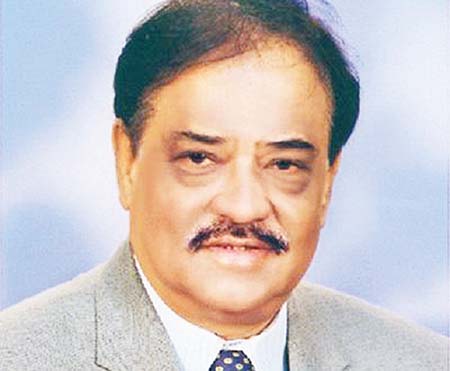
Dr Mizanur Rahman Shelley, founder Chairman of Centre for Development Research (CDRB), and former technocrat Cabinet Minister of Bangladesh, died on August 12, 2019. He contributed his writeups to the Daily Observer which are being published regularly as "The Symphony of Our Times".





