Bangalees are the only nation in the history of the world who have shed fresh blood and given their lives for their mother tongue. No one can ever take away someone's mother tongue and Pakistan made that nefarious attempt and had to pay the price. Language is the lifeblood of a nation's culture which the ruler of Pakistan wanted to destroy our culture.
Within a few months of the partition of country in 1947, only Urdu and English were used, excluding Bengali from Pakistan's first currency, stamps, train ticket, postcards, etc. As a result, student and intellectual protests were held in Dhaka and the students were led by the then popular student leader Sheikh Mujibur Rahman.
The number of Bengali speaking people in the then Pakistan was much higher than the number of Urdu speaking people. But on March 21, 1948, Muhammad Ali Jinnah announced that Urdu would be the only state language of Pakistan and his announcement was like a thunderbolt to the Bangalees.
The movement to make Bengali the state language had been going on since 1947 but the movement spread like wildfire when the final decision to make Urdu the sole state language was taken in the Assembly of Pakistan on January 26, 1952.
Despite being a resident of East Bengal, Khwaja Nazimuddin repeated Jinnah's statement at a rally in the Paltan on January 27, 1952. The people of the rally started chanting slogans demanding to make Bengali the state language. Spontaneous strikes and protests began in East Pakistan on 28 January.
A general strike was declared on 21st February and Section 144 was issued to prevent the strike but when the students marched in violation of section 144, the police fired indiscriminately at them killing many. Salam, Barkat, Rafiq, Jabbar, Safiur and many others were killed in the police firing.
Chhatra League was established in the year 1948 under the leadership of Sheikh Mujibur Rahman and Chhatra League made 10 demands, one of which was to make Bengali the state language.
Rashtrabhasha Sangram Parishad was reformed on 2 March 1948 and Sheikh Mujibur Rahman played a vital role this time. Sheikh Mujibur Rahman was arrested on 11 March 1948 and it was a turning point in his life. In this context, he said that the state language movement was started on March 11, 1948 with the formation of the Rashtrabhasha Sangram Parishad.
An 8-point agreement was signed between the Rashtrabhasha Sangram Parishad and Khwaja Nazimuddin on March 15, 1948. Before the agreement was signed, it was shown to the language activists detained in the jail and approval was taken. The agreement was signed after approval. Sheikh Mujibur Rahman saw the terms of the agreement and approved it.
As a result of this historic agreement, Bengali language was first recognized as a medium of education and Sheikh Mujibur Rahman and other prisoners were released by the terms of the agreement.
On March 15, the government objected to the release of some prisoners and Sheikh Mujibur Rahman strongly protested. A meeting was held at Dhaka University on 16th March to accelerate the language movement and it was led by Sheikh Mujibur Rahman. The strike was observed in all educational institutions of the country on 17th March and was led by Sheikh Mujibur Rahman.
The language movement spread all over East Bengal as a mass movement due to the hard work of Sheikh Mujibur Rahman, Tajuddin Ahmed, Mohammad Toha, Naeem Uddin Ahmed, Shawkat Ali, Abdul Matin, Shamsul haque and other youth leaders.
On January 4, 1948, Sheikh Mujibur Rahman formed an organization called Chhatra League with the students and through this organization the journey of language movement started. Sheikh Mujibur Rahman was arrested more than once while fighting for the language.
Sheikh Mujibur Rahman was leading the language movement on the streets on March 11, 1948 and was arrested from there. He outlined the entire March 11 strike program. The secret reports made by the detectives at that time made it clear that Sheikh Mujibur Rahman was leading the strike on March 11.
When Muhammad Ali Jinnah announced in 1948 that Urdu would be the only state language of Pakistan, the students, led by Sheikh Mujibur Rahman, immediately shouted 'no, no,no'. And since then Muhammad Ali Jinnah never made such a statement. He was released on March 15 and on March 16 and he presided over the meeting of Rastrabhasa Sangram Parishsd (The National Language Action Committee) and promised to take the language movement forward from the front lines.
Bangabandhu made a strong demand to make Bengali the state language and he played a unique role in shaping public opinion. From prison, he led the mother tongue movement through various means.
Bangabandhu convinced Suhrawardy with his political wisdom and finally Suhrawardy made a statement in support of Bengali as one of the state languages of Pakistan.
The language movement that started in 1948 under the leadership of Bangabandhu Sheikh Mujib was completed in 1952. Since he was in prison in 1952, he could not take part in the movement directly, but from prison he encouraged his followers to continue the movement.
Bangabandhu's contribution to the development of Bengali language was immense. His contribution in making Bengali the state language and introducing Bengali at all levels was unique.
He played a major role in introducing Bangla language in the day to day affairs of Parliament.
As a Minister of the United Front, he played a major role in the development of the Bengali language. In the session of the Legislative Assembly on January 27, 1956, he demanded that the daily proceedings of the Parliament be printed in Bengali. Bangabandhu laid flowers at the Shaheed Minar on February 21, 1971 and said that the language movement of 1952 was not limited to the language movement only, it was a movement for the establishment of socio-political, economic and cultural rights.
This great leader introduced the Bengali language and Bengali speakers to the international arena. He adopted Bengali as the state language in the constitution of 1972.
Bangabandhu made history by giving a speech in Bengali at the United Nations on 25 September 1974. On March 12, 1975, President Sheikh Mujibur Rahman issued the first official order for the introduction of Bangla language in the office. Our State Language Day has now been accorded the status of International Mother Language Day.
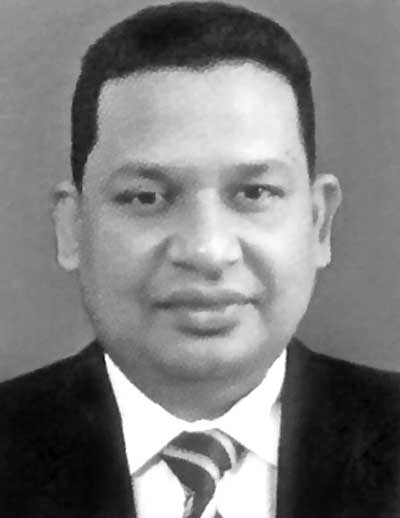
Majhar Mannan, Assistant Professor, B A F Shaheen College, Kurmitola, Dhaka





