Bangladesh has emerged as a role model for development on the global stage. The eradication of poverty in Bangladesh has seen significant success in the past decade through the concerted efforts of both government and non-government organizations, as well as various social initiatives. Key strategies for poverty alleviation have included the expansion of social safety nets, economic incentives, encouragement of small savings, effective disaster risk reduction programs, and transforming unemployed groups through training into skilled labour to provide employment opportunities. Bangladesh's success in alleviating poverty through these applications has caught the attention of experts worldwide.
The poverty rate is relatively high in the Rangpur division of the country. In this division, the poverty rate is 47.23%, followed by Mymensingh at 32.77% and Rajshahi at 28.93%. On the other hand, the lowest concentration of impoverished people can be found in Gulshan, an affluent area in Dhaka, with only 0.4%. The highest concentration of poverty is in Char Rajibpur upazila in Kurigram district at 79.8%. The Sustainable Development Goals (SDGs) set by the United Nations play a significant role in guiding the government's efforts. These SDGs focus on internationalism, inclusive development, and technological advancements, all with a strong emphasis on addressing the most impoverished and marginalized segments of society.
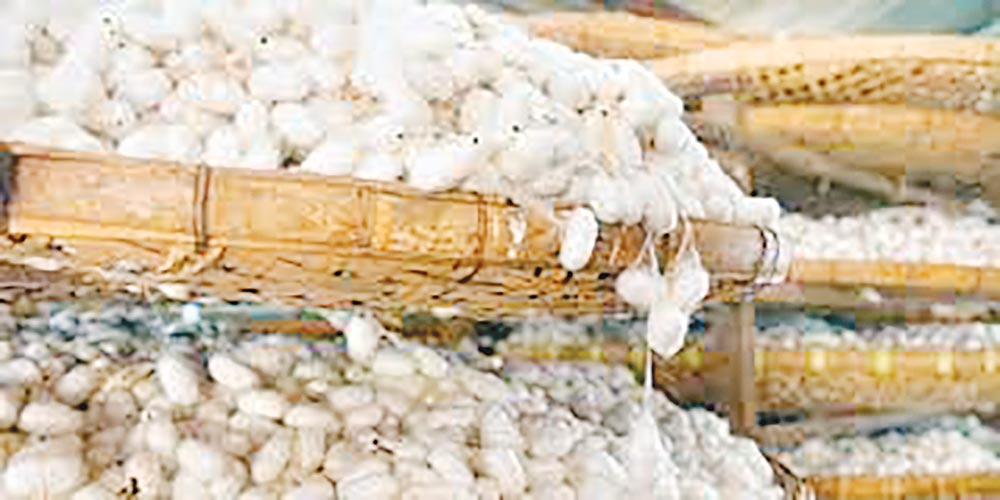
The government is actively following the "whole society" approach in practical implementation. Various steps have been taken to improve the living standards of the underprivileged population in northern Bangladesh. One such step is the cultivation of silk and the necessary measures for its development. Silk cultivation holds a unique characteristic in that it can transfer wealth from the rich to the poor. Silk cultivation is a natural process and can be carried out as a cottage industry. This work can be done alongside other household tasks, eliminating the need for additional manpower. This allows family members to utilize their unused labour and earn extra income. Women in the family are directly involved in the silk production process, which not only contributes to the family income but also makes decision-making processes straightforward. In this way, silk cultivation not only generates income but also empowers women. Approximately 85% of silk cultivators in Bangladesh are women. In small households, silk cultivation does not require extra land, time, or effort. It is an environmentally friendly and labour-intensive task.
According to the Bangladesh Bureau of Statistics, as of 2022, the total population of the Rajshahi Division in Bangladesh is 23,053,119 people. Among them, more than 15 million people reside in rural areas. In this division, there are over 2.44 million people belonging to the marginalized population, with a significant portion living below the poverty line. A substantial number of these individuals are struggling to make ends meet in extreme poverty.
The government, both through governmental and non-governmental programs, has been actively working to provide social support to these underprivileged individuals. They are implementing various initiatives such as free food distribution, food-for-work programs, cash relief, fair price cards, shelter, housing assistance, homecoming assistance, allowances for the elderly, orphan support, stipends for the disabled, support for destitute women, widows, and separated spouses, among other schemes.
In these areas, the government is also providing various forms of vocational training to empower the economically disadvantaged population. They are giving out necessary funds without collateral to facilitate resettlement through different programs.
In the Rajshahi region, silk production, particularly from mulberry silkworms, is most prevalent. However, in recent years, silk production in the Rangpur region has been steadily increasing. This area, especially in Gaibandha, Kurigram, Nilphamari, and parts of Rangpur district, has seen an expansion in silk farming. In this region, many women, often with minimal training, have ventured into sericulture, either by learning from nearby experienced women or seeking guidance, ultimately initiating silk farming at their own homes. As a result, new areas for silk cultivation have emerged in the Rangpur region.
It's worth noting that Bangladesh's total silk production is significantly lower than global demand, with around 35-40 metric tons produced annually while over 400 metric tons are needed to meet local demand. The deficit is covered by importing raw silk.
Silk farming mainly focuses on mulberry silkworms. These silkworms solely feed on mulberry leaves. Mulberry plants have a life cycle of 20-25 years after a one-time planting, requiring minimal maintenance. They are harvested 3-4 times a year, and occasional pruning and watering may be necessary. The associated costs are relatively low compared to other crops. Suitable land that is not prone to flooding is essential for successful cultivation.
Bangladesh Silk Development Board and the Bangladesh Sericulture Research and Training Institute (BSRTI) supply mulberry saplings and disease-free silkworm eggs free of cost to sericulture farmers. They provide essential training in mulberry cultivation, sericulture, and reeling. In addition to that, they assist in constructing rearing houses for the silkworms (known as "Cocoon Houses") and provide resources for necessary equipment like reeling machines, trays, and spinning wheels.
Silk farming enables underprivileged families to earn an average of around 16,000 Bangladeshi Taka annually. However, not all families reach this level of income. Yet, it's essential to recognize that silk farming alone cannot eradicate poverty. Nevertheless, it does have the potential to contribute to the basic needs of people living below the poverty line.
Silk farming empowers people who were once marginalized economically and socially to become self-sufficient. When these individuals can actively engage in their endeavours and make informed decisions, they gain self-confidence. This newfound capacity enables them to make well-informed decisions. Their involvement in sericulture ultimately helps reduce economic disparities. Among those most benefited are economically disadvantaged women, especially in the remote regions, who are becoming more aware and engaged in improving their socio-economic situations. Their participation in various economic and social activities marks the positive signs of women's development in these regions.
The writer is a Student, University of Chittagong





