



| HEADLINE |

|
Sustainable solutions must for urban waste management
Published : Wednesday, 8 November, 2023 at 12:00 AM
Imran Hossain


 In the rapidly urbanizing areas of the twenty-first century, the effective management of waste has emerged as a significant concern. The increase in populations in urban areas has not only led to enhanced economic growth and social interactions but has also brought concerning challenges in terms of waste generation and disposal. Dealing with waste management is a critical challenge, particularly for developing and underdeveloped nations. Because industrialized nations produce more waste than developing nations do, the problem is more severe there. Due to their high rates of waste generation, developing nations have numerous difficulties with appropriate waste management. The Middle East and North Africa produce only around 129 megatons of waste annually, compared to the 468 megatons produced annually by East Asia and the Pacific region.
 Bangladesh is a developing country in South Asia that generates 334 megatons of waste annually. Bangladesh ranks third among the countries for the production of waste. Bangladesh generates approximately 0.41 kilograms of waste per person every day. Here, poor waste management practices, including expensive disposal, irregular waste collection, insufficient landfills, and a lack of efficient waste management policies, are leading to a number of issues. Nevertheless, waste management is a key concern due to the considerable costs involved and the limited emphasis on waste disposal practices.
The problem is exacerbated by the rise in population growth and urbanization, resulting in considerable waste generation that demands larger disposal areas. The urban population in Bangladesh is growing rapidly, particularly in major cities like Dhaka, Rajshahi, Barisal, Khulna, Sylhet, and Gazipur, etc. Approximately 13% of the total population and a substantial 55-60% of the urban population reside in these six major cities. The United Nations estimates that by 2050, two-thirds of the world's population will live in urban areas. This exponential urban growth has resulted in a corresponding rise in waste generation. Consequently, the predictable per-person waste production is around 0.5 kg/day, of which a small amount of 0.2 kg/day reaches designated disposal sites, leading to significant environmental challenges attributed to inadequate management.
The effects on public health, environmental sustainability, and urban growth are concerning when solid waste is frequently dumped in undeveloped disposal facilities without adequate consideration. Moreover, the cities are impacted by the absence of planned waste disposal networks, leading to haphazard disposal practices by households, often involving drains as unplanned waste containers. The consequence of such disregard for proper waste management manifests in the unsatisfactory distribution of drainage patterns, resulting in inadequate flow of solid as well as liquid waste, thereby engendering negative environmental consequences.
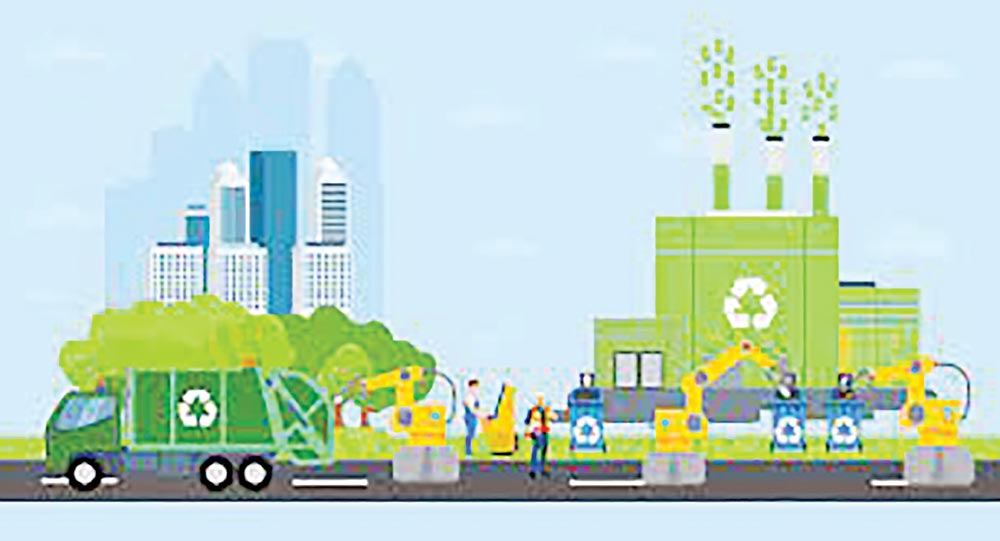
A recent comparative study, funded by BANBEIS of the Ministry of Education under the GARE program, delves into waste management practices in two rapidly urbanizing cities, Rajshahi and Gazipur, and uncovers noteworthy disparities that shed light on the complex journey towards a more sustainable future. The study aimed to investigate the waste disposal methods, liquid waste flow patterns, final waste disposal techniques, frequency of waste collection, and the public's perception of local government initiatives in Rajshahi and Gazipur cities. The results of this comprehensive investigation have revealed crucial insights into the challenges and opportunities faced by these two urban cities.
The research reveals a significant contrast in waste disposal practices. In Rajshahi, a structured approach prevails, with a substantial majority (55.7%) of households paying attention to specified waste disposal places. On the other hand, in Gazipur, a remarkable 78.1% of households rely on the informal method of handing waste to community workers. This contradiction underscores the necessity for specific waste collection strategies that account for the unique dynamics of each city.
The research further uncovers surprising differences in the management of liquid waste. A considerable majority of Rajshahi households (85.4%) favor drainage systems for liquid waste disposal. Conversely, Gazipur demonstrates a higher reliance on sewerage lines (35.9%), highlighting the complex interplay between infrastructure development and waste management strategies.
The study delves into the final dumping place of waste, revealing differing tendencies. Rajshahi exhibits a preference for safety tanks (89.1%) for waste disposal, ensuring a contained approach. In contrast, Gazipur indicates a tendency for waste to find its way into drains (33.9%), reflecting the need for enhanced disposal infrastructure.
In this aspect, waste management requires active local government participation because it is the foundation of urban governance. Local governments are expected to play a significant role in the creation and execution of waste management policies and procedures due to their proximity to the citizens under their jurisdiction. The safety, health, and sanitation of their respective jurisdictions are directly impacted by their policies and actions.
Ultimately, this comparative study is a wake-up call, emphasizing the urgency of embracing sustainable waste management practices. The findings underscore the need for context-specific strategies that embrace sustainable waste management principles and foster community engagement. The challenges are undeniable, but so are the opportunities for transformative change. Rajshahi and Gazipur stand as shining examples of insight, illuminating the path toward cleaner, more resilient, and more sustainable cities. In their experiences, other cities can find inspiration, guidance, and the unwavering belief that a greener future is not just a dream but a tangible reality waiting to be shaped.
The writer is a columnist and a researcher and also worked as a researcher with IFES and UK-AID.
Loading...
Loading...
Also read



Editor : Iqbal Sobhan Chowdhury
Published by the Editor on behalf of the Observer Ltd. from Globe Printers, 24/A, New Eskaton Road, Ramna, Dhaka.
Editorial, News and Commercial Offices : Aziz Bhaban (2nd floor), 93, Motijheel C/A, Dhaka-1000.
Phone: PABX- 41053001-06; Advertisement: 41053012; 01793317829, 01550707291, E-mail: [email protected], [email protected] Online: email: [email protected] 41053014; 01550707297 Advertisement: 01550707296
Published by the Editor on behalf of the Observer Ltd. from Globe Printers, 24/A, New Eskaton Road, Ramna, Dhaka.
Editorial, News and Commercial Offices : Aziz Bhaban (2nd floor), 93, Motijheel C/A, Dhaka-1000.
Phone: PABX- 41053001-06; Advertisement: 41053012; 01793317829, 01550707291, E-mail: [email protected], [email protected] Online: email: [email protected] 41053014; 01550707297 Advertisement: 01550707296


