



| HEADLINE |

|
10,000 more Rohingyas arrive in BD recent weeks: UNHCR
Published : Thursday, 1 December, 2016 at 12:00 AM
Mamunur Rashid


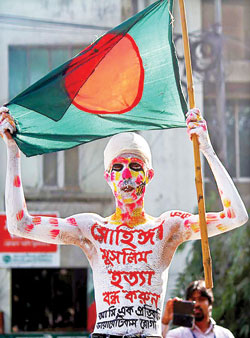 At least 30,000 more Rohingya Muslims from Myanmar have been displaced and thousands more have been affected. At least 10,000 Rohingyas have arrived in Bangladesh in recent weeks, fleeing violence in neighbouring Myanmar, the United Nations said on Wednesday.
 "Based on reports by various humanitarian agencies, we estimate that there could be 10,000 new arrivals in recent weeks," said Vivian Tan, a spokeswoman for the UN refugee agency in Bangkok. "The situation is fast changing and the actual number could be much higher." Many of Rohingya Muslims from Myanmar fled into China, Indonesia, Malaysia and India
The Myanmar army has carried out a bloody crackdown in the western state of Rakhine, forcing some 30,000 people to flee their homes. Bangladesh has stepped up patrols on the border to try to stop the Rohingyas from entering, but last week it said thousands had flooded into the country.
Those interviewed by journalists inside Bangladesh had horrifying stories of gang rape, torture and murder at the hands of Myanmar's security forces.
Analysis of satellite images by Human Rights Watch found hundreds of buildings in Rohingya villages have been razed.
Myanmar has denied allegations of abuse, saying the army is hunting "terrorists" behind raids on police posts last month. Foreign journalists and independent investigators have been banned from accessing the area to probe the claims.
Myanmar troops poured into the western state of Rakhine along the frontier with Bangladesh in response to coordinated attacks on three border posts on October 9 that killed nine police officers.
Rohingya residents and human rights groups accuse the military and border guard forces of raping Rohingya women, torching houses and killing civilians during operations there. The Myanmar government and military deny the accusations.
The violence is the most serious since hundreds were killed in communal clashes in Rakhine in 2012, and poses the biggest test yet for the eight-month-old administration of Nobel Peace Prize winner Aung San Suu Kyi.
Many people in mainly Buddhist Myanmar regard the country's 1.1 million Rohingyas as illegal immigrants from Bangladesh.
Up to 50,000 people are now estimated to have been displaced and thousands more have been affected by the recent fighting, the United Nations has said.
Amid the military clampdown, a humanitarian effort to provide food and medicines to more than 150,000 people has been suspended for more than 40 days in the area, which is populated mostly by Rohingyas.
Myanmar does not recognise the Rohingyas as its citizens and dubs them 'Bangali'. Rohingyas, who managed to land in Bangladesh, have taken shelter at refugee camps and other places in Cox's Bazar. Bangladesh has so far pushed back thousands of Rohingyas.
The latest violence is the most serious since the 2012 communal clashes. Many have criticised Nobel Peace Prize winner Aung San Suu Kyi for her silence although her party is in power.
Loading...
Loading...
Also read



Editor : Iqbal Sobhan Chowdhury
Published by the Editor on behalf of the Observer Ltd. from Globe Printers, 24/A, New Eskaton Road, Ramna, Dhaka.
Editorial, News and Commercial Offices : Aziz Bhaban (2nd floor), 93, Motijheel C/A, Dhaka-1000.
Phone: PABX- 41053001-06; Advertisement: 41053012; 01793317829, 01550707291, E-mail: [email protected], [email protected] Online: email: [email protected] 41053014; 01550707297 Advertisement: 01550707296
Published by the Editor on behalf of the Observer Ltd. from Globe Printers, 24/A, New Eskaton Road, Ramna, Dhaka.
Editorial, News and Commercial Offices : Aziz Bhaban (2nd floor), 93, Motijheel C/A, Dhaka-1000.
Phone: PABX- 41053001-06; Advertisement: 41053012; 01793317829, 01550707291, E-mail: [email protected], [email protected] Online: email: [email protected] 41053014; 01550707297 Advertisement: 01550707296


