



| HEADLINE |

|
Tax departments halt work nationwide, exempting essentials trade
Published : Sunday, 25 May, 2025 at 7:34 PM
Shakib Ahmed


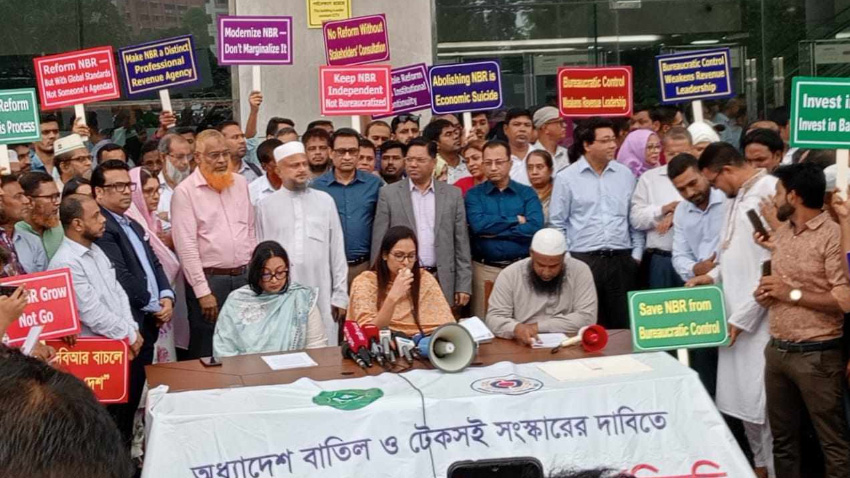
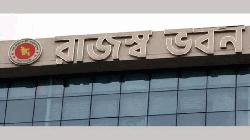
All operations at the country’s tax, customs, and VAT offices will come to a complete halt starting Monday, excluding services related to international passenger travel and the import and export of essential medicines and life-saving equipment.
The announcement was made on Sunday during a press conference held at the headquarters of the National Board of Revenue (NBR) by the NBR Reform Unity Council, a platform of officials pushing for comprehensive reform of the revenue system.
Present at the briefing were Joint Tax Commissioner Monalisa Shahreen Sushmita, Deputy Commissioner Abdul Kaiyum, and Deputy Tax Commissioner Raisun Nesa.
The Reform Unity Council stated that the full-scale work stoppage will continue until the government issues clear decisions regarding their four key demands, which they argue are crucial for restoring integrity and efficiency in the revenue system. They also extended their apologies to taxpayers and service seekers for the temporary disruption, describing it as a necessary sacrifice for long-term national interest.
The council's four-point charter of demands includes:
1. Immediate withdrawal of the recently issued revenue ordinance;
2. Immediate removal of the current Chairman of the NBR;
3. Public disclosure of the Revenue Reform Advisory Committee’s recommendations on the official website;
4. Inclusive review and implementation of a modern revenue reform plan, involving relevant stakeholders such as professional bodies, civil society, business organizations, and political representatives.
The council expressed concern that despite repeated requests, there has been no clear government position on these issues. As such, their previously announced strike will continue indefinitely.
Leaders of the NBR Reform Unity Council emphasized their long-standing demand to restructure the NBR into a strong, independent, and specialized revenue agency aligned with international best practices. They reiterated their support for separating revenue policy-making from administration and called for the establishment of a dedicated revenue policy institute. This institute, they argued, should leverage the expertise of tax, customs, and VAT officials and incorporate broad-based stakeholder input.
Criticizing the current ordinance, they noted that multiple sectors of civil society have expressed serious concerns over its inefficacy and long-term implications. They urged the government to reconsider the ordinance and consult experienced professionals for a more effective and participatory approach.
In a strongly worded statement, the council accused the NBR Chairman of actively obstructing the reform process from the outset. They alleged that he has consistently hindered communication between NBR officers and the government and failed to reflect their vision for a modern revenue structure.
Citing his previous tenure during the tenure of what they called a "fascist regime," they accused him of mismanagement in the banking sector and facilitating tax evasion by halting key audit operations post-July. They also blamed him for recent economic instability, following what they described as an unjustified and unplanned increase in VAT rates.
The council concluded by stating that the Chairman continues to block meaningful dialogue between the government and revenue officials, and that his removal is essential for progress in reform and public trust in the tax system.
The announcement was made on Sunday during a press conference held at the headquarters of the National Board of Revenue (NBR) by the NBR Reform Unity Council, a platform of officials pushing for comprehensive reform of the revenue system.
Present at the briefing were Joint Tax Commissioner Monalisa Shahreen Sushmita, Deputy Commissioner Abdul Kaiyum, and Deputy Tax Commissioner Raisun Nesa.
The Reform Unity Council stated that the full-scale work stoppage will continue until the government issues clear decisions regarding their four key demands, which they argue are crucial for restoring integrity and efficiency in the revenue system. They also extended their apologies to taxpayers and service seekers for the temporary disruption, describing it as a necessary sacrifice for long-term national interest.
The council's four-point charter of demands includes:
1. Immediate withdrawal of the recently issued revenue ordinance;
2. Immediate removal of the current Chairman of the NBR;
3. Public disclosure of the Revenue Reform Advisory Committee’s recommendations on the official website;
4. Inclusive review and implementation of a modern revenue reform plan, involving relevant stakeholders such as professional bodies, civil society, business organizations, and political representatives.
The council expressed concern that despite repeated requests, there has been no clear government position on these issues. As such, their previously announced strike will continue indefinitely.
Leaders of the NBR Reform Unity Council emphasized their long-standing demand to restructure the NBR into a strong, independent, and specialized revenue agency aligned with international best practices. They reiterated their support for separating revenue policy-making from administration and called for the establishment of a dedicated revenue policy institute. This institute, they argued, should leverage the expertise of tax, customs, and VAT officials and incorporate broad-based stakeholder input.
Criticizing the current ordinance, they noted that multiple sectors of civil society have expressed serious concerns over its inefficacy and long-term implications. They urged the government to reconsider the ordinance and consult experienced professionals for a more effective and participatory approach.
In a strongly worded statement, the council accused the NBR Chairman of actively obstructing the reform process from the outset. They alleged that he has consistently hindered communication between NBR officers and the government and failed to reflect their vision for a modern revenue structure.
Citing his previous tenure during the tenure of what they called a "fascist regime," they accused him of mismanagement in the banking sector and facilitating tax evasion by halting key audit operations post-July. They also blamed him for recent economic instability, following what they described as an unjustified and unplanned increase in VAT rates.
The council concluded by stating that the Chairman continues to block meaningful dialogue between the government and revenue officials, and that his removal is essential for progress in reform and public trust in the tax system.
Loading...
Loading...
Also read





Editor : Iqbal Sobhan Chowdhury
Published by the Editor on behalf of the Observer Ltd. from Globe Printers, 24/A, New Eskaton Road, Ramna, Dhaka.
Editorial, News and Commercial Offices : Aziz Bhaban (2nd floor), 93, Motijheel C/A, Dhaka-1000.
Phone: PABX- 41053001-06; Advertisement: 41053012; 01793317829, 01550707291, E-mail: [email protected], [email protected] Online: email: [email protected] 41053014; 01550707297 Advertisement: 01550707296
Published by the Editor on behalf of the Observer Ltd. from Globe Printers, 24/A, New Eskaton Road, Ramna, Dhaka.
Editorial, News and Commercial Offices : Aziz Bhaban (2nd floor), 93, Motijheel C/A, Dhaka-1000.
Phone: PABX- 41053001-06; Advertisement: 41053012; 01793317829, 01550707291, E-mail: [email protected], [email protected] Online: email: [email protected] 41053014; 01550707297 Advertisement: 01550707296


