A bizarre new species of prehistoric whale has been identified from a 25-million-year-old fossil found on an Australian beach, offering scientists fresh insight into the early evolution of the ocean's giants.
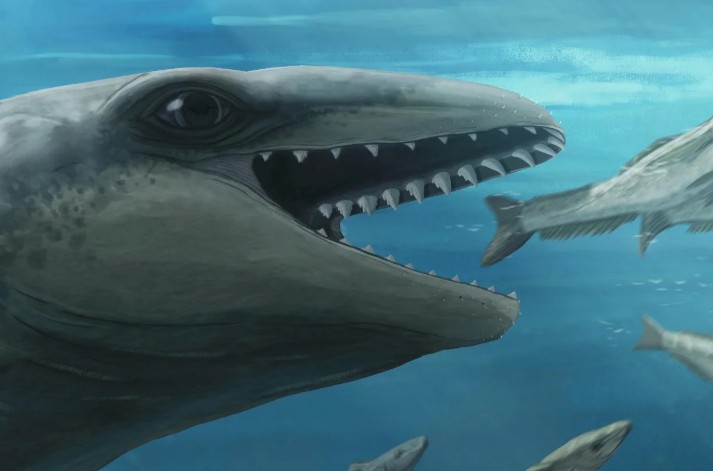
Named Janjucetus dullardi, the creature is a far cry from the majestic whales we know today. Described by researchers as “deceptively cute” yet fearsome, it had bulging tennis ball-sized eyes, sharp teeth, and a shark-like snout — features that suggest it was built for hunting. Unlike modern whales, the juvenile fossil was small enough to fit in a single bed.
The fossil was officially named this week in the Zoological Journal of the Linnean Society by a team led by Erich Fitzgerald, senior curator of vertebrate paleontology at Museums Victoria Research Institute.
“It might have looked like a mash-up between a whale, a seal and a Pokémon,” said Fitzgerald, “but they were very much their own thing.”
A rare branch of the whale family tree
The discovery was made in 2019 at Jan Juc Beach in Victoria, a site already known for producing some of the most unusual ancient whale fossils. This is only the fourth known species of mammalodontids—a now-extinct group of early whales that lived during the Oligocene Epoch, about 34 to 23 million years ago.
These early whales, measuring around 3 meters in length, likely had small, vestigial limbs and bore little resemblance to today’s baleen giants like humpbacks or blue whales. While modern whales filter-feed, Janjucetus was equipped with jaws for tearing and chewing, hinting at its predatory nature.
Although the fossil includes only a partial skull, its quality is remarkable and helped scientists confirm it as a new species — a rare occurrence in cetacean paleontology, due to how seldom whale remains survive intact.
A fossil hunter’s dream come true
The fossil was discovered by amateur fossil enthusiast Ross Dullard, a school principal and longtime beachcomber who spotted part of the skull sticking out of a cliff. A single dislodged tooth was enough to spark suspicion of a major find.
Dullard, now the fossil's namesake, sent photos to Museums Victoria. His dedication — and six years of hopeful waiting — paid off this week with scientific validation.
“It’s literally been the greatest 24 hours of my life,” Dullard said, describing the moment he walked into school to applause and high fives.
To celebrate, he plans to throw a fossil-themed party featuring whale-shaped treats and cetacean games.
Unlocking the past to understand the future
Paleontologists say discoveries like Janjucetus dullardi help fill in key evolutionary gaps. As one of the few well-preserved examples of early whales, it offers clues about how ancient species hunted, moved, and adapted to changing environments — information that could inform studies on how modern marine life might respond to today’s climate challenges.
“It’s only the chosen few, the vast minority of all whales that ever lived, that get preserved as fossils,” Fitzgerald said.
And thanks to a sharp-eyed fossil hunter and years of research, one of those rare few now has a name — and a place in the strange and wild story of whale evolution.
SR