



| HEADLINE |

|
Bright potential for our Halal food exports
Published : Wednesday, 10 December, 2025 at 12:00 AM
Sadia Afrin


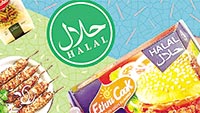 Halal food is no longer only a matter of religious rules. It has become a symbol of global safe food standards. Its core strength lies in purity, health safety, organic production, and improved sanitation. In the halal slaughtering method, all blood is fully drained from the animal's body. As a result, the risk of bacterial growth decreases. The meat stays fresh for a longer time and its taste also improves. Since alcohol, pork-based items, and harmful ingredients are prohibited, halal food has gained popularity worldwide as a "trustworthy food." Not only Muslims but many non-Muslim countries are also consuming halal food for health reasons.
According to international research, the global market value of halal food is rising dramatically: in 2018 the market was valued at $1.6 trillion, in 2024 it reached $2.93 trillion, in 2025 it will be $3.30 trillion, and by 2034 it will grow to $9.45 trillion, with a growth rate of 12.45%. Indonesia, with a population of about 275 million-87% of whom are Muslim-may become one of the biggest buyers and consumers in this market. In addition, large Muslim-populated countries in the Middle East such as Turkey, Iraq, Qatar, Kuwait, Saudi Arabia, and the UAE; European countries like France (with more than 5.57 million Muslims) and the UK; and North American countries such as Canada (1.7 million Muslims) and the United States (6 million Muslims by 2030) are key areas for market expansion.
But unfortunately, Bangladesh has not yet gained the expected position in this vast market. As a Muslim-majority country, Bangladesh should naturally hold a strong competitive position in halal food exports. Halal standards are part of our food culture. We also have an advantage in pricing because production costs are relatively low. In addition, Bangladeshi expatriates have already created ready markets abroad. Our tea, spices, fish, fruits, and vegetables have long been in international demand
The biggest barrier for Bangladesh in competing in the global halal market is the lack of internationally recognized halal certification. At present, BSTI or the Islamic Foundation provides halal certificates, but many countries-especially major markets in the Middle East and Southeast Asia-do not accept these certificates. As a result, problems arise in exporting local products. Therefore, Bangladesh must establish a unified, internationally accepted halal certification board and secure recognition from JAKIM, SFDA, and the GCC. At the same time, the credibility of certification must be improved through modern technology and transparent processes.
Bangladesh's agricultural products, spices, fruits, and vegetables have already built a good position in global markets. Now, instead of exporting only raw goods, we can significantly increase export earnings by producing processed and high value-added halal food items. These include processed chicken and beef, frozen foods, snacks, dairy products, noodles, biscuits, juices, and more. These types of products have high global demand-and high profit margins.
At the same time, it is very important to establish a Halal Economic Zone to attract foreign investors and build modern production facilities. It will act as a full-fledged production and export hub centered on the halal industry. Human resource development in the halal sector is also crucial. Farmers, workers, entrepreneurs, and government officials must receive regular and internationally standard training on halal production methods, quality control, and supply chain management. Investment must also increase in research and innovation to maintain global standards and produce new, quality products. This will help expand the industry and reduce unemployment by creating new jobs.
In addition, strategic partnerships must be built with targeted markets. There is high demand for halal products in the Middle East, Malaysia, Indonesia, Brunei, the UK, France, Germany, Japan, and Korea. Bangladesh must urgently sign MoUs with these countries on free trade, technology cooperation, and mutual recognition of halal certification. Alongside this, the branding of Bangladeshi halal products must be strengthened through international trade fairs and diplomatic initiatives.
Finally, policy support, incentives, low-interest loans, and the development of modern laboratories and logistics infrastructure will make the export process easier for entrepreneurs. Many entrepreneurs today fall behind due to international certification requirements or complex export procedures-these obstacles must be removed quickly.
The Bangladesh government has already set a goal to make the country a leading halal hub by 2030. If the above measures are implemented with commitment, Bangladesh will become one of the world's major halal food exporters and an important part of the global economy.
The writer is a student, Islamic University
Loading...
Loading...
Also read



Editor : Iqbal Sobhan Chowdhury
Published by the Editor on behalf of the Observer Ltd. from Globe Printers, 24/A, New Eskaton Road, Ramna, Dhaka.
Editorial, News and Commercial Offices : Aziz Bhaban (2nd floor), 93, Motijheel C/A, Dhaka-1000.
Phone: PABX- 41053001-06; Advertisement: 41053012; 01793317829, 01550707291, E-mail: [email protected], [email protected] Online: email: [email protected] 41053014; 01550707297 Advertisement: 01550707296
Published by the Editor on behalf of the Observer Ltd. from Globe Printers, 24/A, New Eskaton Road, Ramna, Dhaka.
Editorial, News and Commercial Offices : Aziz Bhaban (2nd floor), 93, Motijheel C/A, Dhaka-1000.
Phone: PABX- 41053001-06; Advertisement: 41053012; 01793317829, 01550707291, E-mail: [email protected], [email protected] Online: email: [email protected] 41053014; 01550707297 Advertisement: 01550707296


