After the failure of Hanoi summit in 2019, the relations between the two Koreas have been deteriorated. In December 2023, the North Korean leader Kim Jong Undeclared an end to inter-Korean dialogue, and labelled the South Korea as the 'main enemy.' And the tensions have since then been increased between the two countries. While the South Korean President LeeJae-myung declared his willingness to improve relations between the two countries, it is expected that North Korea will not continue with its 'two hostile states' policy escalating tensions and spoiling the peace in the Korean peninsula. How could the two Koreas resume their friendly relations to benefit the people of North Korea who have been the victims of human rights abuses for a long time, and are in dire need of help and assistance?
A group of human rights organisations recently welcomed the decision of South Korea co-sponsoring a resolution of UN Human Rights Council on North Korea. Let me share a joint statement of that group; it said that South Korean President Lee's decision to co-sponsor the United Nations Human Rights Council resolution on North Korea reaffirms South Korea's longstanding commitment to freedom, democracy, and the rule of law.
We know that the resolution was adopted by consensus on March 30, 2026, at the council's 61st session; and it maintains international scrutiny of grave abuses in the North Korea. We are also aware that South Korea also co-sponsored another resolution of General Assembly on North Korea in 2025.
If we analyse the South Korean current policy, we find that the Lee administration rejected the previous government's conflictual inter-Korean policy, and took measures that served to reduce tensions; for example, the suspension of propaganda broadcasts on the border and the cessation of the sending of anti-regime leaflets to the North Korea were announced in the first weeks of the Lee administration. The South Korean government has also been offering the North the resumption of humanitarian aid, economic and tourist cooperation. Surely, these offerings and cooperative measures and initiatives would improve the lives of people in North Korea guaranteeing the right to make a living and achieve economic prosperity as the foundation of true human rights.
I would like to briefly share the humanitarian assistance that was provided earlier by the South to the North. Let me cite from an article (South Korea's humanitarian aid to North Korea hits zero for 1st time in nearly 30 years, Aamir Latif, 05 March 2025) "According to Yonhap News, it marks the first time that such aid has plummeted to zero since South Korea started providing humanitarian assistance in 1995, following severe food shortages in North Korea caused by massive rains and flooding. Seoul dispatched 150,000 tons of rice to Pyongyang at the time. South Korea's humanitarian aid to North Korea, which peaked at 439.7 billion won ($302 million) in 2007, began declining after North Korea's alleged nuclear weapons and missile development gained traction. The last such aid to North Korea involved a nutrition support program for North Korean children, which was carried out in 2023 with a budget of 900 million won ($618,091), including 700 million won ($480,756) in private funding." However, North Korea has been increasing its reluctance to accept any assistance from South Korea.
It is true that any problems can be resolved through dialogues and talks. South Korea already made proposal for talks. According to an article (South Korea's ruling party urges North Korea to accept offer for military talks, Anadolu staff, 20 November 2025) "South Korea's ruling party urged North Korea on Thursday to accept its offer for military talks, local media reported. Kim Byung-kee, floor leader of the ruling Democratic Party (DP), said North Korea should immediately respond to their call, according to Yonhap News Agency. "As South Korea's first official proposal for talks with the North since President Lee took office, it will mark an important opportunity to resume inter-Korean dialogue," Kim said during a policy coordination meeting at the National Assembly. His statement came after Seoul proposed holding military talks with Pyongyang to discuss how to clarify the Military Demarcation Line (MDL) in a bid to prevent possible clashes near the inter-Korean border. Regarding criticisms from the North over the recent US-South Korea summit, Kim said if Pyongyang has "something to say, it can fully do so when inter-Korean talks are held." If North Korea accepts South Korea's offer for military talks, it would mark the first inter-Korean military dialogue since general-level military talks in 2018. Since 2000, the two Koreas have convened two ministerial-level and around 40 working-level military talks."
The reality is that people of North Korea have been facing severe food shortages, malnutrition, and economic dysfunction driven by various reasons. It is expected that North Korea holds policies that improve the lives and help meet the essential needs and protect the rights and dignity of all people in its territory. One can argue that South Korea can help through humanitarian food/medical aid via international organizations (e.g., UNICEF, WFP) or NGOs, supporting disaster relief, and offering technical economic development training. Unfortunately, such aid and activities are now being constrained by lack of political will and inter Korean policy undertaken by North Korea. For the sake of the betterment of people of the country, it is expected that the North Korea moves from its reluctance to accept the humanitarian assistance that is being offered by South Korea. Peace-loving people do think that such expected behaviour of North Korea is vital for peaceful co-existence of the two states.
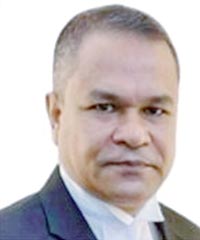
The writer is a barrister-at-law, human rights activist and an advocate at the Supreme Court of Bangladesh





