



| HEADLINE |

|
Manpower crisis in Rajshahi special tribunal
Published : Wednesday, 23 May, 2018 at 10:25 PM
Rafiqul Hasan Firoz


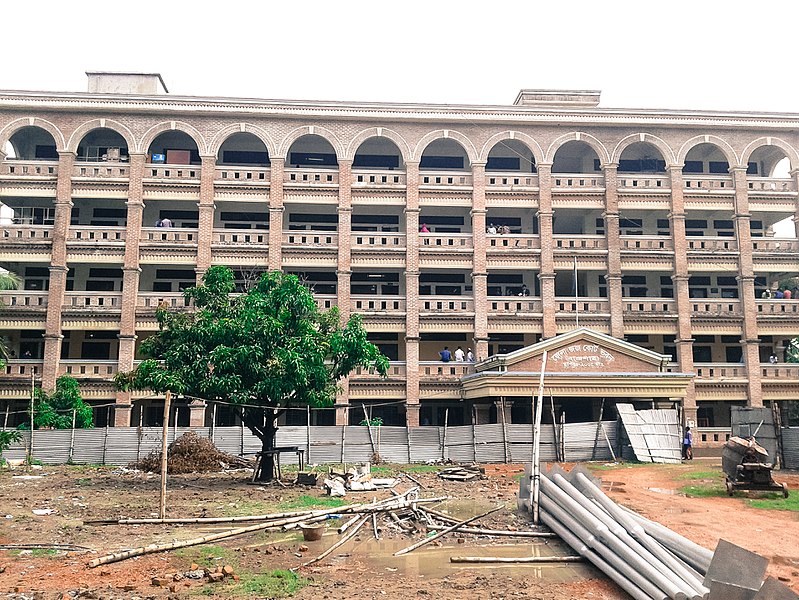 Rajshahi Women and Children Repression Prevention Tribunal has passed two decades but still it’s facing manpower crisis.
 The activities of this court are being conducted with less than half of required manpower. Even it has no record room. In order to get the copies of cases, it depends on the Divisional Special Judge's Faculty. As a result, concerned people are to face delay in getting duplicates.
Sources said, the Women and Children's Repression Prevention Court-1 was established in 1996. By the year 2000, the number of cases pending in this court stood at around 3,000.
In 2003, considering the excessive litigation and to dispose the huge cases, the Court of Women and Children Repression Prevention Trimunal-2 was set up.
At present, there are two women and children courts running in Rajshahi. The Court No-2 has crossed nearly one and a half decades, but it has not yet appointed any own staff. The activities of this court are going on by District Judge's staff. Except a staff writer and a driver, the all staff of the court are of the District Judge’s office.
The sources said both the courts are running with less staffs than required. There is no proper arrangement for keeping a record of the cases disposed in this court.
The concerned ministry has already been informed about the need of a record room for the preservation of records. Records are kept in different places within the court. Not just records, there is no room for preserving the important files and evidences of the cases.
There are more problems with the Court-2. There is no room for Public Prosecutor (PP) in this court resulting in many problems with documents, said Ismat Ara, PP of this court.
The number of cases pending with this court is about 1 thousand. Of these, the number of women and children cases is about 8 hundred and the civil and criminal cases are two hundred.
On the other hand, the number of cases pending with the Court-1 is one thousand, said Special Public Prosecutor Muzaffar Hossain. Of them, women and children's cases are 6 hundred and the civil and criminal appeal is four hundred.
AIMD
Loading...
Loading...



Editor : Iqbal Sobhan Chowdhury
Published by the Editor on behalf of the Observer Ltd. from Globe Printers, 24/A, New Eskaton Road, Ramna, Dhaka.
Editorial, News and Commercial Offices : Aziz Bhaban (2nd floor), 93, Motijheel C/A, Dhaka-1000.
Phone: PABX- 41053001-06; Advertisement: 41053012; 01793317829, 01550707291, E-mail: [email protected], [email protected] Online: email: [email protected] 41053014; 01550707297 Advertisement: 01550707296
Published by the Editor on behalf of the Observer Ltd. from Globe Printers, 24/A, New Eskaton Road, Ramna, Dhaka.
Editorial, News and Commercial Offices : Aziz Bhaban (2nd floor), 93, Motijheel C/A, Dhaka-1000.
Phone: PABX- 41053001-06; Advertisement: 41053012; 01793317829, 01550707291, E-mail: [email protected], [email protected] Online: email: [email protected] 41053014; 01550707297 Advertisement: 01550707296


