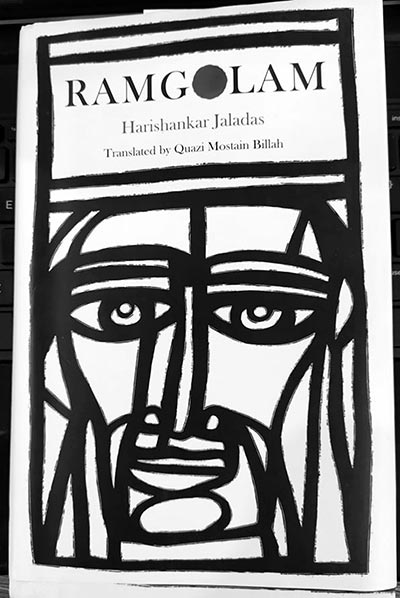
Ramgolam by Harishankar Jaladas is a milestone in subaltern studies. In Bengali literature this book claims a special place for it is the only book that is written solely on the life, sufferings, sexuality and deprivation of a particular low caste community namely the scavengers. The central character of the novel is Ramgolam whose name is a blend of two words from two mainstream religions. Ram refers to one of the ten avatars who Hindus adore and Golam in Islamic terminology refers to slave. When RamGolam starts growing he once has asked his grandfather about his weird name. His grandfather, in reply, lets him know he has been named so with a purpose. In society scavengers are not treated as human beings. Both Muslims and Hindus disregard them. Ramgolam's name has been done in a way so that no one can disregard him in future.
Scavengers were brought to Bangladesh from India. There are two types of methars living in Bangladesh, Telegu speaking and Hindi speaking. They are regarded as the vehicle to clear shits and piss of the bhadrolokhs. Although they toil hard to keep the city livable for the so called civilized people they are regarded as untouchable. Hindus believe if they touch any one from the sweepers' community they will be cast into the dreariest hell. In reply to Ramgolam's question Gurucharan says,'' We are a very unfortunate race. To the Hindus we are untouchable. We are an unholy race. Not just our touch, even if a Hindu or a Brahmin steps on our shadows, he becomes polluted. It is a heinous sin for them. They would be sent to Rourab, if after treading on our shadows they do not recite Gayatri mantra for one hundred thousand times and fast for whole day.' This kind of racial discrimination ruins their life. They are regarded as wretched and outcast.
Although the sweepers serve the civilized section of the nation they are deprived of basic needs. They are provided with only two-room shabby apartment where they can hardly live decently. Their dwelling condition is shabby and nasty. They have to live like jackals and dogs. They can't have the opportunity to lead a personal life because of the lack of rooms allotted to each of the family. Chaparani, mother of Ramgolam once asked god, 'It's alright that you have made us poor, but you didn't even allow us space enough for the husband and wife to sleep together!' This is their life. They are separated from their essential human nature. By being alienated they have to live like animals who only live for their immediate needs i.e. eating, drinking and sexuality. Moreover they are provided with no sanitation facilities. Early in the morning they have stand in Indian line for relieving.
The sweepers are also denied education. Their children are not allowed to sit with other children from either Hindu or Muslim community. Teachers often disregard them by saying low caste and that's why even they start schooling but can't continue. City corporation bor Shahib established a primary school for the sweepers' children. Even in this school they are treated as cast out. Teachers over there treated them as lower caste untouchables. It is seen that in one of the functions arranged in the sebok colony school the sweepers' children were not allowed to participate .The headmaster cast the sweepers' children out of the school area showing excuse that they were not well clad. Fighting against all the odds Ramgolam got his education. He is the only SSC passed person among all the four colonies of the scavengers. With his education all through he tried his best to bring emancipation for the deprived methars. He was elected as sarder or leader of the methar communities and he fought for them in all odds. He bargained with the city corporation boss by his wit and presence of mind. It is education that brought light in the deprived community. But Ramgolam fails to emancipate his caste because the scavengers are although very simple, but they can be easily bought. The City Corporation boss created fragility in the sweepers' community by using the mantra of religion. This mantra works like opium in the low caste.
The sweepers are not allowed to attend any other job other than sweeping and cleaning shits and piss. Both men and women earn in their family. The males earn and spend the money in drinking and boozing. After their earning is eaten out in drinking, they beat their wife for money. Fate followed them with less rewarding things. The Corporation boss decided to employ people from other communities in sweeping and cleaning activities. At this the sweepers became worried and they tried and protested against this disastrous decision but their efforts went in vain just because of the treachery of some of their treacherous mates from their community. Kartik and Ramgolam fought hard but failed. Here Kartik and Ramgolam are similar to Oberika and Okonkwo. They work hand in hand for saving the age-old profession of their forefathers. Both of them got tricked by the influential City Corporation boss and were convicted of murdering.
Kartik was given capital punishment, while Ramgolam was given fourteen years jail. After this the methars got distracted and in ones and twos people from other communities joined the city corporation job of cleaning and sweeping. Ramgolam's efforts in rescuing the sweepers went in vain. Here he is like Sisyphus who, despite his indomitable spirits never meets success. He is doomed to suffer, there is no way out from anxiety and despair; from nothingness and meaninglessness. But still he believes, one day his caste will break the restrictions imposed upon them and see light. He emerged as a superman for the low caste scavengers but in the end he fails. At times nihilism occurs in his mind but he overcomes by his strong will power and determination.
Reading Ramgolam in English translation is really a thrilling one. The translator has opened a new vista in Bangladeshi literature in English. Ramgolam is a story of lost hopes, dreams, frustration and loss of culture. The narrator depicts the social upbringing, evolution and how, through ages, the methars have been deprived of their human rights and have been suppressed by the so called civilized, educated section of the society. This book opens up an opportunity for the new generation in knowing the struggles and sufferings of the scavengers' community. They quarrel often and mend by themselves, they fall in love love, they smile, they cry. Existential crises always pervade their life. Disease, starvation and death are their constant companions.
But life never stops for them.
The reviewer is a lecturer, Premier University