



| HEADLINE |

|
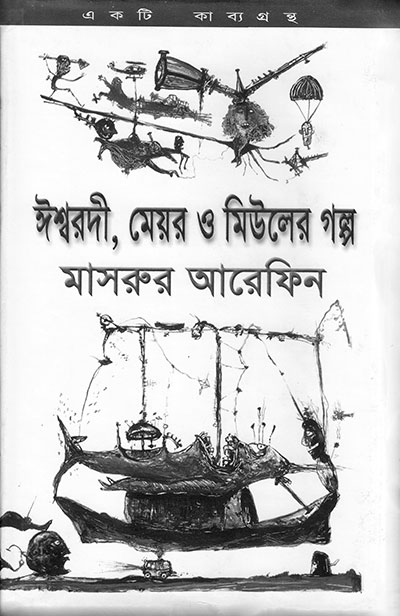
The Story of Iswardi, the Mayor and the Mules
Mashrur Arefin
Published : Saturday, 21 December, 2019 at 12:00 AM
Reviewed by Ashraful Kabir


�I saw Iswardi from a distance while getting on a train. Still there, people ride on horseback, and horse-keepers carry water filling the leather bags. I saw cloth-drawn-rope in the hall of Iswardi; there are tunic-jerkin, shirt and petticoat - because it is heard that many buildings are there, and the foundation of Iswardi is very firm and solid.
It is also true that there are many people beside horse-keepers in Iswardi; they are educated, more knowledgeable than the masons, because they along with their ancestors have enough titles and surnames. Those wise persons have composed parabola in our hearts; therefore, it is difficult to detect the longitude of Iswardi from the train.
That's all we know, because of our travel-talent, Iswardi's attitude is quite transient, from moment to moment, as the mercury rises up and down in the morning and evening. And whatever happens there the burden of recording it, the honorable mayor has given me� is a matter of his lineage.'
The book opens with an individual expression given by the speaker wherein we find the speaker has been awarded a great responsibility by the honorable mayor of Iswardi to record everything, every detail happening there. Because Iswardi is a great place for monarchy - a great place to continue the anarchy. Whose monarchy is this? Yes, it's the monarchy of the mules! It's the monarchy of the mayor, colonel, rhinoceros, DIG and Mr. Sofa. Iswardi has a bright future and under this brightness, Iswardi is a world of possibility, a world of everything! Everything is possible there in the reign of honorable mayor.
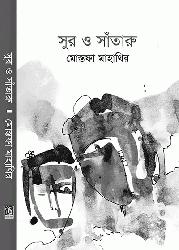
In the first chapter, the speaker like poet has presented us some allegorical protagonists who play potential roles throughout this whole satirical poem - substantially under the leadership of the mayor. The speaker approaches us vividly presenting some metaphorical-images of Iswardi - the locale, and those images draw our attentions. We shall dissect those images afterwards from the long narrative prose-poem 'The Story of Iswardi, the Mayor and the Mules', written by one of the most prominent Bangladeshi poets, novelists, essayists, and translators Mashrur Arefin. The poetry 'The Story of Iswardi, the Mayor and the Mules' comprises twelve chapters which are also fraught with allegorical as well as satirical descriptions indeed.
In the first chapter, we have the vivid portrayal of another 'Iswardi', the daughter of the chief of Mass Education and Literacy Project, in which the poet has flashed back to his childhood: 'Kheyal koresi, mone poriyesi Iswardir kotha, sei sob remembrance of the things things past amra jokhon prothom shona hoy, sei shoishobe amra tar - Iswardir - maturity ar kotha shuni, puberty ar dheu ter pai�' The poet has juxtaposed this two-in-one name through the single word 'Iswardi' just to depict the overall scenery of epitomizing differences. The poet closes this chapter by submitting a petition to the mayor while making some innuendoes to the mayor.
To our utter surprise, we have the description of municipal activities in the second chapter that has been mocked ridiculously: 'Pakhi mane jajabor pakhi, shikari pakhira ase beshi, ase dur theke. Eisob chara, nuton Payra o Kakatua chara, Bolaka, Jhuton ar kakpakhi chara joto pakhi - Cranker Huiter, Titiv, Shokuni, Vorot, Dhonesh ar Turkish Ghughu - shob ase mukto bayur lobhe, ase municipalitir nijosho scholarship a�Mayor ar bongsho porompora shohorer name diyesen ai donation, ai faculty scholarship.' The poet does not find any hope except encountering an emptiness of passing days and nights in Iswardi. The poet here also reflects on the pervasive arbitrariness which differentiates mayor like ruler's actual identity.
In the third chapter, the poet is seen becoming very much obsessed and sympathetic to the horrible experience of August and ultimately criticises the mayor, ambassador and their wives respectively because of their motionlessness not to perform their jobs in due time: 'ta sotti, kisu to ter chilo botei, but possibly what could I�ki korar silo? - Military Thermodynamics�tar sutroi ai: tidal power a chole regiment gulu. Amar korar ache kisu? Nai.' Here we, the readers, notice the flattery of the chucklehead, the mayor. The first line of the fourth chapter raises a moment: 'Iswardir mule gulu kotha theke elo, se bishoye bole neya valo' and after going through a few of the following lines, we have our answer: 'Samarkhand theke. Reshomer rasta dhore, caravan a chore, Toimur Long ar sathe, Taklamakan ar Hun der slaughter house pashe rekhe rekhe�.'
The fifth chapter uncovers the hidden lust of the mayor to Iswardi, daughter of Mr. Sofa: 'Mayorer mone pore Iswardi name Sofar konyar kotha - Meyetar voyonkar dabrano rup (hay! Kibhabe kibhabe she chirokal durei roye jay ar tini dukhi o kamuk-e roye jan.)' In the sixth chapter we find the mayor is on the way to collect votes for the ensuing election. This is the common scenery that adumbrates and portrays the nature and characteristics of a politician from the past, present and most probably from the future. The customary vote collection charmingly leads us to the seventh chapter: 'Ajker meeting a jara uposthit nandikor o kobi, sokolei janen samne votavuti, Kartikyer prothom dibose. Aro janen nishoi, ami vote pete valobasi, ar valobasi tar badhahin kroy o bikroy.' Isn't it very much relevant with the prevalent environment around us? We find a little bit sensual dialogues in the eighth chapter and we can epitomise the ninth chapter through the quotation: 'Manuser itihas niye somvob onek purbavas deya, bishleshon kore kore, gonokthakur o Bentham ar pokriay. Bishesoto jara khomotay, tader vobishot niye bola dher soja, tomader agamikal kemon jab eta bolar cheye.'
We can quote from 'A Tale of Two Cities by Charles Dickens - It was the best of times, it was the worst of times, it was the age of wisdom, it was the age of foolishness, it was the epoch of belief, it was the epoch of incredulity, it was the season of light, it was the season of darkness, it was the spring of hope, it was the winter of despair.' Here we feel the same thrill in Iswardi through the behavioral aspects of its protagonists. All these chapters are filled with highly metaphorical as well as satirical descriptions. We just perceive the poet's craftsmanship and satirical explosion that has been fully divulged line-by-line throughout the whole poem.
The usage of humour, irony, exaggeration, ridicule to expose and criticizing people's stupidity, vices and other topical issues have made this long poem very much relevant and fruitful particularly in context with our existing surroundings. After reading this whole poetry, one may come to a conclusion that, this long poem is nothing but an individual attack to somebody else but it is surely not! The poet has just only ridiculed the dishonest incumbents, their associates and mule-like-disciples from Iswardi in a very caustic way.
The texture of the poem is different and distinct though the readers may be a little bit disturbed by facing too many English words from the jacket page to the end. The punch line of the poem is that Mashrur Arefin has discovered the meaninglessness and flippancy of everyday life in Iswardi ultimately identifying him as a talkative in the last line of the page seventy eight: '�Ar dekho ami, golper kothok (bachal ek lok).' But we, the readers, understand that a dexterous poet like Mashrur Arefin can never be a talkative rather the spring of ultimate hope. Oh, yes, to add here, Iswardi is just only an imaginary land that is just needed to be expanded. So, let's start reading the book and get attached with the journey towards Iswardi.
The book has been dedicated to 'Farhad Mazhar' and 'Ahmed Sofa' and published by 'Da Prokashana' on February, 2001 and the price of the book is BDT. 100.00 only.
The reviewer is a poet, essayist, literary critic & a banker
Loading...
Loading...



Editor : Iqbal Sobhan Chowdhury
Published by the Editor on behalf of the Observer Ltd. from Globe Printers, 24/A, New Eskaton Road, Ramna, Dhaka.
Editorial, News and Commercial Offices : Aziz Bhaban (2nd floor), 93, Motijheel C/A, Dhaka-1000.
Phone: PABX- 41053001-06; Advertisement: 41053012; 01793317829, 01550707291, E-mail: [email protected], [email protected] Online: email: [email protected] 41053014; 01550707297 Advertisement: 01550707296
Published by the Editor on behalf of the Observer Ltd. from Globe Printers, 24/A, New Eskaton Road, Ramna, Dhaka.
Editorial, News and Commercial Offices : Aziz Bhaban (2nd floor), 93, Motijheel C/A, Dhaka-1000.
Phone: PABX- 41053001-06; Advertisement: 41053012; 01793317829, 01550707291, E-mail: [email protected], [email protected] Online: email: [email protected] 41053014; 01550707297 Advertisement: 01550707296


