



| HEADLINE |

|
The potentials of folk lore and styles for realistic art
Published : Monday, 3 February, 2020 at 12:00 AM
Takir Hossain


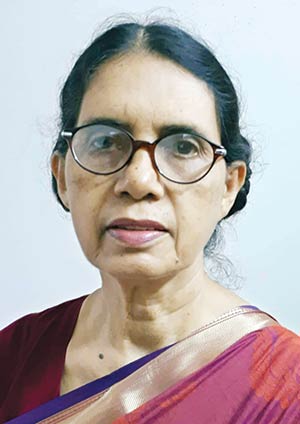
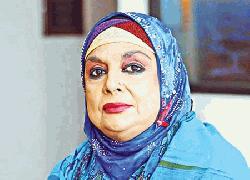
Sadhana Islam
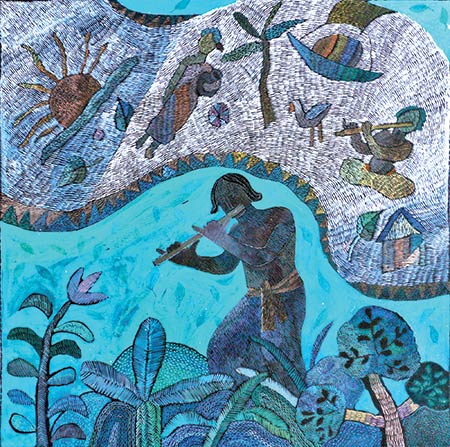 Besides batik, Sadhana Islam has done many paintings through the egg tempera. During the early-80s and mid-80s of the last century, oil was gravely deficient in our country. During that time, Sadhana started to work with the egg tempera. The painter feels that the medium is a permanent, fast-drying painting medium consisting of coloured pigments mixed with a water-soluble binder element - usually a glutinous material such as an egg yolk. Tempera paintings are very long-lasting and Sadhana can easily handle the medium.
 Through the medium (egg tempera), Sadhana Islam has widely focused on folk motifs. Over a large span of her career, she has been working on folk motifs and ancient ballads. Folk ballads of Nakshi Kanthar Math (verse narrative written by the folk poet Jasimuddin) have found prominent places in her works. The verse is considered a masterpiece in Bengali literature and has been translated into many different languages. She has used different kinds of birds, rural life and different social, cultural and religious rituals, boats, riverine life and greenery - all as pleasant and decorative motifs. The childlike drawings and compositions are not just duplications of a child's fantasy. These compositions reflect the innocent realisation of life as a whole. With these she has used the traditional style of Nakshi Kantha. The meticulous stitches of Nakshi Kantha are faithfully scratched in the paintings, highlighting the stylistic character of this traditional village art. The ecstasies and torments of the village women, the unexpressed words of the shy village maidens, the simple hopes and aspirations of the village folks find life in these stitches of coloured threads taken from the worn-out sharees to ornate the handmade quilts. Her third solo exhibition of egg tempera was held at Divine Art Gallery in the city in 1994.
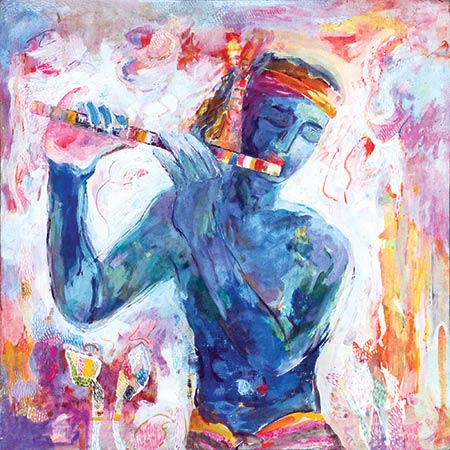
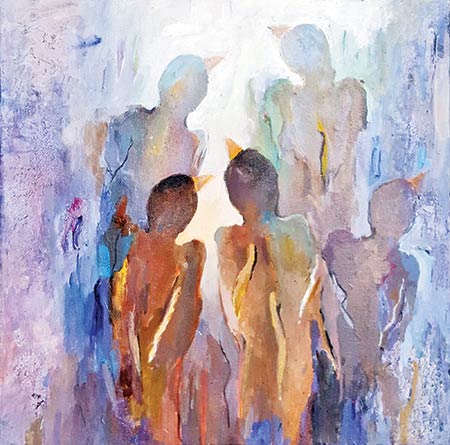 Beside batik and egg tempera, Sadhana Islam has also worked with acrylic, oil, dry pastel, charcoal and others. Her paintings delve deep into folk, pastoral life and rural traditions. Most of her works highlight bucolic and rustic elements; and the recurring motifs are flowers in different genres, birds, greenery, rural women carrying pitchers, peasants fluting under the tree, lush foliage, bulls and buffalos. To portray flowers, Sadhana mainly deals with the seasonal flowers of Bangladesh. She is overwhelmed by the vivid colours of spring flowers, especially Sonalu, Radhachura, Krishnachura and Chandra Prabha. Her very picturesque and appealing natural observation is profoundly embedded in her psyche. Her acrylic-based paintings are created spontaneously as her skilled hands brush the easels with colours. The painter depicts close-up views of the branches of trees containing patches of flowers of different colours and then distorts the work by splashing colour pigments.
Sadhana's realistic works on the Bangladeshi countryside were marked by her lucid and personal technique. Her excessive use of space provides grace to all her work that belongs to this sensuous grade. Tactile, sharp and stirring colours give depth and shape to her paintings. Over the years, her use of colours and realistic forms has been applauded. For most of her career, her works focused on nature and human figures. Some of her works seem to convey a sense of solitude. The colours she generally used - green, red, yellow and azure - flow and merge with passion. The effortless intermingling of colours produced visions that are refreshing and her figures always seem enigmatic. By merging modern techniques with the traditional cultural heritage she enriched the field of artistic creativity in a variety of ways. Her technical intelligence and expressive power are noticeable. In her creations she presented the people, rural habitat and its surrounding atmosphere and other aspects of nature. Her art pieces done in the mediums like watercolours, acrylic and oil painting are radiant with inventiveness. Her lines are very fluent and expressive. They also seek varieties, sometimes producing feminine faces, sometimes natural scenes while sometimes capturing childhood memories.
 The dawn of realism is usually regarded as the commencement of modern art. This is due to its belief that daily chores of life and the pragmatic world are chief concerns of art. Theoretically, realism accepted the progressive aims of modernism, finding novel truths through the re-examination of traditional systems. Realism denies imaginative idealisation and replaces it with an intense observation of surroundings. As this idea was inherent in artistic practices in different corners of the world for centuries, though without formal recognition, realism in its wider sense has encompassed many art movements across a number of civilisations.
Realism was a movement in the early nineteenth century in France that asserted to represent people and their everyday realities based on precise observations. The artistic movement "realism" must be distinguished from the word "realism" - the latter being an aspect of most figurative arts throughout time. The artistic movement of realism challenged centuries of tradition which saw the uppermost art's desire to idealise pictorial forms and gallant subjects. In Bangladesh, realism has been practiced since the inception of our art movement in the early 1950s. After that artists transformed their modes of expression into varied genres of art. After independence, a number of painters started to expose their creativities through realism and thus Sadhana Islam's name came to prominence during the mid 80s.
Space plays a very significant role for Sadhana's paintings as it is the main splendour of her creations. She has a great ability to draw mass, volume and texture as well as creating sensitive compositions which are outstanding. For an art aficionado, her paintings bring a new-fangled and eye-catching look, and provide the spectators a sense of great pleasure. Her paintings are vivid demonstrations of her in-depth study on her subjects. Her drawings and sketches are lively and have the right kind of restraint.
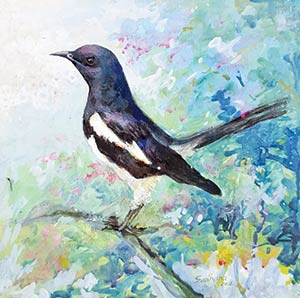 By means of Sadhana's sweeping brushstrokes and malleable textures, the canvas gets a vivacious and spirited look. She has mastered an enigmatic quality for her paintings that work on many levels from the visual to the subconscious. Observing her works critically, one gets the feeling that her acrylic follows the typical watercolour tonalities - soft and seemingly transparent. Tranquility is one of the vital components in Sadhana's works. The objects of her works are in a melancholic mood, which is repetitively focused on. The interplay of light and shade has been superbly featured in her works.
 Sadhana's works on canvas reveal the celebration of triumph and broad-spaced vision. She gets pleasure by painting what moves her creative soul and enables her to translate an individual language through colours and figurative expressions. Her themes are always upholding the greatness of life. Through the process, the viewer also gets to know the artist's individuality and mental state.
Sadhana always chooses a certain language in order to explain the stories of her paintings lively. She has been enthusiastically studying movements of figures and arrangements of compositions for a long time. In this sense, the artist is very cautious about her composition and arrangement of figures. Still, the painter is recognised for intrepid approaches and she crosses great lengths to describe her topics.
The themes of Sadhana's works are in a somber mood and their characteristics are highlighted. Lighting is a prominent feature in the works and the artist generally prefers luminous light. At times, her figures look moving and help us reflect on their experiences, ecstasy and despair. Scrupulous harmonising of light and shade is another noticeable feature in her works and the paintings appear more serene because of their lucid colours.
The writer is an art critic and curator.
Loading...
Loading...
Also read








Editor : Iqbal Sobhan Chowdhury
Published by the Editor on behalf of the Observer Ltd. from Globe Printers, 24/A, New Eskaton Road, Ramna, Dhaka.
Editorial, News and Commercial Offices : Aziz Bhaban (2nd floor), 93, Motijheel C/A, Dhaka-1000.
Phone: PABX- 41053001-06; Advertisement: 41053012; 01793317829, 01550707291, E-mail: [email protected], [email protected] Online: email: [email protected] 41053014; 01550707297 Advertisement: 01550707296
Published by the Editor on behalf of the Observer Ltd. from Globe Printers, 24/A, New Eskaton Road, Ramna, Dhaka.
Editorial, News and Commercial Offices : Aziz Bhaban (2nd floor), 93, Motijheel C/A, Dhaka-1000.
Phone: PABX- 41053001-06; Advertisement: 41053012; 01793317829, 01550707291, E-mail: [email protected], [email protected] Online: email: [email protected] 41053014; 01550707297 Advertisement: 01550707296


