



| HEADLINE |

|
World Photography Day and us
Published : Friday, 19 August, 2016 at 8:54 PM
Shahriar Feroze


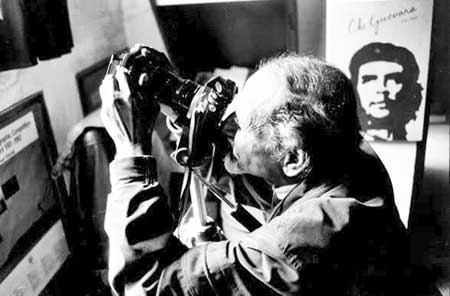 Until the invention of video recorders if there was anything to have captured time by freezing it, it's the camera - an apparatus which i often compare to time machine.
 Though there is a bit of dispute over the one and first inventor of the sophisticated science behind photography? Some claim the Frenchman Louis Daguerre to be the inventor of the daguerreotype while others believe it to be William Fox Talbot inventor of the calotype. Whether you're team Daguerre or team Talbot, know this that both photographic techniques were introduced rather coincidentally in 1839. Moreover, it was in that same year that the French government announced photography "a gift to the free world." The date was thus set to be 19 August.
Think deeply, this priceless gift to mankind had instantly changed the viewing and recording of our surroundings forever. The process that has however, changed the visuals of the world is actually the collective contribution of photographers from all across the globe and fascinatingly, though more than 100 years later, our photographers from Bangladesh too, have played a momentous role on the evolution of modern-day photography.
Back at home , the officially recorded representation of taking, studying, experimenting and researching with photographs through the help of a proper institution had began with the famed late Manzoor Alam Beg. Commonly known as Beg Sir, he was also internationally renowned and titled Aalokchitracharjo (The Chancellor of Photography) besides being a recipient of the prestigious Ekushey Padak. He played a pioneering role in the modern art of photography movement in Bangladesh by setting up of the first photographic training centre known as Begart Institute of Photography in 1960 and Bangladesh Photographic Society (BPS) in 1976 at Dhaka, of which he was the founding principal and former president.
It's still a mystery why didn't our public university authorities take his guidelines and efforts seriously for introducing photography as a full-fledged subject. Had that been done, a lot of controversy arising in the name of "Affiliation", "Recognition" could have been easily avoided.
The late maestro was not only a well-trained photographer but best known for art photography and for setting newer trends in the field. To add further, the international photography community had recognised his exceptional skills for organising local photographers and arranging photographic activities in a country where clicking was mostly considered a personal pastime leisure. The first photographic Bengali journals and publications were also introduced through his hands. Probably his biggest professional achievement is to have created a new generation of qualified photographers - many of those who are not merely leading the industry today, but have enriched various sections of global photography by winning prestigious honours and awards. His students scattered around many countries in the world silently echoes of a genius whose milestone movement should have taken our photo industry further beyond.
A number of M.A. Beg's contemporaries have also made us proud in the consecutive eras of 50', 60's and 70's. The 50s and 60s were politically tumultuous times for us and the lenses captured a series of watershed moments of those movements. Some notable among them are the late photographer Amanul Huq who had documented the Language Movement and worked with legendary filmmaker Satyajit Ray.
Followed him was the noted late Rashid Talukdar, globally renowned for capturing some of the defining images of the atrocities during the Bangladesh Liberation War of 1971. The Ahmed brothers, Nowajes and Naibuddin Ahmed contributed hugely in terms of shaping the photographic voice for an independent Bangladesh. Beyond Liberation War photography Anwar Hossian went a step further by establishing himself as cinematographer of note. The list goes on.....
At an individual level, achievements and accomplishments till the late 90s followed but the vacuum was created somewhere deep inside the industry - the collective thrive to grow was missing. Particularly, in the post Beg-era commercialisation of the industry became rampant. Funds were coming, new schools were opened, exhibitions and photo business boomed but academic recognition and inclusion of photography as a sophisticated subject of art and science at our universities was somewhat struck taking the industry nowhere. So as the media is abuzz against the backdrop of a recent fund scam instead of pointing fingers at any individual we must identify why was the leadership in the industry missing? How much has been done to establish and promote photography through the institutes? Moreover, why the academic affiliations and recognitions are still not there?
Perhaps the easy answer in this regard is that the common platform once created for bringing all photographers of the country is not effectively functioning any longer. The BPS has got much to do about it besides organising itself and the first step in that is to hold elections so to run the society through a leadership of elected representatives. That having said, it then must set a goal for wider recognition for the industry. It's somewhat puzzling to comprehend why the country's foremost association of photographers is not running as per a formal structure and legal norms through holding regular elections. Needs reminding, in 1990 the BPI (Bangladesh Photographic Institute) had come into existence for an unexpected 15 years before it was shut down 2005. Taking lessons from it, photographers should unite for realising the unfinished movement of its founder the late Beg sir. On the topic of a common platform Begart is still the only photo school where veteran photographers are seen gathering.
The local photo institutes have a very important role to play here other than just killing themselves for foreign funds. Those who believe, funds to be the lifeline of photo schools, follow the country's oldest school of photography - Begart , how it still manages to survive without funds or donations. Why only blame photographers and spearheads of photo institutes when our successive governments have repeatedly neglected the industry so regularly. The time has come for the government to regulate our photography industry, scrutinise and evaluate degrees handed out to students with the help of experts on the field while regularly monitoring their functioning and academic affairs.
In fact, the people on power must draw lessons from how the industry is regulated abroad.
Last but never the least, apart from a few individual web sites and some scattered web pages there is still no publication or sequential documentation of the accurate history of Bangladesh photography. Our photographic community must jointly focus on this particular issue by realising the fact - an industry which doesn't care of its past don't actually know where it is heading to. The history of photography in Bangladesh not only remains un-written but appears deliberately distorted from various readings.
Whatever, the day meant for celebrating cannot be fully exhausted by pointing a whole list of grievances and objections. Let's make this 19 August, the first step of a new beginning for our photography industry by start clicking the camera.
Enjoy life through photos.
The writer is a freelance journalist
Loading...
Loading...
Also read




Editor : Iqbal Sobhan Chowdhury
Published by the Editor on behalf of the Observer Ltd. from Globe Printers, 24/A, New Eskaton Road, Ramna, Dhaka.
Editorial, News and Commercial Offices : Aziz Bhaban (2nd floor), 93, Motijheel C/A, Dhaka-1000.
Phone: PABX- 41053001-06; Advertisement: 41053012; 01793317829, 01550707291, E-mail: [email protected], [email protected] Online: email: [email protected] 41053014; 01550707297 Advertisement: 01550707296
Published by the Editor on behalf of the Observer Ltd. from Globe Printers, 24/A, New Eskaton Road, Ramna, Dhaka.
Editorial, News and Commercial Offices : Aziz Bhaban (2nd floor), 93, Motijheel C/A, Dhaka-1000.
Phone: PABX- 41053001-06; Advertisement: 41053012; 01793317829, 01550707291, E-mail: [email protected], [email protected] Online: email: [email protected] 41053014; 01550707297 Advertisement: 01550707296


