The editorial page of a newspaper is perhaps the less read but the most dignified part of it. An editorial says many things, pinpointing faults, providing valuable suggestions and recommending solutions to problems. This is one of the major areas where journalists are allowed to come up with their views unlike news. The news pages are the areas of journalism where the expression of opinion is unethical. Journalists are expected to maintain this rule religiously. There is no scope for deviation, in no way. Do we actually care about that? Not really!
A few months back, a UNB delegation, including me, visited a newspaper house in Dhaka and met its revered editor. We were actually discussing the fast-changing media landscape in the wake of the storm brought by the internet and information technology. Though the editor does not see any immediate threat to the broadsheet journalism, he recognises the heat the traditional media has taken from the all-pervasive internet and the social media.
At one point of our interaction, the editor drew my attention and said, "Please don't use adjectives in news items, please don't editorialise your items." The other day I prepared a list of questions for a foreign journalist to interview an economist where I used the word 'stunning' while describing Bangladesh's success in socioeconomic development. The veteran journalist suggested me to drop the word 'stunning' to stay neutral, though I used it thinking that Bangladesh was not a person but a country.
We have got a tendency to use too many adjectives in news stories in a bid to make those either flowery or highlight anyone or anything. This is such a practice that goes against the basic principle of journalism. A news story should be simple and fully free from adjectives so that readers do not get any scope to misunderstand you. A reporter's job is to plainly describe an incident attributing it to his or her sources, interviewees and witnesses. Media people cannot be a party to any incident. He or she is just the presenter of it. When their personal comments and opinions make their way into news stories that is called editorialisation.
In some cases, we editorialise news stories deliberately and in some cases unknowingly. Those us who do it deliberately are senior people, while the unintentional opinionisation is done by our junior colleagues. Junior journalists are supposed to be groomed by their senior colleagues and they need to be taught how to write a story objectively. If they do not get that desired support from their seniors, they need to learn it by themselves by carefully going through well-edited copies. There are so many techniques to neutralise a news story. Those techniques are very simple. But the problem is that we are least bothered about simple things. Simplicity and easily comprehensible things sometimes do not attract us!
In the late 90s, a gentleman joined UNB as our colleague. As he came from a different discipline, he sought some tips on how to write a news story. I innocently lectured him about 5Ws and 1H. It was so simple. Unfortunately, he found it so funny. But the fact is that we always miss these basic elements while writing news stories even after working in newsrooms for so many years. For example, you have written a good story on a horrific road accident and it has been released or published after 'good' editing, at least linguistically, but it never mentioned when exactly the accident actually took place, and your copy editor also overlooked it. In such a case, there is every possibility for your readers to give you a harsh feedback because he or she wants to know when exactly the road crash happened. It is needed for various reasons. Today we are doing real-time journalism where the exact time is very important. It is not funny!
In this hyper-connected digital world, the media has to serve diversified groups of audience. Among them are unbiased readers and viewers. They are conscious and careful. The media, therefore, has to provide the services what the readers want. An editorial is a piece that carries the institutional views of the newspaper and the responsibility for it ultimately goes to the editor. So it has to be written with a great wisdom maintaining the consensus view of its editorial board members, including the editor, because the aim of this writing is to influence the opinion - the opinion of the audience, the policymakers and the government itself. This exercise will contain arguments backed by evidence.
The editorial page, which is basically the opinion mobiliser, offers various types of writing other than editorials such as post-editorials, opinion articles and letters to the editor. In the entire exercise, there should be a harmony so that it does not contradict the basic rules of journalism. The unwarranted contradiction is seen when we mix up things. According to the rules, we cannot opinionise our news stories but we are doing that knowingly or unknowingly confusing our readers. The confusion deepens when news stories look like editorials while editorials are reproducing information from news stories without further works. When an editorial comes up with one view, another writer of the same newspaper expresses completely a different opinion on the same issue. This is contradictory and unusual for a newspaper.
One day I told a friend of mine, working for a major vernacular national daily, that his newspaper hardly gave the due focus on its opinion pieces, particularly the editorials. He then quipped saying, "Why do you go for reading those? Modern readers do not read editorials!"
I have a habit of having a quick look at newspaper headlines every day and go through some stories if those attract me. Sometimes I find some news headlines very attractive but commentative. And this is exactly where there lies the question of ethics! News writing has to be objective, no matter what, though critics say there is nothing like objectivity in the media industry. This is, I think, more of a sentimental statement than of logic. Doing objective journalism and refraining from twisting a story are nothing but a question of high value that journalism deserves most.
When it comes to editorial, I would like to say that we must select a topic or an issue that will be burning one so that the reader feels attracted to it. And of course the editorial must mention on the basis of which news item the piece is being written. Editorial is not a sweeping article. So, such a topic should be chosen which has public interests. And the writing style should be lucid which will help connect the readers and the stakeholders. It should also be persuasive so that the policymakers get motivated to go for action and find out a solution.
I would like to reach a conclusion saying that we need to keep news pages free from editorialised types of writings as newspaper readers do not learn about journalism ethics by going through books. They, in fact, learn what we educate them through our works. There should not be any wrong teaching. We need to sit up and give our readers a greater understanding of the issue.r
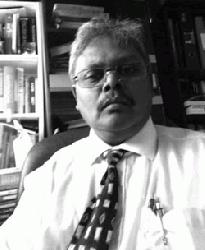
Mahfuzur Rahman is Chief News Editor of United News of Bangladesh (UNB).
In this hyper-connected digital world, the media has to serve diversified groups of audience. Among them are
unbiased readers and viewers. They are conscious and careful. The media, therefore, has to provide the services what the readers want
Email: mehfuzsam@yahoo.com