



| HEADLINE |

|
Nobel's will and discovery in science
Fragments of Reality
Published : Tuesday, 1 November, 2016 at 12:00 AM
Dr Kanan Purkayastha


 Alfred Nobel, the inventor of dynamite and holder of 355 patents, in 1896, by a will before his death established the Nobel Prizes 'for the greatest benefit of mankind.' In his will Alfred Nobel states that, '�The whole of my remaining realizable estate shall be dealt with in the following way: the capital, invested in safe securities by my executors, shall constitute a fund, the interest on which shall be annually distributed in the form of prizes to those who, during the preceding year, shall have conferred the greatest benefit to mankind. The said interest shall be divided into five equal parts, which shall be apportioned as follows: one part to the person who shall have made the most important discovery or invention within the field of physics; one part to the person who shall have made the most important chemical discovery or improvement; one part to the person who shall have made the most important discovery within the domain of physiology or medicine; one part to the person who shall have produced in the field of literature the most outstanding work in an ideal direction; and one part to the person who shall have done the most or the best work for fraternity between nations, for the abolition or reduction of standing armies and for the holding and promotion of peace congresses.�It is my express wish that in awarding the prizes no consideration whatever shall be given to the nationality of the candidates, but that the most worthy shall receive the prize, whether he be a Scandinavian or not.' Considering the wording of Nobel's will, I wonder how present day scientific discovery, which is much more integrated in nature, would comply with this will.
It has been widely discussed in recent time that appreciation of present day scientific discovery has somehow delimited by Nobel's will, because it is very difficult to demarcate between physics and chemistry and also chemistry and medicine. As an example, if we want to abide by Nobel's will, then in case of discovery in quantum chemistry and quantum physics or discovery in atomic structure and atomic bonding, it is difficult to distinguish between chemical and physical discovery. Also lots of important discovery that are bringing greater benefit to mankind cannot be rewarded by Nobel prize because discovery has to be clearly a 'chemical discovery' or 'physical discovery' or 'discovery within the domain of physiology or medicine'.
One example can be cited is the discovery of hidden organizing principle in coastal ecosystem, which was discovered by Robert Paine at the University of Washington. This is a fundamental discovery, but because Paine's work is related to ecology, there is no scope of honouring him by Nobel Prize. Discovery of continental drift in 1915 by Alfred Wegener, who was a geologist, which is a very important discovery, led to a unified explanation for phenomena such as earthquakes, volcanoes and mountain formation. Both Paine and Wegener have passed away. So, according to Nobel's will, they cannot be recognised anymore by the prize and also geology and ecology are not mentioned in Nobel's will.
A group of researchers at Aalto University in Finland, points out that it is taking longer and longer for scientists to receive Nobel prizes for their work. Their research suggests that prior to 1940, only 11 per cent of physics prizes, 15 per cent of chemistry prizes, and 24 per cent of physiology or medicine prizes were awarded for work more than 20 years old. Since 1985, those percentages have risen to 60 per cent, 52 per cent, and 45 per cent, respectively. If these trends continue, then researchers note that, by the end of this century no one will live long enough to win a Nobel Prize, which cannot be awarded posthumously. Time lag of winning Nobel Prize is also mentioned by Physicist Richard Feynman and British Astrophysicist Martin Rees. Feynman, in an interview with 'South Shore Record' in 1965 states that 'you know, I did this work in 1949. I guess they just ran out of winners and looked back over the old stuff.' Rees argues that Nobel trend reflects 'a growing backlog of potential winners.' Rees further states that 'there are more people than ever before whose achievements are up to the standard of earlier winners.' Nobel committee sometimes take long time to recognise a discovery in order to understand the validity of a discovery. As an example Higgs boson was predicted half a century ago, which received Nobel Prize in 2013 after CERN declared that they have found Higgs boson. Physicist Max Tegmark believes that inflation theory of the universe has a big chance for winning a Nobel. The theory was originally proposed more than 30 years ago, and its inventors as Tegmark puts it 'including Alan Guth and Andrei Linde-at ages 67 and 66 respectively-aren't getting any younger.'
Nobel Prize is now considered as reserved for a fraction of scientific community and gradually receding from the interests of society at large. Some argue that the discipline Nobel had in his mind was the purest sciences and deserve extra recognition. Other argues that this fundamental concept has been shrunk over the year and now demarcation between sciences is very difficult. In fact one discipline is benefiting from another discipline. Couple of years ago at least 10 scientists wrote an open letter to the Nobel Foundation asking them to recognize more areas of science. Similar evolution has happened in 1968, when prize for economics was established. However in response to that open letter Nobel Foundation said that the committees that made the awards, 'have been reasonably successful up till now in tracing major developments of modern civilization.'
In order to recognise all beautiful discoveries in science and technology for the benefit of mankind, one solution could be to update Nobel Prizes and another could be to establish other such prizes for integrated sciences, as an example in case of Mathematics there is a prize, known as 'The Abel Prize', which is considered as an equivalent of Nobel Prize. However, we should not forget what Feynman said. In an interview with BBC in 1981 Nobel laureate Richard Feynman said, 'I don't like honours. I appreciate it for the work that I did, and I know that there's a lot of physicists who use my work. I don't need anything else. I don't think there's any sense to anything else. I don't see that it makes any point that someone in the Swedish Academy decides that this work is 'noble enough' to receive a prize. I've already got the prize: The prize is the pleasure of finding the thing out, the kick in the discovery, the observation that other people use it. Those are the real things.' I hope that the scientists in all discipline should not be disheartened by the Nobel's 19th century desire. In science 'the pleasure of finding things out' is the most important thing.r
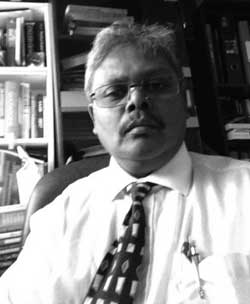
Dr Kanan Purkayastha teaches chemistry and environmental sciences in United Kingdom. He is a fellow of the Institution of Environmental Sciences in UK
Appreciation of
present day scientific discovery has somehow been delimited by Nobel's will, because
it is very difficult to demarcate between physics and chemistry and also chemistry
and medicine
Loading...
Loading...
Also read




Editor : Iqbal Sobhan Chowdhury
Published by the Editor on behalf of the Observer Ltd. from Globe Printers, 24/A, New Eskaton Road, Ramna, Dhaka.
Editorial, News and Commercial Offices : Aziz Bhaban (2nd floor), 93, Motijheel C/A, Dhaka-1000.
Phone: PABX- 41053001-06; Advertisement: 41053012; 01793317829, 01550707291, E-mail: [email protected], [email protected] Online: email: [email protected] 41053014; 01550707297 Advertisement: 01550707296
Published by the Editor on behalf of the Observer Ltd. from Globe Printers, 24/A, New Eskaton Road, Ramna, Dhaka.
Editorial, News and Commercial Offices : Aziz Bhaban (2nd floor), 93, Motijheel C/A, Dhaka-1000.
Phone: PABX- 41053001-06; Advertisement: 41053012; 01793317829, 01550707291, E-mail: [email protected], [email protected] Online: email: [email protected] 41053014; 01550707297 Advertisement: 01550707296


