The Sustainable Development Goals (SDG) are framed in a globally accepted framework that focuses on 17 goals with 169 associated targets and 230 indicators. To ensure SDG in Bangladesh by leaving no one behind in most possible short time, a set of 39+1 priority indicators has been adopted by Government of Bangladesh which is known as "Bangladesh Model".
Among the priorities SDG -3 "Health" was selected as no 4 National priorities and 32 Upazilas Selected "Health" as local Priorities.Also there are four thematic areas are selected to achieve SDG-3 by Bangladesh. Infrastructure of Healthcare facilities are divided into three ties; primary healthcare (PHC) is provided at the grassroots level, through the upazila health complex (UHC), union health and family welfare center (UHFWC), and community clinic, located at sub-district, union, and village levels, respectively. District Hospitals are considered to be secondary level and Medical College, Institutes, Specialized Hospitals are exist at the top level.Bangladesh is doing significant achievements in Health sector at MDGs but there are some barriers still pulling the progress of SDGs in terms of inclusive development.
From the FISCAL Year 2018-2019 Bangladesh Government allocated 5.2-6%for health sector at the budget expenditure, which is not ideal for a country of 160 million people. Alongside challenges, like 67% out-of-pocket expenditure, absenteeism, corruption and red-tapism are deep rooted problems of health sector. But all these problems areclotted to lack of accountability and good governance practices of the health sector. Almost every research about Health/Public Health one of the key recommendations is to unclog those barriers of accountability and good governance might subdue by ensuring people participation.
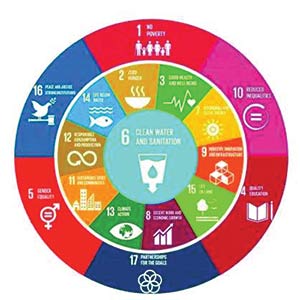
To enable people participation "whole of a society approach" is a very pragmatic approach. A whole-of-society approach enables individuals, civil society, and other stakeholders to interact with public officials, play an acritical role in setting the public agenda and influence public decisions. To achieving SDGs targets, Bangladesh governmentadopt the "whole of society approach", but what we experience that the space for Civil Society at "whole of society" approach is becoming narrowing with time. The 5 Pillar of SDG (People, Planet, Prosperity, Peace, and Partnerships) will be cemented each other by encouraging civil society mobilization. The participation of civil society is fundamental to democratic governance. Through civil society,citizens come together to hold their leaders accountable and address challenges that governmentscannot tackle alone.
In the health sector, civil society platforms/organizations had undertaken critical policy advocacy in the 1980s and 1990s through the community-levelhealth watch groups which existed in several regions of the country supported by NGOs, and which brought to the surface issues related to access and quality of care within their locality. Today many of these platforms/organizations have dissipated. Buta strong civil society has the potential to positively impact social exclusion and health inequity through stronger participation, active monitoring and increased accountability and good governance. It can also play a role in refocusing healthcare systems according to health rights and social welfare goals which in turn would impact quality of life of the citizens and provides citizens the power, especially the marginalized and poor, to influence central decisions.
The Civil Society Platform may introduce different advocacy tools to collect citizens voice and channelize the voice from local to Central. The voices enable to hold government (and other actors) accountable to major health sector commitments. The actions of civil society will generate evidence which will use a databank for SDG Data Gap Analysis.
Agenda 2030 is an ambitious target, most of which is formulated in a global context. Bangladesh also emphasizes localization considering its own context and priorities. The goals of the Sustainable Development Goals-2030 are interrelated as well as interdependent. The realization of any one objective directly or indirectly affects one or more other objectives. No objective can be achieved in isolation. Increasing interaction and trust between civil society and governments by building inclusive relationships will lead to the central and transformative promise of the SDG-2030.
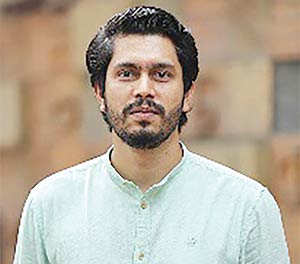
The writer is a Development Practitioner who works at Bangladesh Health Watch, Brac James P Grant School of Public Health