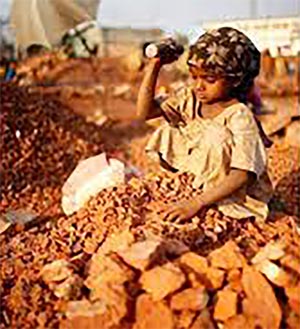
Child labour remains one of the most pressing challenges worldwide, robbing children of their innocence, freedom, and potential. Across the globe, millions of children are trapped in hazardous work environments, sacrificing their health, education, and development. The immediate effects of child labour are devastating, but the long-term consequences are even more alarming. Without urgent action, the future effects of child labour threaten to cast a shadow over generations, creating cycles of poverty, inequality, and stunted social and economic growth. Let's know why it is a great threat.
One of the most damaging consequences of child labour is the disruption it causes to a child's education. Children forced to work are often deprived of the opportunity to attend school regularly, which severely impacts their academic and cognitive development. Education is a pathway out of poverty and a means to a better life, but children who work instead of learning miss out on this opportunity, hindering their ability to acquire the skills necessary to secure stable, fulfilling jobs in the future. When children grow up without education, they're less likely to understand basic health information, financial literacy, and civic rights. This lack of knowledge makes it difficult for them to advocate for their rights, escape poverty, or improve their socioeconomic status. In this way, child labour perpetuates a vicious cycle: those forced into labour are more likely to have children who also experience poverty, limited education, and a lack of opportunity. This intergenerational effect of child labour can lead to a society where entire communities are systematically deprived of advancement.
Child labour frequently places children in hazardous work environments, exposing them to physical and psychological dangers that can have lifelong consequences. Children in industries such as mining, construction, agriculture, and manufacturing are often exposed to toxic chemicals, heavy lifting, repetitive tasks, and excessive hours. The toll on their developing bodies can lead to chronic health issues such as respiratory problems, musculoskeletal disorders, and malnutrition, which affect them well into adulthood. Furthermore, the psychological trauma of child labour can have severe mental health consequences, including anxiety, depression, and low self-esteem. In addition, children who work in high-stress or abusive environments may suffer from post-traumatic stress disorder (PTSD), which can affect their ability to lead fulfilling lives. Poor mental health among individuals can have broader social effects, from decreased productivity to an increased burden on healthcare systems. The health consequences of child labour ultimately affect a nation's workforce quality and overall productivity, with far-reaching impacts on economic stability.
A workforce comprised of poorly educated individuals with limited skills is not conducive to long-term economic growth. Countries that continue to rely on child labour for cheap labour miss out on the benefits of an educated and skilled population. As adults, former child labourers often find themselves limited to low-wage, low-skill jobs, lacking the knowledge and training necessary to advance or contribute meaningfully to industries that drive innovation and growth. The result is a low-income economy that struggles to compete globally. Nations with high rates of child labour may experience slower economic growth, less innovation, and lower foreign investment due to a lack of skilled labour. In contrast, countries that prioritize education and child welfare see stronger economic outcomes. For example, economies that have moved away from child labour have achieved higher productivity, created better job opportunities, and experienced faster economic progress. This shift requires investment in children's education and welfare now but leads to long-term gains in human capital and economic stability.
Child labour reinforces poverty and inequality in society. Low-wage work perpetuates poverty within families, as children who grow up working in low-skill jobs are less likely to break free from economic hardship. Without education and marketable skills, they face limited job prospects, trapping them in the same poverty-stricken conditions that initially pushed them into labour. Additionally, child labour disproportionately affects marginalized groups, including ethnic minorities, rural populations, and impoverished families, widening societal inequality. This systemic inequality results in social instability, as communities grow increasingly divided between those who have access to education, healthcare, and fair employment, and those who remain trapped in poverty. Over time, these disparities can lead to social unrest, erode trust in institutions, and weaken the overall fabric of society.
Uneducated, impoverished youth who are left with few opportunities are more vulnerable to exploitation and may turn to crime as a means of survival. The lack of social support, education, and economic opportunity often leads young people to crime, trafficking, or joining gangs as a means to provide for themselves and their families. A society with high levels of unskilled and disillusioned youth is more prone to violence, crime, and instability, which can strain law enforcement, increase incarceration rates, and decrease public safety. When young people are deprived of legitimate opportunities to improve their lives, it fosters resentment and discontent, which can lead to social upheaval. Addressing child labour and investing in youth is not only a humanitarian responsibility but also a step towards creating a more stable, secure society.
The future effects of child labour extend far beyond the immediate suffering of the children involved. It impacts economies, communities, and social stability on a large scale, creating cycles of poverty, inequality, and lost potential that are difficult to break. However, addressing child labour isn't just about saving individual children; it's about ensuring a healthier, more prosperous future for entire societies. Governments, communities, businesses, and individuals all have a role in ending child labour and investing in children's education, health, and future. Let us strive to build a world where every child can grow up in a safe, supportive environment that fosters their talents, dreams, and potential. Ending child labour today is a vital step toward securing a brighter, fairer, and more resilient tomorrow for all.
The writer is an undergraduate student, Department of Political Science, University of Rajshahi