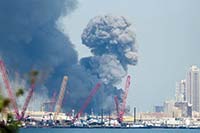
The recent military attack on Iran has once again shaken the geopolitical climate in the Middle East and sparked the intense debate in the Muslim world. The United States and Israel allegedly launched attacks on several strategic Iranian targets, which increased the tension in the region and provoked a strong international response. It has been reported that hundreds of targets have been hit and civilian deaths have been increasing as the conflict has spread across the region.
Along with the direct geopolitical implications, there is one burning question that reverberates throughout the political discourse, the mosques, the universities, and the media outlets: would such an attack have been possible if the Muslim world had been unified? The concept of Muslim unity, which is sometimes called the solidarity of the Ummah, has long been considered as a possible source of collective power. However, the facts of international politics paint a much more complicated picture.
The Muslim world consists of more than fifty states that vary in geographical location, political organization, economic capacity and military forces. Such disparities influence their foreign policies and strategic priorities. Certain countries with the majority of Muslim population have a strong connection with the western powers whereas others establish themselves as the geopolitical opponents. In some states, economic integration with global markets is prioritized, whereas others emphasize ideological resistance to Western influence. These conflicting interests complicate the possibility of acting collectively in case of international crisis. This means that the reaction of Muslim nations to the war in Iran, Palestine or any other country is not always the same; some are very vocal, others are very diplomatic.
The unity in itself, however, does not necessarily lead to strategic power. Economic power, technological development, and military force are those parameters that define the global balance of power.Some of the Muslim-majority nations have huge resources, such as huge amounts of energy, huge populations, and huge financial assets. Nevertheless, these resources are still divided in various national priorities. The possible strength of these resources cannot be easily transformed into collective influence without well-organized political and military structures.
As an illustration, organizations made to symbolize Muslim unity, like the Organization of Islamic Cooperation (OIC) are not strategic alliances but rather diplomatic platforms. Having 57 member states, the organization seeks to speak on behalf of the unity of the Muslim world, yet, it does not have binding mechanisms on collective security or coordinated policies on defence.Consequently, declarations of solidarity are widespread, but there is little geopolitical action.
Historical Divisions and Regional Rivalries: The other hurdle to unity is the historical divisions in the Muslim world itself. Political competition, sectarianism and regional goals tend to take precedence over the larger considerations of shared identity.The politics between leading regional actors, like Iran, Saudi Arabia, and Turkey, has long been influenced by strategic rivalry as opposed to collective action. Such rivalries affect the diplomatic standings and render the establishment of a united geopolitical bloc impossible.
Moreover, in some cases, collective action is complicated by ideological dissimilarity between Sunni and Shia political systems. Even though these divisions do not constitute all political relationships, they add to the breakup of regional alliances and complicate cohesive response to crises.
Global Power Politics and External Influence: An even stronger political integration of Muslim nations would not always inhibit foreign military action. The global geopolitics is majorly influenced by the great states, whose strategic interests are not limited to a specific region. The United States, Russia, China, and European nations are major powers that have a high political, military, and economic presence in the Middle East in terms of military bases, defence alliances, and energy relations. These actors normally seek their strategic interests when conflicts arise. In this regard, diplomatic influence may be enhanced once Muslim states are united, but it would not help to prevent military conflict. The recent upsurge is an example of how fast regional tensions can spread to other geopolitical tensions.
The question of whether Muslim unity could have prevented the attack on Iran is not simple to answer. A higher level of unity could build political power and strategic leverage, but the severity of political division, rival national interests, and power politics on an international level restrain its effectiveness. The challenge lies not only in solidarity, but also in institution building, coordination and long-term strategy. Without these elements, unity remains essentially symbolic. The crisis in Iran therefore brings to the fore the need to translate the call for unity into practical cooperation - one that is capable of influencing the outcome of global politics.
The writer is a Lecturer, Department of English, Bangladesh University of Business and Technology (BUBT)





