
The 2026�"27 national budget allocates approximately Tk 250 billion for Bangladesh’s Haor region, spanning infrastructure, education, agriculture, fisheries, social protection, and climate adaptation. On paper, this appears to signal a broad-based development commitment. Yet the more pressing question is whether this fragmented allocation reflects the structural realities of the Haor basin�"or merely continues the long-standing pattern of project-led interventions that fall short of transformative change.
The Haor region is central to Bangladesh’s food security and inland fisheries economy, while also representing one of its most climate-exposed geographies. Flash floods, premature crop losses, erosion, and seasonal isolation repeatedly destabilise livelihoods. In such a setting, development cannot be reduced to dispersed project allocations; it requires a coherent, long-term and climate-responsive regional strategy.
A substantial share of the budget is directed towards infrastructure, including elevated roads, bridges, culverts, and upazila-level development projects. Improving connectivity is undeniably essential in a waterlogged landscape where mobility defines access to services and markets. However, these initiatives remain largely fragmented. Without an integrated Haor master plan, infrastructure investments risk functioning as isolated assets rather than components of a resilient regional system.
In education, the emphasis on flood-resilient infrastructure is a necessary and timely intervention. Schools in the Haor belt are routinely submerged for extended periods, making elevated and climate-adaptive structures indispensable. Yet infrastructure alone cannot resolve deeper structural constraints. Persistent teacher shortages, poverty-driven dropout rates, and widening digital divides continue to undermine learning outcomes. Without addressing these systemic issues, physical investments will yield limited developmental returns.
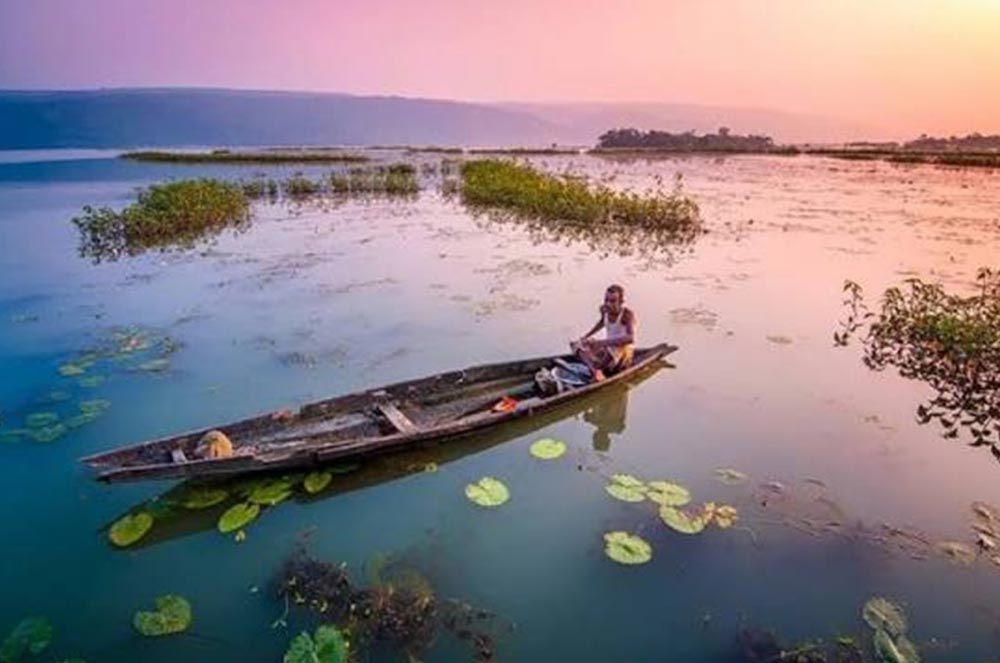
Climate adaptation efforts rely significantly on international financing, particularly in wetland ecosystem projects such as those in Tanguar Haor. While global partnerships are important in addressing climate vulnerability, heavy dependence on external funding underscores a deeper concern: insufficient domestic fiscal and institutional capacity to sustain long-term adaptation. Climate resilience, by its very nature, demands durable national investment frameworks rather than project-bound external support.
Agriculture and fisheries�"core pillars of the Haor economy�"receive allocations that remain modest relative to their vulnerability and national importance. Farming in the Haor basin is not merely a livelihood activity; it is a critical component of Bangladesh’s food security system. Yet recurring flash floods, inadequate storage infrastructure, and the absence of effective crop insurance mechanisms continue to expose farmers to systemic risk. Fisheries, similarly vital, remain constrained by limited investment in research, value chains, and resilient infrastructure.
Social protection measures, including expanded VGF coverage and targeted grants, provide important short-term relief. However, they do not address the intergenerational nature of poverty in the Haor region. What is required is not only consumption support, but a sustained framework for livelihood diversification, skills development, and local economic transformation.
At the core of the debate lies a deeper issue: the scale and philosophy of allocation. Haor stakeholders have long demanded a dedicated development fund of Tk 5 trillion, reflecting the cumulative impact of climate-induced losses and repeated agricultural shocks. While such figures may be debated, they highlight a persistent mismatch between perceived need and actual budgetary commitment.
Equally critical is the limited participation of local stakeholders in budget formulation. Farmers, fishers, environmental experts, and local institutions remain marginal in decision-making processes. This disconnect between planning and lived experience weakens the effectiveness of interventions and perpetuates policy inefficiencies.
In its current form, the budget offers incremental progress but falls short of a transformative agenda. It continues the legacy of fragmented planning, where projects accumulate but systemic resilience remains elusive.
What the Haor region requires is not simply higher allocations, but a unified national policy framework�"one that integrates climate adaptation, agriculture, fisheries, education, environment, and livelihoods into a single coherent strategy. Without such a shift, development will remain statistical rather than structural, and the uncertainty that defines life in the Haor basin will persist despite rising budgetary figures.
The writer is a journalist and columnist





