



| HEADLINE |

|
Bangladesh imports 7000 tonnes diesel from India
Published : Sunday, 29 March, 2026 at 11:14 PM
Observer Online Report


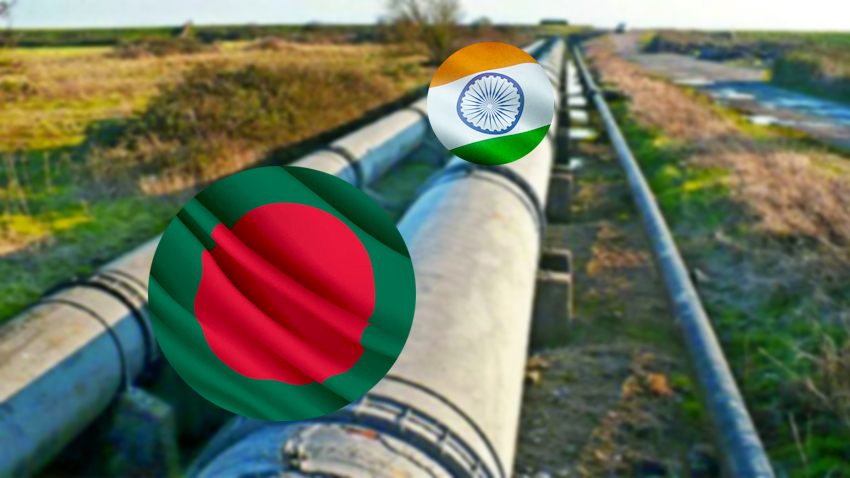
Bangladesh has begun receiving 7,000 tons of diesel through a cross-border pipeline from India's Numaligarh Refinery as global shipping uncertainties threaten the country's fuel supply chain.
The first shipment entered the pipeline Saturday evening, with the full consignment expected to arrive within one to two days.
Bangladesh Petroleum Corporation (BPC) Chairman Md Rezanur Rahman confirmed the pipeline import, stating that alternative supply routes have mitigated immediate fuel shortage concerns despite ongoing Middle East conflicts disrupting maritime transportation.
Industry sources reveal that diesel powers Bangladesh's agriculture, road transport, and electricity generation sectors, making supply stability critical. While 17 tankers were scheduled to deliver diesel this month, only nine have arrived so far, with one en route and seven facing uncertain schedules.
The pipeline solution comes as shipping costs rise and vessel availability declines due to regional conflicts. Officials note that maintaining delivery schedules has become increasingly difficult under current global conditions.
Bangladesh and India activated the 130-kilometer Friendship Pipeline in December 2022 under a 2017 agreement. The pipeline delivers diesel directly to Parbatipur depot in Dinajpur, with annual capacity of 120,000 tons and potential for 60,000 additional tons.
Limited storage capacity prevents large single shipments, but the pipeline's rapid unloading capability enables 7,000-ton batches. Transportation costs through the pipeline average $5.50 per barrel, often cheaper than maritime routes.
Energy analysts warn that while alternative supply routes are crucial during global instability, Bangladesh must expand storage capacity to fully benefit from pipeline imports. Localized supply concerns have already emerged, with agricultural season demands posing additional challenges.
BPC data shows diesel accounts for 63% of Bangladesh's total fuel demand. The 2024-25 fiscal year required approximately 4.35 million tons of diesel, primarily imported from international markets.
The pipeline initiative follows an earlier 5,000-ton diesel delivery from India on March 25. Bangladesh has received nearly 15,000 tons through the pipeline in recent weeks as authorities diversify supply sources amid persistent global shipping disruptions.
The first shipment entered the pipeline Saturday evening, with the full consignment expected to arrive within one to two days.
Bangladesh Petroleum Corporation (BPC) Chairman Md Rezanur Rahman confirmed the pipeline import, stating that alternative supply routes have mitigated immediate fuel shortage concerns despite ongoing Middle East conflicts disrupting maritime transportation.
Industry sources reveal that diesel powers Bangladesh's agriculture, road transport, and electricity generation sectors, making supply stability critical. While 17 tankers were scheduled to deliver diesel this month, only nine have arrived so far, with one en route and seven facing uncertain schedules.
The pipeline solution comes as shipping costs rise and vessel availability declines due to regional conflicts. Officials note that maintaining delivery schedules has become increasingly difficult under current global conditions.
Bangladesh and India activated the 130-kilometer Friendship Pipeline in December 2022 under a 2017 agreement. The pipeline delivers diesel directly to Parbatipur depot in Dinajpur, with annual capacity of 120,000 tons and potential for 60,000 additional tons.
Limited storage capacity prevents large single shipments, but the pipeline's rapid unloading capability enables 7,000-ton batches. Transportation costs through the pipeline average $5.50 per barrel, often cheaper than maritime routes.
Energy analysts warn that while alternative supply routes are crucial during global instability, Bangladesh must expand storage capacity to fully benefit from pipeline imports. Localized supply concerns have already emerged, with agricultural season demands posing additional challenges.
BPC data shows diesel accounts for 63% of Bangladesh's total fuel demand. The 2024-25 fiscal year required approximately 4.35 million tons of diesel, primarily imported from international markets.
The pipeline initiative follows an earlier 5,000-ton diesel delivery from India on March 25. Bangladesh has received nearly 15,000 tons through the pipeline in recent weeks as authorities diversify supply sources amid persistent global shipping disruptions.
Loading...
Loading...
Also read









Editor : Iqbal Sobhan Chowdhury
Published by the Editor on behalf of the Observer Ltd. from Globe Printers, 24/A, New Eskaton Road, Ramna, Dhaka.
Editorial, News and Commercial Offices : Aziz Bhaban (2nd floor), 93, Motijheel C/A, Dhaka-1000.
Phone: PABX- 41053001-06; Advertisement: 41053012; 01793317829, 01550707291, E-mail: [email protected], [email protected] Online: email: [email protected] 41053014; 01550707297 Advertisement: 01550707296
Published by the Editor on behalf of the Observer Ltd. from Globe Printers, 24/A, New Eskaton Road, Ramna, Dhaka.
Editorial, News and Commercial Offices : Aziz Bhaban (2nd floor), 93, Motijheel C/A, Dhaka-1000.
Phone: PABX- 41053001-06; Advertisement: 41053012; 01793317829, 01550707291, E-mail: [email protected], [email protected] Online: email: [email protected] 41053014; 01550707297 Advertisement: 01550707296


