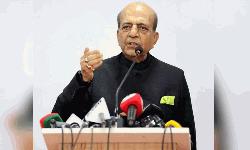
Expressing frustration over what he described as a return to fascist practices, Cumilla-4 (Debidwar) lawmaker and Jatiya Nagorik Party (NCP) chief organizer Hasnat Abdullah said the current government appears to be replicating the system of former Prime Minister Sheikh Hasina in everything but name.
"All that remains to be said now is that we need everything of Hasina's system, just without Hasina," he wrote in a post on his verified Facebook account on Friday, April 3.
A day earlier on Thursday, Hasnat Abdullah revealed in another Facebook post that the government has proposed cancelling 10 ordinances, including the referendum ordinance.
He listed the ordinances marked for cancellation as the National Human Rights Commission Ordinance, the Enforced Disappearance Prevention and Remedy Ordinance, the Police Commission Ordinance, the Supreme Court Secretariat Ordinance, the Anti-Corruption Commission (Amendment) Ordinance, the Supreme Court Judges Appointment Ordinance, the Right to Information (Amendment) Ordinance, the Microfinance Bank Ordinance, the Bank Resolution Ordinance, and the Referendum Ordinance.
The remarks come against the backdrop of a growing political dispute over constitutional reforms that were shaped during the previous interim government.
After nearly a year of consultations, dialogue, and debate, the July National Charter outlining state reform initiatives was finalized and signed on October 17 last year.
Subsequently, an implementation order titled the July National Charter (Constitutional Reform) Implementation Order was issued on November 13, specifying how the 48 constitution-related reform proposals would be carried out. A referendum held on February 12, the same day as the parliamentary elections, sought public consent on those reform proposals, and the "yes" vote prevailed.
Under the implementation order, the newly elected members of parliament were also expected to serve as members of a Constitutional Reform Council. Much like parliament itself, the council's first session was required to be convened within 30 calendar days of the official declaration of election results.
Accordingly, the Parliament Secretariat had prepared for elected members to take two separate oaths on February 17, one as members of parliament and another as members of the Constitutional Reform Council.On that day, members from Jamaat-e-Islami, the NCP, and other opposition groups took both oaths.
However, BNP lawmakers declined to take the oath as members of the Constitutional Reform Council. As a result, the council could not be formed within the stipulated 30-day deadline, leaving the constitutional reform process in limbo and deepening the rift between the ruling party and the opposition over the future of the July National Charter.