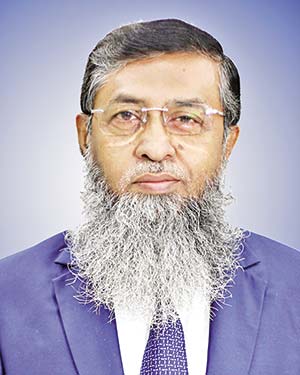
Bangladesh's industrial engine is "virtually in intensive care", with a punishing mix of power shortages, exorbitant lending rates and a burdensome double taxation regime pushing factories towards collapse, according to Mohammad Hatem, President of the Bangladesh Knitwear Manufacturers and Exporters Association (BKMEA).
In an exclusive interview with The Daily Observer on Wednesday, Hatem delivered a stark warning ahead of the national budget, saying policy inertia is throttling industrialisation at a time when entrepreneurs are already battling acute power and gas disruptions, shrinking export orders and record-high financing costs.
"Most industries are now in the ICU because there are no industry-friendly policies," he said, sharply criticising the National Board of Revenue's double taxation structure and the banking sector's steep interest charges.
“Under the existing system, the NBR deducts substantial sums at source
as Advance Income Tax (AIT), yet when the final corporate tax liability
is assessed at year-end-often at a lower 12 per cent on actual
profits-the excess AIT paid is
neither refunded nor adjusted.”
"It has become almost impossible to keep factories alive. New investors-domestic or foreign-are not coming, while many established units are now staring at closure."
Responding to a query on the National Board of Revenue (NBR), Mohammad Hatem said exporters and industrial entrepreneurs are being squeezed by what he termed an unjust advance tax regime.
Under the existing system, the NBR deducts substantial sums at source as Advance Income Tax (AIT), yet when the final corporate tax liability is assessed at year-end-often at a lower 12 per cent on actual profits-the excess AIT paid is neither refunded nor adjusted.
"To cite an example, if Tk1 crore is deducted as AIT but the final payable tax stands at Tk50 lakh, the surplus Tk50 lakh simply remains stuck," Hatem said.
He argued that despite repeated objections from the business community, the authorities have failed to address this anomaly, leaving entrepreneurs burdened by a punitive double-hit taxation mechanism that is seriously undermining industrial expansion and fresh investment.
Hatem said repeated power and energy interruptions are slashing factory utilisation by nearly half, rendering profitability unattainable and threatening wage payments to thousands of workers. The crisis, he added, is being compounded by commercial lending rates of 15 to 20 per cent and import financing costs of 15 to 16 per cent on letters of credit.
"No entrepreneur can survive under such punishing costs. We cannot meet bank instalments, let alone plan expansion," he said.
The BKMEA chief urged the forthcoming budget to deliver sweeping tax rationalisation, lower borrowing costs and immediate energy relief, warning that without coordinated intervention Bangladesh's industrial base could slide into a deeper contraction.
His remarks come as exporters have been pressing for broader liquidity support amid slowing overseas shipments and rising geopolitical energy costs. Bangladesh Bank this month reopened a Tk5,000 crore low-cost pre-shipment refinancing window for exporters at a maximum 5 per cent lending rate, a move widely welcomed by the business community as a timely cushion for production continuity.
Hatem welcomed the central bank's decision, saying the revival of the fund could help arrest the recent export slowdown if banks release financing swiftly.
"We appreciate the government's Tk5,000 crore export support initiative. Once these funds start reaching factories, our declining exports should rebound very quickly," he added.
Representing nearly 2,540 knitwear exporters since 1996, the Bangladesh Knitwear Manufacturers and Exporters Association remains one of the country's most influential trade organisations, and Hatem's intervention is expected to intensify pressure on policymakers to make the FY2026-27 budget decisively pro-industry.





