
As the world observes World Environment Day on June 5, 2026, the global community finds itself locked in a rhetorical embrace of sustainability-a hollow performative gesture that rings particularly shrill in the context of Bangladesh. Here, the environment is not merely at risk, it has effectively collapsed.
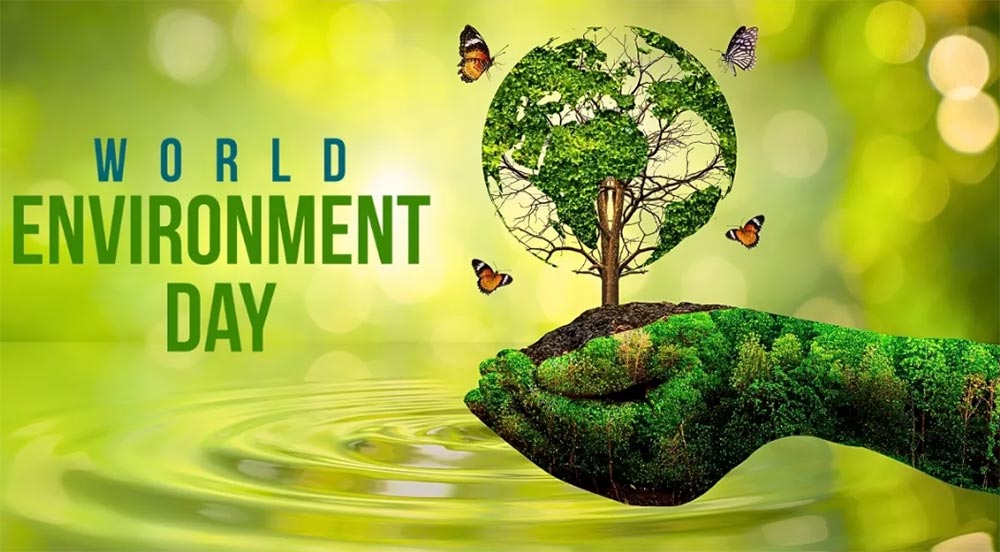
For the millions inhabiting the suffocating sprawl of our cities, nature has transitioned from a life-sustaining force into an existential adversary. We are no longer discussing the threat of climate change; we are witnessing the autopsy of a nation's geography, murdered by the twin forces of anthropogenic negligence and institutional hubris. The theme for World Environment Day 2026 is: "Inspired by Nature. For Climate. For Our Future."
Bangladesh is currently experiencing what environmentalists term a 'poly-crisis'-a simultaneous disintegration of all critical life-support systems. The air we breathe is no longer a source of sustenance but a toxic cocktail of particulate matter (PM2.5), sulfur dioxide, and nitrogen oxides. According to the World Air Quality Report (2026), Dhaka consistently ranks among the most polluted cities globally, with air quality indices regularly bypassing the 'hazardous' threshold.
This is not merely an inconvenience; it is a mass-casualty event in slow motion, contributing to a silent epidemic of respiratory diseases, cardiovascular failure, and cognitive impairment in children.
Yet, the degradation is systemic. Our rivers, the lifelines of the Bengal Delta, have been transformed into stagnant sewers. Industrial effluents from the tanning, textile, and pharmaceutical sectors flow unchecked, carrying heavy metals like chromium and lead directly into our food chain.
Research by the Intergovernmental Panel on Climate Change (IPCC) has long warned that the Ganges-Brahmaputra-Meghna delta is one of the most vulnerable regions on Earth. However, our policymakers continue to treat 'development' as the proliferation of glass-and-steel monstrosities that trap heat and repel cooling winds. We are building a future that we cannot physically inhabit.
Perhaps the most damning indictment of our current situation is the absolute absence of effective, science-led governance. For decades, the political class has treated environmental protection as a cosmetic PR exercise-a box to be ticked during ceremonial events like World Environment Day-rather than a foundational pillar of national security.
The Environmental Conservation Act (1995) and its various iterations exist largely as ornamental artifacts. When the state prioritizes short-term industrial expansion over the basic biological requirements of its citizens, it violates the most fundamental social contract. The politicization of environmental oversight has led to a culture of impunity, where Environmental Impact Assessments (EIAs) are frequently bypassed, falsified, or ignored for the sake of political expediency.
When a government fails to protect the water, the air and the soil, it abdicates its primary mandate: the protection of its people. We are witnessing a transition toward a state of living that is increasingly unfit for human habitation. The infrastructure of our cities-devoid of proper waste management, lacking in green spaces, and choking on vehicular emissions-serves as a monument to institutional decay.
The frequency of natural disasters-cyclones, earthquakes, flash floods, and increasingly erratic lightning strikes-is now, in reality, a predictable reaction to an altered environment. The World Meteorological Organization (WMO) has noted that the destabilization of the Bay of Bengal's thermal profile is fueling more intense and unpredictable cyclonic events.
Furthermore, the surge in lightning strikes, once a manageable climatic phenomenon, has become a lethal hazard. Scientists attribute this directly to the loss of tall trees and the rapid heating of the atmosphere, which disrupts vertical wind patterns. These are not 'acts of God'-they are the direct, quantifiable consequences of human intervention. We have stripped the land of its natural defenses, and now we reap the harvest of that negligence.
On this World Environment Day, we must shift the narrative from adaptation to confrontation. We must confront the reality that our current political and industrial culture is fundamentally incompatible with the survival of our ecosystem. If we continue to ignore the warning signs-the toxic air, the parched soil, the boiling streets-we will not be remembered for the buildings we erected, but for the life we allowed to wither away. The time for polite discourse has long passed; the time for systemic, radical change is the only path left to avert total collapse.
The writer is a journalist





