The concept of "tourism economics" may sound new, but it is not actually anything novel. Like our neighboring countries, we too earn from the tourism sector. A large number of people also find employment in our relatively weak tourism sector. Even without proper statistics, I believe the number is no less than 7.5 million. And we all know that tourism's contribution to Bangladesh's GDP is around 3 percent. Alongside employment, the existence of regular income sources and investment means that an economy centered around tourism does exist in our country. This is what we call "tourism economics." One does not hear much debate about "tourism economics" from the economists of our country, nor does the relevant government authority say much about it. This is likely because of its less significant contribution to the macro economy.
Bangladesh's tourism industry is not, as I say, particularly powerful; rather, it is recognized as a weak sector. But the sector is not inherently weak; it has been kept weak. This country lacks nothing in terms of tourism resources. Nature has gifted us generously with hills, rivers, the sea and forests. Over many years, due to the consistent indifference of successive governments, we have been unable to convert these resources into tourism products. Our "tourism economics" revolves around what little tourism product we do have.
Like other tourism-dependent countries, Bangladesh too has domestic, inbound and outbound tourism. Among these, domestic tourism is the most prevalent. Outbound tourism is gradually growing, while a declining trend in inbound tourism is visible. This could be the subject of separate research, which I do not wish to discuss here.
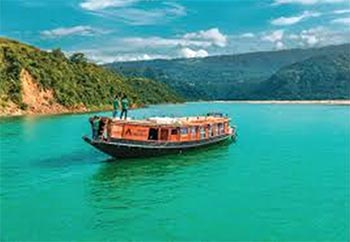
The role of tour operators and tour guides is indispensable for proper tourism management. In our country, a large number of educated, trained and refined individuals have cheerfully chosen this profession. Even without adequate government support, they are advancing the tourism business with their skill and competence. Over time, without even minimal support from the state apparatus, a few more private initiatives in the development of domestic tourism are worth noticing. For example, the houseboats centered around Tanguar Haor, the luxury launches heading to the Sundarbans, or the pleasure boat heading to Saint Martin's. Investment in these ventures is also quite substantial. These have presumably received loans from the country's banking system.
One of the other important segments of the tourism sector in our country is the hospitality industry. This segment has seen considerable development. World-class, star-rated hotels have risen in tourist cities like Cox's Bazar, Kuakata and some other premium tourist destinations. In addition, tourism centers have been developed in relatively secluded environments across the country in a somewhat eco-friendly manner, more commonly known as resorts. To my knowledge, the hotels that have grown in the country's tourist towns and the resorts built in secluded rural settings are broadly successful businesses. For young graduates who have studied tourism, this is an excellent career field.
Another important venture in the tourism sector is domestic airlines. Investment in this segment is the highest of all. Although a notable amount of private investment in the country's civil aviation sector was seen in the last decade, not all businesses could succeed in the long run. However, those that are currently surviving are clearly doing very well. The disappearance of private ventures in this sector despite sufficient demand could be the subject of separate research.
Now the question is: what steps need to be taken to fully benefit from the tourism industry? What kind of support will the government sector provide and how will the private sector play its role? These can be discussed in detail. The Ministry of Commerce, or NBR, can hold one or more meetings with tourism stakeholders before the budget to determine development strategies. The biggest advantage at the current time is that we have a long-term Tourism Master Plan in hand. If development plans can be organized according to this master plan, it is expected that this industry can be brought to the desired level. However, whatever is said, continuous research on market research and market development in the tourism industry of this country is now a demand of the times.
The government must enter the field with major capital investment in developing basic tourism infrastructure. If the government lacks the capacity, foreign investment must be attracted through special incentives. The number of tourist police in the country must be increased and the security of tourist centers strengthened. Just as Malaysia, Pakistan, Nepal, Bhutan, the Maldives and India conduct road shows to create markets for their tourism, our foreign missions in those countries must effectively promote Bangladesh's tourism industry to consumers in those markets through similar road shows.
On the other hand, to invigorate the private sector as the lifeblood of the tourism industry, the government must provide adequate policy support. The unreasonable tax burden on tourism-related businesses must be reduced. Initiatives like Sabarang must be rapidly pushed forward to attract foreign tourists. As a tourism worker and a modest student of economics, I believe that if Bangladesh's tourism sector is given due importance and moved forward, it will emerge as a significant driver of economic development in the days to come.
The writer is former Chief Executive Officer, Bangladesh Tourism Board





