
The announcement by the Minister of Agriculture on 15 June 2026 that Bangladesh will establish 2,000 mini cold storages within the next one to two years marks a historic milestone for the country's agricultural transformation. For decades, farmers have suffered substantial financial losses because of inadequate storage facilities for vegetables, fruits, spices, and other perishable commodities. The government's decision deserves sincere appreciation and congratulations because it addresses one of the most critical weaknesses in our agricultural value chain.
Bangladesh has achieved remarkable success in increasing agricultural production. Yet every year enormous quantities of vegetables, fruits, onions, and other perishables are lost before reaching consumers. During peak production seasons, farmers are often forced to sell their produce at very low prices because they lack storage facilities. When supply suddenly exceeds market demand, prices collapse, leaving farmers with little profit despite months of hard work.
The government's mini cold storage initiative directly addresses this challenge. According to the Agriculture Minister, each facility will be operated through a cooperative system involving 15 to 20 farmers and powered by solar energy. The model has already demonstrated success under pilot projects. If implemented effectively, approximately 40,000 farmers will benefit directly from the first phase of expansion.
The initiative did not emerge overnight. In recent years, the Ministry of Agriculture and the Department of Agricultural Extension (DAE) have been testing small-scale cold storage technologies under several pilot projects. In 2025, the government launched a project distributing 100 mini cold storages to farmers under the program "Enhancing Farmers' Income through Expansion of Affordable Cold Storage Technology to Tackle Climate Change Risks." These units were designed to preserve vegetables and other perishable products at the community level.
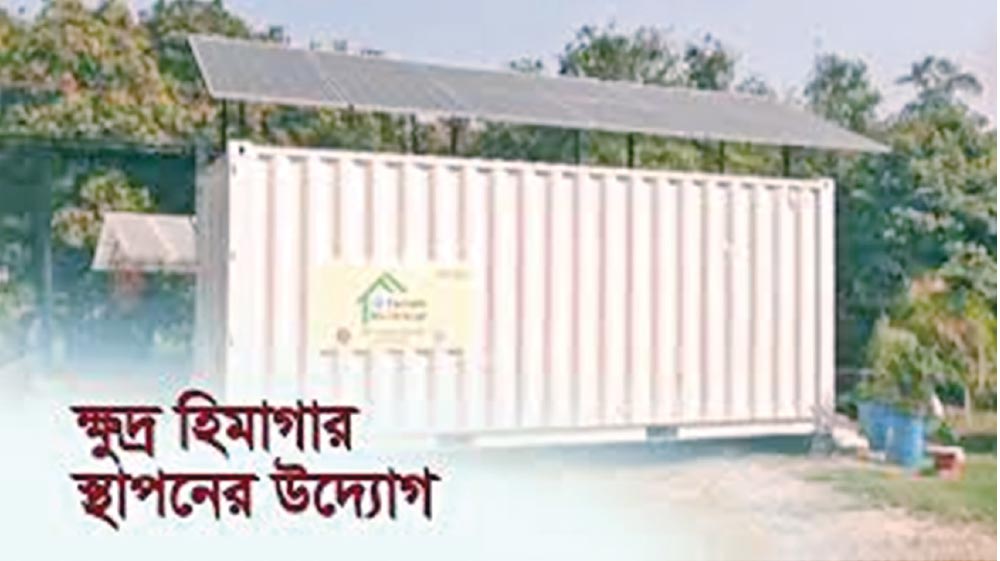
The pilot experience provides valuable lessons for scaling up. Reports indicate that many of these facilities are solar-powered, digitally monitored, and relatively affordable compared with conventional commercial cold storages. Some units have storage capacities of around 10 tons and can be managed by farmer groups. The combination of renewable energy and decentralized management makes them particularly suitable for rural Bangladesh.
The emphasis on solar power is especially important. Rising electricity costs and occasional power shortages often increase the operating expenses of conventional cold storages.
Solar-powered systems can significantly reduce running costs while contributing to climate-smart agriculture. Bangladesh has already gained considerable experience with solar irrigation systems, and this expertise can be extended to cold storage operations. Recent examples from the private sector demonstrate that solar-powered cold storage can substantially reduce energy expenses while lowering carbon emissions.
However, building 2,000 mini cold storages is only the first step. Their success will depend on how effectively they are planned, managed, and integrated into agricultural markets. Several policy considerations deserve attention.
First, site selection must be based on production clusters rather than administrative convenience. Areas with high production of vegetables, fruits, onions, ginger, garlic, potatoes, and mangoes should receive priority. Regions such as Rajshahi, Chapainawabganj, Naogaon, Rangpur, Bogura, Jashore, Cumilla, and parts of Mymensingh could benefit significantly from such investments.
Second, farmer ownership and participation must remain central.Experience around the world shows that community-managed storage facilities often perform better when users have a direct stake in management and maintenance. The cooperative model proposed by the government is therefore encouraging. However, clear operational guidelines, transparent accounting systems, and regular training will be essential.
Third, a national training program should accompany infrastructure development. Many farmers have limited experience with cold chain management. They need practical knowledge regarding grading, sorting, packaging, temperature management, record keeping, and marketing. DAE can play a leading role in building these capacities.
Fourth, digital technology should be integrated from the beginning. Mobile-based booking systems, inventory management, temperature monitoring, and market information services can improve efficiency and transparency. Farmers should be able to know available storage space, expected market prices, and optimum selling periods through simple mobile applications.
Fifth, special financial mechanisms will be needed. While the government may initially provide capital support, long-term sustainability requires financially viable business models. Low-interest credit, matching grants, and public-private partnerships could help farmer groups maintain and expand operations.
Sixth, mini cold storages should become part of a broader cold-chain ecosystem. Storage alone will not solve all marketing problems. Efficient transportation, collection centers, pack houses, processing facilities, and market linkages must also be strengthened. Otherwise, farmers may still face bottlenecks when attempting to sell stored produce.
Seventh, research institutions should continuously evaluate performance. Organizations such as BARC, BARI, BAU, and other agricultural research institutions can help identify the most suitable crops, storage conditions, energy systems, and business models. Evidence-based improvements will be essential as the program expands nationwide.
The government should also consider special support for women's groups, youth entrepreneurs, and farmer producer organizations. Mini cold storages can create new rural employment opportunities in storage management, transportation, aggregation, and marketing. They can become important engines of rural economic growth.
The initiative is particularly relevant for northern Bangladesh, including the Barind region. Farmers there increasingly produce vegetables, fruits, mangoes, onions, and spices. Yet they often suffer from severe price fluctuations and limited storage opportunities. Community-based cold storages powered by solar energy could significantly strengthen agricultural resilience in these areas.
Bangladesh now stands at an important crossroads. The country has already achieved food production success. The next challenge is reducing losses, increasing value addition, and improving farmer profitability. Mini cold storages represent a practical and farmer-friendly solution to this challenge.
The government's decision to establish 2,000 mini cold storages deserves widespread support. Yet success will depend not only on construction but also on sound planning, effective management, farmer ownership, digital integration, and strong market linkages. If these elements are ensured, this initiative may become one of the most impactful agricultural investments of the decade.
The vision has been announced. The pilots have shown promise. Now it is time to transform that vision into a nationwide success story that benefits millions of farmers and strengthens Bangladesh's food system for generations to come.
The writer is an agricultural scientist (Former Director General, Bangladesh Agricultural Research Institute and Fellow, Bangladesh Academy of Agriculture)





