



| HEADLINE |

|

Ghost power bills spark outrage; Theft or Robbery?
Published : Monday, 3 August, 2026 at 5:41 PM
Hasibul Islam


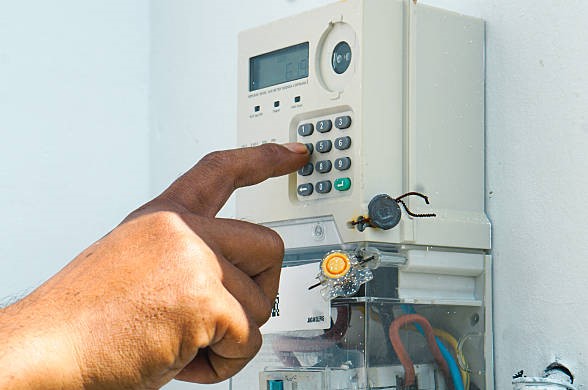
A wave of complaints over unusually high electricity bills for June has swept across Bangladesh, with consumers from the capital and several districts alleging that their bills have increased several-fold despite little or no change in electricity consumption. The complaints have come from both prepaid and postpaid meter users, prompting widespread public anger and renewed scrutiny of the country's electricity billing system.
Consumers from Dhaka, Narayanganj, Rajshahi, Chapainawabganj, Brahmanbaria, Kurigram, Habiganj and other districts say they did not add any new electrical appliances to their households, while many areas also experienced load shedding during the month. Despite this, they received bills far higher than usual, leading many to question whether the situation amounts to "theft or robbery."
Bangladesh has nearly 50 million electricity consumers, a large proportion of whom still use postpaid meters. Consumers and energy experts have long alleged irregularities in meter reading, claiming that meter readers often fail to record actual consumption. In many cases, estimated bills are issued or several months' electricity usage is combined into a single billing cycle, pushing customers into higher tariff slabs and significantly increasing their bills.
Power sector officials acknowledge that errors in meter reading, billing mistakes and the accumulation of electricity units over multiple months can result in abnormally high bills. However, a source familiar with the sector also alleged that questions have been raised in some cases regarding revenue collection and system-loss accounting at the end of the fiscal year.
Complaints reported across the country
In Dhaka's Adabor area, a resident who usually pays around Tk 1,500 a month received a June bill of nearly Tk 14,500. After visiting the local electricity office, officials discovered that a single incorrect digit had been entered during meter reading. The bill was later corrected to Tk 1,460.
A consumer in Niketan saw the monthly bill jump from Tk 6,842 in May to Tk 48,909 in June.
In Narayanganj, one customer reported an increase from Tk 6,100 to Tk 11,200. In Brahmanbaria, one consumer's bill rose from Tk 1,700 to nearly Tk 4,000, while another's increased from Tk 6,000 to almost Tk 13,000.
In Chapainawabganj, a household without an air conditioner received a bill of Tk 4,766, up from Tk 1,800. In Ulipur of Kurigram district, a consumer using only a fan and a light bulb said they received a bill of Tk 7,200.
One of the most extreme cases was reported in Habiganj, where a woman was mistakenly issued an electricity bill of Tk 25.7 million (Tk 2.57 crore). Authorities later attributed the incident to a computer error and corrected the bill.
Prepaid users also affected
The complaints are not limited to postpaid consumers.
A prepaid meter user in Dhaka said they had to recharge nearly Tk 9,000 within just 13 days, whereas a full month's electricity consumption usually costs between Tk 3,000 and Tk 3,500.
In Tejgaon, a woman using a prepaid electricity meter said a Tk 1,000 recharge, which normally lasts for more than a month, was exhausted in just 11 days in July. She said her family's electricity consumption had remained unchanged, leaving her unable to explain the sharp increase in costs and adding to concerns over possible billing irregularities
A consumer under the Northern Electricity Supply Company PLC (NESCO) claimed that nearly Tk 350 was deducted within three days after recharging Tk 1,000.
Government orders investigation
Following the surge in complaints, the Ministry of Power held a review meeting on July 2, chaired by Power Division Secretary Mirana Mahrukh.
The meeting instructed all electricity distribution companies to immediately investigate complaints of excessive bills, promptly correct any billing or technical errors, and take legal action against those found responsible for malpractice.
Meanwhile, environmental group Bangladesh Poribesh Andolon (BAPA) and the Rajshahi Rokkha Sangram Parishad submitted a memorandum to NESCO's managing director, demanding the cancellation of inflated bills, issuance of fresh bills based on actual meter readings, adjustment of excess charges and the establishment of a dedicated consumer complaint cell.
Experts call for greater transparency
Professor M. Shamsul Alam, energy adviser to the Consumers Association of Bangladesh (CAB), said complaints over electricity bills are not new.
He said transparency in meter reading and billing must be ensured to restore consumer confidence and prevent similar incidents from recurring.
Authorities defend billing system
Bangladesh Power Development Board (BPDB) Chairman Md. Rezaul Karim said electricity consumption increased in June due to higher temperatures and that electricity tariffs had also risen. He added that most of the disputed bills examined by the authorities were found to be accurate.
State Minister for Power, Energy and Mineral Resources Anindya Islam Amit acknowledged that complaints of excessive bills had been received from several areas. He said complaint cells have been opened at every electricity office to resolve consumers' grievances quickly and urged affected customers to contact their local offices for assistance.
-HIS

Loading...
Loading...
Also read




Editor : Iqbal Sobhan Chowdhury
Published by the Editor on behalf of the Observer Ltd. from Globe Printers, 24/A, New Eskaton Road, Ramna, Dhaka.
Editorial, News and Commercial Offices : Aziz Bhaban (2nd floor), 93, Motijheel C/A, Dhaka-1000.
Phone: PABX- 41053001-06; Advertisement: 41053012; 01793317829, 01550707291, E-mail: [email protected], [email protected] Online: email: [email protected] 41053014; 01550707297 Advertisement: 01550707296
Published by the Editor on behalf of the Observer Ltd. from Globe Printers, 24/A, New Eskaton Road, Ramna, Dhaka.
Editorial, News and Commercial Offices : Aziz Bhaban (2nd floor), 93, Motijheel C/A, Dhaka-1000.
Phone: PABX- 41053001-06; Advertisement: 41053012; 01793317829, 01550707291, E-mail: [email protected], [email protected] Online: email: [email protected] 41053014; 01550707297 Advertisement: 01550707296


