



| HEADLINE |

|

Climate change past point of no return, warns UN
Published : Sunday, 6 September, 2026 at 12:00 AM
Observer Desk


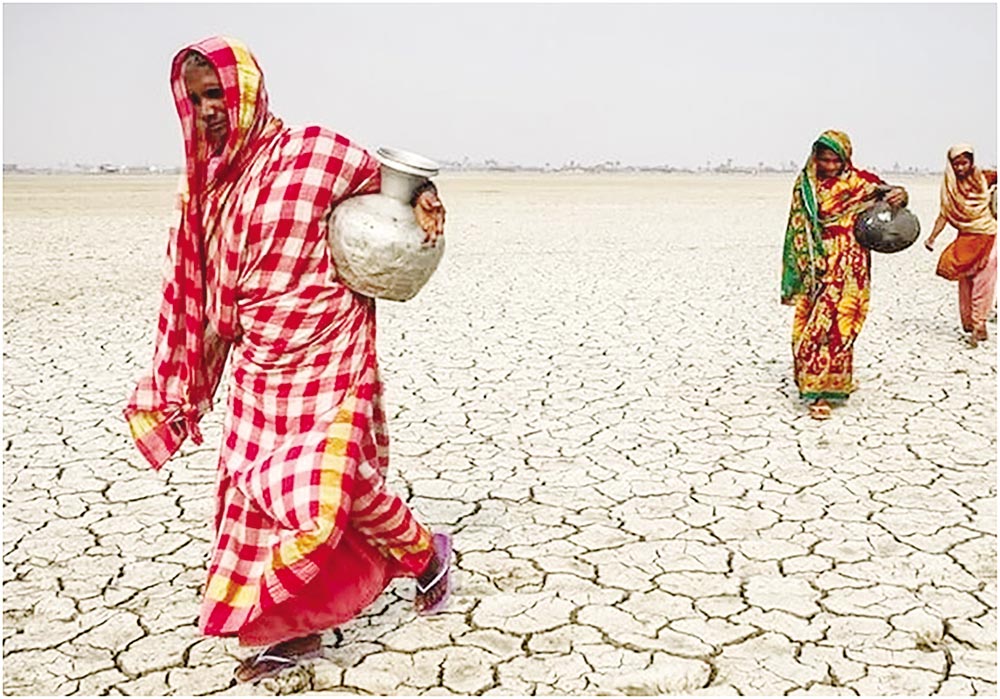 The world is now expected to breach the 1.5C global warming threshold within the next few years and remain above it for decades, according to a new United Nations report that says the focus must increasingly turn to limiting the scale and duration of the overshoot.
The report by the United Nations Environment Programme, released on Wednesday, says warming driven by the burning of coal, oil and gas will push global temperatures beyond the 1.5C limit set under the 2015 Paris Agreement.
Even under the most optimistic scenario, warming is now expected to peak at around 1.8C by mid-century, while current government policies could put the world on course for about 2.6C of warming by 2100.
“Humanity is speeding past the limit to avoid climate catastrophe,” UN Secretary-General António Guterres said.
UN officials and scientists stressed, however, that 1.5C remains the goal.
Rather than treating the threshold as a point beyond which further action no longer matters, they say countries must now work to limit how far temperatures rise above it and how long the overshoot lasts.
That would require faster cuts in fossil fuel use alongside technologies capable of removing carbon dioxide from the atmosphere.
“Let’s be very clear, the 1.5 target is still the goal. But now we need to approach it differently from above,” UNEP Executive Director Inger Andersen said.
The world is currently around 1.4C warmer than pre-industrial levels on a 20-year average.
Report co-author Richard Betts, a climate scientist at the University of Exeter, said temperatures were likely to cross 1.5C within the next few years and remain above the threshold for “many, many decades”.
“It’s a reality check. We have to live with this warmer world,” Betts said.
“But there’s still a lot we can do to limit warming.”
The report warns that every additional fraction of a degree will bring greater risks.
Joeri Rogelj of Imperial College London, another report co-author, said every five years of delay in cutting emissions would add at least 0.1C to peak warming.
Andrew Weaver, a climate scientist at the University of Victoria who was not involved in the report, cautioned against treating 1.5C as a definitive point of failure.
“Every tenth of a degree we avoid still means less damage,” he said.

Loading...
Loading...
Also read



Editor : Iqbal Sobhan Chowdhury
Published by the Editor on behalf of the Observer Ltd. from Globe Printers, 24/A, New Eskaton Road, Ramna, Dhaka.
Editorial, News and Commercial Offices : Aziz Bhaban (2nd floor), 93, Motijheel C/A, Dhaka-1000.
Phone: PABX- 41053001-06; Advertisement: 41053012; 01793317829, 01550707291, E-mail: [email protected], [email protected] Online: email: [email protected] 41053014; 01550707297 Advertisement: 01550707296
Published by the Editor on behalf of the Observer Ltd. from Globe Printers, 24/A, New Eskaton Road, Ramna, Dhaka.
Editorial, News and Commercial Offices : Aziz Bhaban (2nd floor), 93, Motijheel C/A, Dhaka-1000.
Phone: PABX- 41053001-06; Advertisement: 41053012; 01793317829, 01550707291, E-mail: [email protected], [email protected] Online: email: [email protected] 41053014; 01550707297 Advertisement: 01550707296


