



| HEADLINE |

|
Bangladesh to build 460 MW solar plant at Rampal site
Published : Tuesday, 8 September, 2026 at 10:04 PM
Observer Online Report


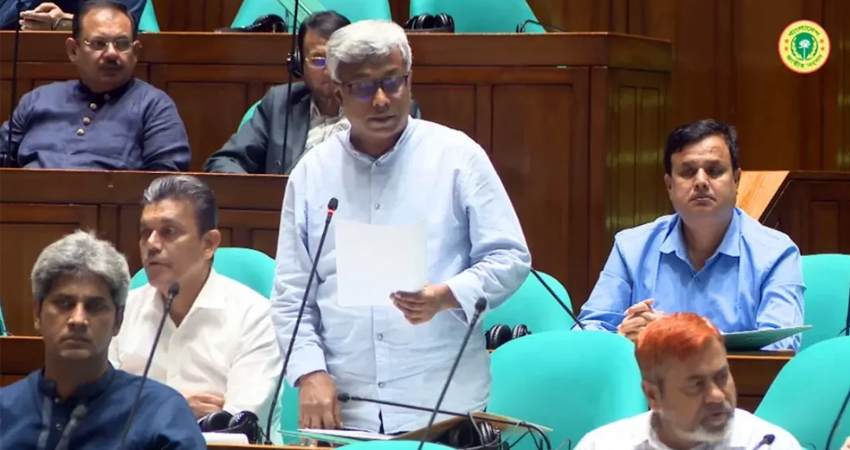
Collected Photo
State Minister for Power, Energy and Mineral Resources Aninda Islam Amit announced in parliament on Tuesday (September 8) that the government will implement a 460 MW solar power project instead of a coal-fired plant in the second phase of the Rampal power station to protect the environment and heritage.
Responding to a notice raised by MP Helen Zerin Khan with Deputy Speaker Kaisar Kamal in the chair, the minister outlined government initiatives for the energy sector. He added that a 70 MW solar plant is also planned on the unused ash pond area of the Matarbari Coal Power Project.
Highlighting future energy needs, Amit stated that national electricity demand is projected to reach 24,000 to 25,000 MW by 2030 due to ongoing economic growth and industrialization. To meet this demand while reducing reliance on imported fossil fuels, the government aims to generate at least 20 per cent of its power from renewable sources by 2030 and 40 per cent by 2040, as outlined in the National Renewable Energy Development Policy 2026-2030.
Under the plan, the target includes 5,500 MW from rooftop solar, 4,500 MW from ground-mounted solar, and an additional 450 to 550 MW from wind, waste-to-energy, hydro, floating solar, and agrivoltaics by 2030.
To stimulate private investment, duty on imported solar panels, inverters, batteries, and mounting structures has been slashed to one per cent, alongside a full six-month tax exemption for commercial importers of solar components.
Furthermore, the government will purchase excess electricity generated by solar project investors at Tk 10.50 per unit over the next six months to supply the national grid.
The minister noted that policy frameworks including the Project Development Guidelines on Government Land 2026, the Private Participation Enhancement Policy 2025, Net Metering Guidelines, and the National Rooftop Solar Program have been finalized to facilitate public-private partnerships and private sector entry into renewable energy.
-SA
Loading...
Loading...
Also read









Editor : Iqbal Sobhan Chowdhury
Published by the Editor on behalf of the Observer Ltd. from Globe Printers, 24/A, New Eskaton Road, Ramna, Dhaka.
Editorial, News and Commercial Offices : Aziz Bhaban (2nd floor), 93, Motijheel C/A, Dhaka-1000.
Phone: PABX- 41053001-06; Advertisement: 41053012; 01793317829, 01550707291, E-mail: [email protected], [email protected] Online: email: [email protected] 41053014; 01550707297 Advertisement: 01550707296
Published by the Editor on behalf of the Observer Ltd. from Globe Printers, 24/A, New Eskaton Road, Ramna, Dhaka.
Editorial, News and Commercial Offices : Aziz Bhaban (2nd floor), 93, Motijheel C/A, Dhaka-1000.
Phone: PABX- 41053001-06; Advertisement: 41053012; 01793317829, 01550707291, E-mail: [email protected], [email protected] Online: email: [email protected] 41053014; 01550707297 Advertisement: 01550707296


