



| HEADLINE |

|

Rohingya problem a ‘grave human crisis’: UNGA President
Published : Tuesday, 22 September, 2026 at 12:00 AM


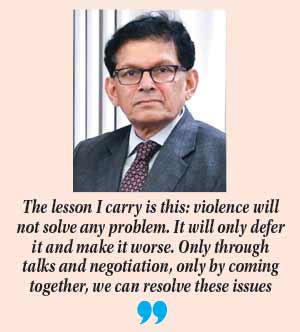 President of the UN General Assembly's 81st session Dr Khalilur Rahman has described the Rohingya crisis as a “grave human crisis” and said violence will not solve any problem.
“The lesson I carry is this: violence will not solve any problem. It will only defer it and make it worse. Only through talks and negotiation, only by coming together, we can resolve these issues,” he said.
The UNGA President said it is a grave human crisis - a population attacked, their homes bombed, their villages burned, chased out by their own country’s people while pregnant mothers’ abdomens cut open and the fetuses thrown into fire.
“But I also saw their resilience, their ability to survive and their yearning to go home. When the Secretary-General visited Cox’s Bazar last year, more than 100,000 refugees gathered on a Ramadan evening to share breakfast with him, each holding a placard reading: we want to go home,” Khalilur said.
“That’s why I see such value in the assembly - a place where people gather at the highest levels, in a safe environment, to work out the best way forward,” he said.
As high-level week gets underway - the busiest week of the UN calendar, the largest gathering of world leaders in one place anywhere on the planet - Rahman sat down with UN News recently to discuss what a “much needed transformation” would actually look like, why he believes artificial intelligence poses a test unlike anything the UN has faced before and what lessons from his work on the Rohingya crisis he is carrying into the role.
Bangladesh is hosting over 1.3 million Rohingyas in Cox’s Bazar and Bhasan Char Island, a senior official told UNB, noting that Prime Minister Tarique Rahman, during his General Assembly address, will seek to draw renewed international attention to the protracted Rohingya crisis and mobilise stronger global cooperation towards its resolution.
He is scheduled to attend a Bangladesh-hosted side event on the Rohingya issue on September 23 where he will seek effective international cooperation for the earliest possible repatriation of the forcibly displaced Rohingyas to Myanmar.
Foreign Secretary Asad Alam Siam on Sunday described the Rohingya issue as an “ongoing problem” and said Bangladesh would once again use the gathering of world leaders to highlight its magnitude and the challenges it poses.�"UNB

Loading...
Loading...
Also read



Editor : Iqbal Sobhan Chowdhury
Published by the Editor on behalf of the Observer Ltd. from Globe Printers, 24/A, New Eskaton Road, Ramna, Dhaka.
Editorial, News and Commercial Offices : Aziz Bhaban (2nd floor), 93, Motijheel C/A, Dhaka-1000.
Phone: PABX- 41053001-06; Advertisement: 41053012; 01793317829, 01550707291, E-mail: [email protected], [email protected] Online: email: [email protected] 41053014; 01550707297 Advertisement: 01550707296
Published by the Editor on behalf of the Observer Ltd. from Globe Printers, 24/A, New Eskaton Road, Ramna, Dhaka.
Editorial, News and Commercial Offices : Aziz Bhaban (2nd floor), 93, Motijheel C/A, Dhaka-1000.
Phone: PABX- 41053001-06; Advertisement: 41053012; 01793317829, 01550707291, E-mail: [email protected], [email protected] Online: email: [email protected] 41053014; 01550707297 Advertisement: 01550707296


