



| HEADLINE |

|

OMC strengthens local dengue test capacity
Published : Tuesday, 29 September, 2026 at 12:00 AM
Staff Correspondent


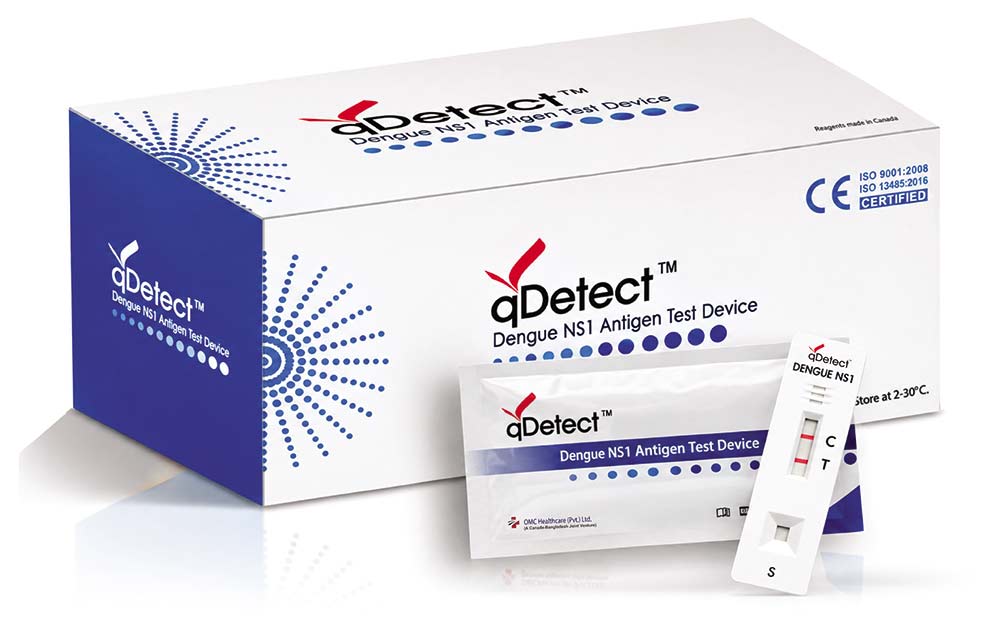 As dengue continues to strain Bangladesh’s healthcare system, local production of diagnostic kits is gaining importance amid concerns over disruptions to imported medical supplies.
Local availability is particularly relevant as dengue and chikungunya can circulate simultaneously and share several clinical symptoms. Timely testing helps physicians make appropriate clinical decisions and health facilities manage increased demand during outbreaks.
OMC Healthcare says it has been manufacturing diagnostic products in Bangladesh since 2011 and operates under ISO 9001 and ISO 13485 quality-management systems. It obtained WHO-GMP certification in 2018 and maintains dedicated production and quality-control facilities.
Its locally manufactured dengue and chikungunya tests have also been used in research in Bangladesh, including a recent hospital-based study involving febrile patients in Dhaka.
The company also contributed to Bangladesh’s COVID-19 response by developing a locally manufactured RT-PCR test kit. DGDA records from the pandemic period list OMC Healthcare among local agents or manufacturers associated with COVID-19 diagnostic products.
Industry stakeholders say domestic manufacturing can provide a buffer during public-health emergencies, when global demand for diagnostic supplies may rise sharply and shipping or supply-chain disruptions can delay imports.
They, however, stress that any preference for local manufacturers in public procurement should not compromise quality or fair competition. They suggest that decisions should be based on regulatory approval, quality certification, independently assessed performance, manufacturing capacity, delivery records and the ability to scale up production during emergencies.
The issue has gained attention amid changes to Bangladesh’s public procurement framework. The Cabinet approved the draft Public Procurement (Amendment) Ordinance, 2026 on September 20, according to a Cabinet Division release. The Public Procurement (Amendment) Act, 2026 was gazetted on April 10 after Parliament passed the bill.
The reforms include rated-criteria evaluation of goods, works and physical services, limited tendering in specified circumstances and alternative procurement arrangements during state emergencies. Against this backdrop, stakeholders are calling for procurement policies that recognise genuine domestic manufacturing capacity while maintaining strict quality and performance standards.
For dengue control, mosquito management, public awareness and clinical treatment remain essential. Ensuring timely access to reliable diagnostic testing is also critical to strengthening Bangladesh’s preparedness for future outbreaks.

Loading...
Loading...
Also read



Editor : Iqbal Sobhan Chowdhury
Published by the Editor on behalf of the Observer Ltd. from Globe Printers, 24/A, New Eskaton Road, Ramna, Dhaka.
Editorial, News and Commercial Offices : Aziz Bhaban (2nd floor), 93, Motijheel C/A, Dhaka-1000.
Phone: PABX- 41053001-06; Advertisement: 41053012; 01793317829, 01550707291, E-mail: [email protected], [email protected] Online: email: [email protected] 41053014; 01550707297 Advertisement: 01550707296
Published by the Editor on behalf of the Observer Ltd. from Globe Printers, 24/A, New Eskaton Road, Ramna, Dhaka.
Editorial, News and Commercial Offices : Aziz Bhaban (2nd floor), 93, Motijheel C/A, Dhaka-1000.
Phone: PABX- 41053001-06; Advertisement: 41053012; 01793317829, 01550707291, E-mail: [email protected], [email protected] Online: email: [email protected] 41053014; 01550707297 Advertisement: 01550707296


