



| HEADLINE |

|

Bank Scams, Capital Shortfalls Drive Savers Back to Savings Certificates
Published : Wednesday, 14 October, 2026 at 12:00 AM
Business Correspondent


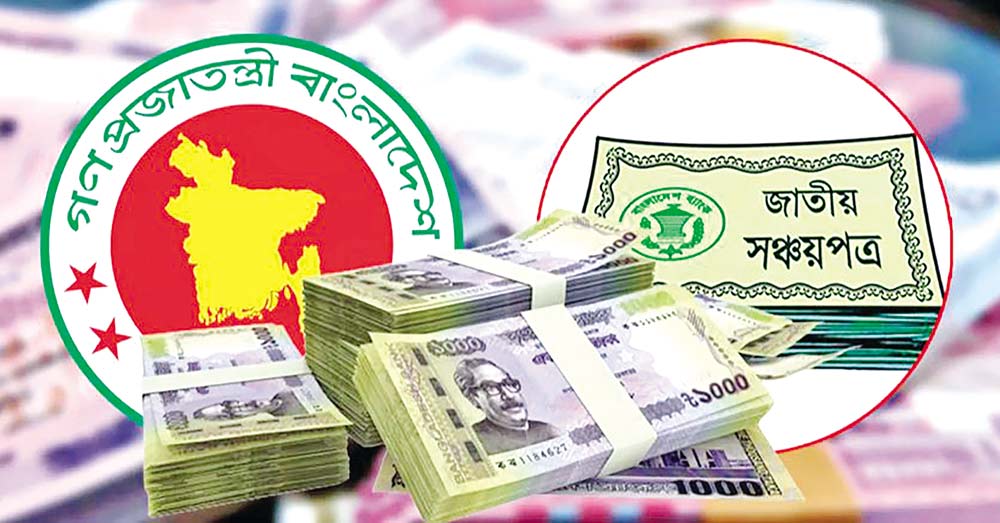 Banking scams, governance failures and capital shortfalls at 22 commercial banks are driving savers towards government-backed savings certificates, with net sales surging nearly 57 per cent in the first two months of FY27 as concerns over the safety of bank deposits persist.
The sharp rise in investment signals a possible shift in public risk perception, as households seek safer havens for their hard-earned money amid mounting concerns over the banking sector’s financial health.
In August, net sales of savings certificates rose to Tk 403.65 crore from Tk 278.81 crore a year earlier. Sales exceeded repayments of principal and interest by Tk 2,059.47 crore, according to central bank officials.
Shaken by banking scams, governance failures and massive capital shortfalls at least 22 commercial banks, Bangladesh’s savers are increasingly turning to government-backed savings certificates, pushing net sales of the instruments sharply higher and raising fresh questions about public confidence in the banking system.
Analysts say the rising demand reflects more than a search for attractive returns. It also signals a shift in how ordinary Bangladeshis assess financial risk, with concerns over irregularities, weak governance and the financial resilience of troubled lenders weighing on investment decisions.
For many households, the question is no longer simply where their money earns the most, but where it is least likely to be exposed to financial distress.
Anwar Hossain, a retired government official, is among those who have reconsidered their investment choices. After investing in savings certificates for years, he moved his money into bank deposits when deposit rates became relatively attractive. Now, growing concerns over the banking sector have prompted him to return to government-backed instruments.
“I saved some money during my working life. After buying a flat, I deposited the remaining amount in a bank. But given the current condition of the banking sector, I no longer feel entirely comfortable keeping my money there. The issue of banks being taken over is also on my mind. That is why I have invested in savings certificates again,” he said.
His experience illustrates the dilemma facing savers as they weigh potential returns against concerns about the safety, accessibility and reliability of their money.
M Helal Ahmed Joni, a research fellow at Change Initiative and a banking sector analyst, said the surge in savings certificate investment should not be mistaken for an improvement in households’ capacity to save.
“ The increase in investment in savings certificates does not mean that people's capacity to save has improved. Rather, many are shifting their money to savings certificates because of declining confidence in banks driven by loan scams and capital shortfalls in at least 22 commercial banks,” he said.
He warned that restoring confidence would require stronger governance and decisive action against financial misconduct.
“Good governance must be ensured, and irregularities and looting must be stopped to retain deposits and investments in banks,” he said.
The government’s decision to retain prevailing profit rates for July-December of the current fiscal year has also helped sustain the appeal of savings certificates. Their maximum rates range from 11.82 per cent to 11.98 per cent, offering investors a relatively attractive source of predictable income.
Government backing adds to their appeal, particularly for risk-conscious households unsettled by persistent weaknesses in parts of the banking system.
However, savings certificates are not a direct substitute for bank deposits. Eligibility requirements, investment ceilings, encashment rules and tax treatment can affect their accessibility and actual returns. The latest increase may therefore reflect a combination of yield-seeking, risk aversion and the redistribution of existing savings rather than an expansion in total household savings.
Bangladesh Bank has disputed the suggestion that rising investment in savings certificates necessarily reflects declining public confidence in banks.
Arif Hossain Khan, spokesperson and executive director of Bangladesh Bank, said bank deposits were also increasing, arguing that both trends could occur simultaneously.
“The increase in investment in savings certificates does not mean that people's confidence in banks has declined. People's confidence in banks has returned, and bank deposits are also increasing day by day,” he said.
He described the choice between bank deposits and savings certificates as an individual investment decision, saying people remained free to choose where to place their money.
The contrasting assessments expose a critical challenge for Bangladesh’s financial sector: rising investment in government savings instruments may reflect normal portfolio diversification, but it may also point to lingering concerns about the security of bank deposits.
The latest figures alone cannot establish how much of the increase stems from a loss of confidence in banks. A clearer assessment would require comparable data on bank deposit growth, savings certificate purchases and redemptions, and investment patterns across different income groups.
But the message from savers such as Anwar Hossain is unmistakable: returns matter, yet confidence remains central to where people choose to keep their money.
For banks already struggling with capital deficiencies and governance concerns, restoring that confidence will require more than assurances. It will depend on credible reforms, stronger oversight, accountability for irregularities and demonstrable protection of depositors’ interests.

Loading...
Loading...
Also read



Editor : Iqbal Sobhan Chowdhury
Published by the Editor on behalf of the Observer Ltd. from Globe Printers, 24/A, New Eskaton Road, Ramna, Dhaka.
Editorial, News and Commercial Offices : Aziz Bhaban (2nd floor), 93, Motijheel C/A, Dhaka-1000.
Phone: PABX- 41053001-06; Advertisement: 41053012; 01793317829, 01550707291, 01550707296
E-mail: [email protected], [email protected]. [email protected], [email protected], [email protected], [email protected], Online-email: [email protected]


