



| HEADLINE |

|

IMF chief highlights hopes and risks facing global economy
Published : Saturday, 17 October, 2026 at 6:03 PM
Observer Online Report


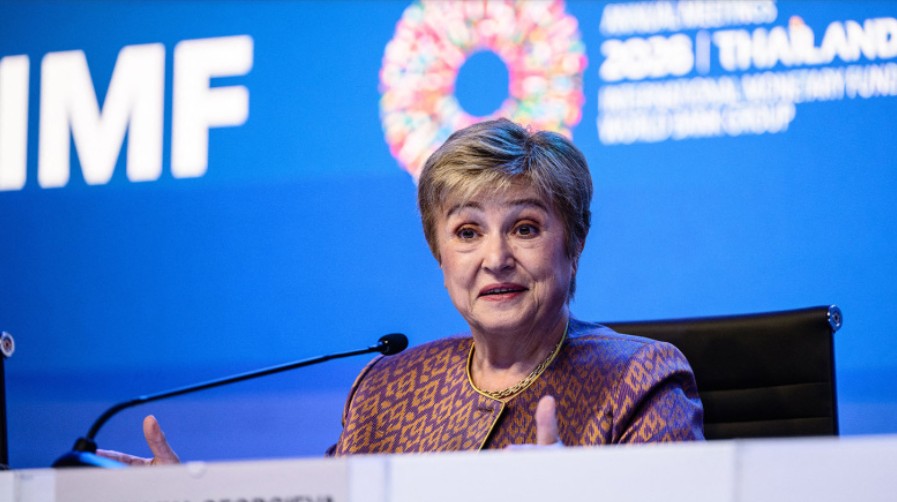
International Monetary Fund (IMF) Managing Director Kristalina Georgieva has highlighted both growth prospects and mounting risks facing the global economy, including inflation, rising debt, wars and climate change.
Speaking at a press conference with Saudi Finance Minister Mohammed Al-Jadaan at the closing session of the IMF and World Bank Group annual meetings in Bangkok, Thailand, on Saturday, October 17, Georgieva stressed the need to support low-income countries struggling with rising prices caused by the war in Iran.
Georgieva said the resilience of the global economy, the potential of artificial intelligence (AI) and Asia’s dynamism offered reasons for optimism. However, concerns remained over AI’s impact, high inflation, growing debt burdens, conflicts and climate-related risks.
She said rising global energy and commodity prices caused by the war had placed additional pressure on low-income countries. Helping these nations cope with the crisis was part of the IMF’s responsibility, she added.
Energy prices in international markets have risen since the United States and Israel launched a war against Iran in late February. Iran retaliated with attacks targeting US allies in the Gulf region, disrupting oil and gas supplies.
Throughout the week, the IMF also warned that high levels of government debt in advanced economies, along with rising bond yields, were complicating financial conditions.
The fund cautioned that central banks might need to raise interest rates to contain inflation, potentially increasing borrowing costs further.
The annual meetings, held in Bangkok from October 12 to 18, brought together finance ministers, central bank governors and senior officials from different countries. Inflation, rising bond yields and AI-driven economic growth were among the key topics discussed.
Addressing the rapid expansion of AI and rising investment in the technology, Georgieva said member countries recognised its importance in sustaining economic growth. However, she warned against relying too heavily on a single driver of growth.
“When we become dependent on one particular driver of growth, it is like standing on one leg,” she said.
The meetings also discussed the need for safeguards and oversight of the most advanced AI models. Recent security breaches involving autonomous AI agents have added urgency to the debate.
Georgieva welcomed the spirit of cooperation among AI companies, governments and other stakeholders in Bangkok.
“When we do our best, the benefits become visible through improvements in people’s lives,” she said.
The discussions underscored the need for greater international cooperation to address war-driven price increases, mounting debt pressures and the rapidly evolving impact of AI.
sks

Loading...
Loading...
Also read







Editor : Iqbal Sobhan Chowdhury
Published by the Editor on behalf of the Observer Ltd. from Globe Printers, 24/A, New Eskaton Road, Ramna, Dhaka.
Editorial, News and Commercial Offices : Aziz Bhaban (2nd floor), 93, Motijheel C/A, Dhaka-1000.
Phone: PABX- 41053001-06; Advertisement: 41053012; 01793317829, 01550707291, E-mail: [email protected], [email protected] Online: email: [email protected] 41053014; 01550707297 Advertisement: 01550707296
Published by the Editor on behalf of the Observer Ltd. from Globe Printers, 24/A, New Eskaton Road, Ramna, Dhaka.
Editorial, News and Commercial Offices : Aziz Bhaban (2nd floor), 93, Motijheel C/A, Dhaka-1000.
Phone: PABX- 41053001-06; Advertisement: 41053012; 01793317829, 01550707291, E-mail: [email protected], [email protected] Online: email: [email protected] 41053014; 01550707297 Advertisement: 01550707296


