



| HEADLINE |

|

Netanyahu fate on line as Israel holds general election today
Published : Tuesday, 27 October, 2026 at 8:26 AM
Observer Online Report


Collected Photo
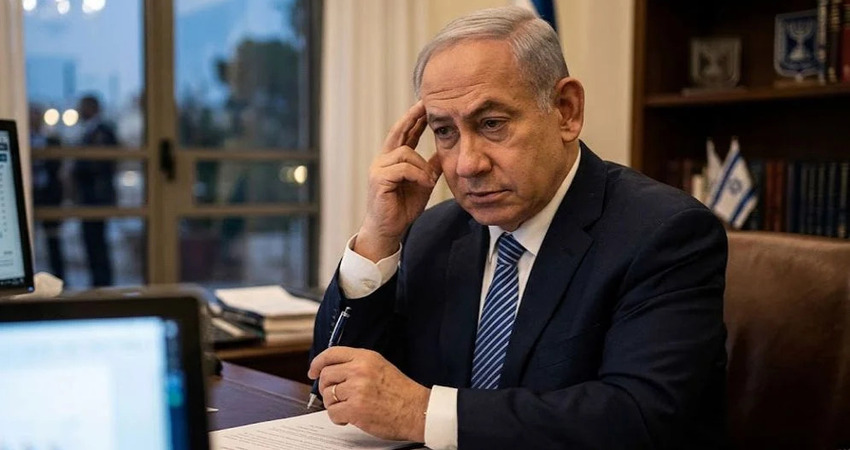
Israelis voted on Tuesday (October 27) in the country's general election to elect the 120 members of the 26th Knesset, setting up a high-stakes showdown that will decide whether Benjamin Netanyahu retains power for a seventh term as prime minister.
Approximately 7.3 million eligible voters are casting their ballots under a proportional representation system, where parties must secure at least 3.25 per cent of the total vote to enter the legislature. A party or coalition requires 61 seats to form a majority government.
Netanyahu, leading his right-wing Likud party, remains anchored by his ultra-nationalist and religious coalition partners, including National Security Minister Itamar Ben-Gvir’s Jewish Power, Finance Minister Bezalel Smotrich’s Religious Zionism, and ultra-Orthodox parties Shas and United Torah Judaism.
The opposition bloc features a range of competing figures, with former IDF Chief of Staff Gadi Eisenkot—heading the centrist Yashar party—emerging as a prominent contender to lead a potential anti-Netanyahu coalition. Former prime ministers Naftali Bennett, leading the Together alliance, and Yair Lapid are also key figures in the opposition movement.
Final pre-election opinion polls conducted last Friday point to a deadlocked outcome. Projected seat distributions place Likud and Yashar neck and neck at 22 seats each, followed by Together with 14 seats, and The Democrats and Joint List securing 9 seats each.
Meanwhile, Jewish Power, Shas, and United Torah Judaism are projected to take 8 seats each, Yisrael Beiteinu and Religious Zionism 7 seats each, and Ra’am 5 seats.
The projections place the Netanyahu-led coalition at 53 seats and the main opposition bloc at 52 seats, leaving both short of the 61-seat threshold. The mathematical deadlock elevates Arab-majority parties to a potentially decisive position, though major opposition leaders, including Eisenkot, have largely ruled out formal coalition partnerships with them.
If post-election negotiations fail to yield a workable majority, Israel could face yet another snap election, during which Netanyahu would remain as caretaker prime minister.
This marks the first parliamentary election in Israel since the October 7, 2023 attacks. Key campaign issues include institutional accountability for security failures, mandatory military conscription for ultra-Orthodox students, and broader debates over the relationship between state and religio
-SA

Loading...
Loading...
Also read



Editor : Iqbal Sobhan Chowdhury
Published by the Editor on behalf of the Observer Ltd. from Globe Printers, 24/A, New Eskaton Road, Ramna, Dhaka.
Editorial, News and Commercial Offices : Aziz Bhaban (2nd floor), 93, Motijheel C/A, Dhaka-1000.
Phone: PABX- 41053001-06; Advertisement: 41053012; 01793317829, 01550707291, E-mail: [email protected], [email protected] Online: email: [email protected] 41053014; 01550707297 Advertisement: 01550707296


