



| HEADLINE |

|

Children face severe health risks as Gazipur pollution spikes
Published : Tuesday, 27 October, 2026 at 11:55 AM
Observer Correspondent


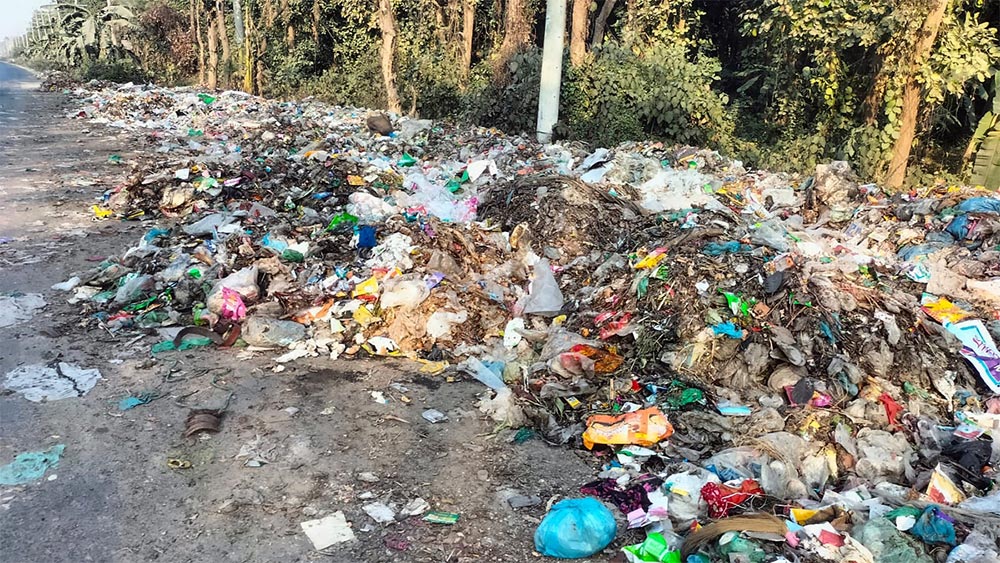
Symbolic Photo
Country's major industrial hub Gazipur faces an escalating environmental crisis as dense industrial smoke, untreated chemical waste, and heavy dust clouds severely compromise air quality, leaving the region's future generation at grave health risk.
Unplanned urbanization coupled with widespread violations of environmental regulations by local factories has elevated toxic pollutants to hazardous levels. Children remain the most vulnerable demographic affected by the deteriorating environment.
Field data and recent environmental studies indicate that concentrations of particulate matter—PM2.5 and PM10—in Gazipur's ambient air consistently exceed safe limits, reaching up to 1,000 µg/m³ during dry seasons. Over the past two decades, nearly 60 per cent of the area's forests have been depleted, while 50 per cent of water bodies have been illegally encroached upon or polluted.
Local rivers, including the Turag and Labondaha, along with surrounding canals, are heavily contaminated by untreated effluent discharged through at least 39 active industrial pipelines. Additionally, illegal lead-smelting workshops and plastic processing units operating in residential areas such as Sreepur and Maona release toxic chemical emissions during night hours.
Local residents report severe respiratory distress among family members. Rehena Begum, 34, a local mother, shared that her seven-year-old son has suffered from continuous coughing and breathing difficulties for three months, with physicians attributing the condition to ambient toxic air.
Addressing the environmental degradation, Professor Emdadul Haq noted that many factory operators bypass mandatory Effluent Treatment Plants (ETPs), discharging raw liquid waste and toxic gases directly into the environment. He urged immediate government drives to shut down non-compliant units and regulate dust generation.
Pediatric specialist Dr. A. K. M. Mostafizur Rahman reported a rise in pediatric hospital admissions for conditions such as pneumonia, chronic bronchitis, asthma, and severe allergic complications. He warned that elevated airborne lead and heavy metal levels pose serious risks to children's cognitive and pulmonary development.
According to global public health reports, air pollution remains the second leading cause of death among children under the age of five in Bangladesh. In high-density industrial zones like Gazipur, toxic air exposure also heightens health risks for pregnant mothers, contributing to congenital respiratory complications in newborns.
During a recent policy dialogue organized jointly by World Vision Bangladesh and Gazipur Agricultural University, environmental experts and policymakers called for immediate regulatory enforcement to protect children from environmental hazards.
In response, the Gazipur District Administration and the Department of Environment (DoE) announced plans to initiate mobile court drives and eviction operations targeting illegal lead-smelting plants and factories operating without functional ETPs.
-SA

Loading...
Loading...
Also read







Editor : Iqbal Sobhan Chowdhury
Published by the Editor on behalf of the Observer Ltd. from Globe Printers, 24/A, New Eskaton Road, Ramna, Dhaka.
Editorial, News and Commercial Offices : Aziz Bhaban (2nd floor), 93, Motijheel C/A, Dhaka-1000.
Phone: PABX- 41053001-06; Advertisement: 41053012; 01793317829, 01550707291, E-mail: [email protected], [email protected] Online: email: [email protected] 41053014; 01550707297 Advertisement: 01550707296


