



| HEADLINE |

|

Chandpur's historic Zamindar houses cry out for urgent care
Published : Tuesday, 3 November, 2026 at 1:49 PM
Observer Correspondent


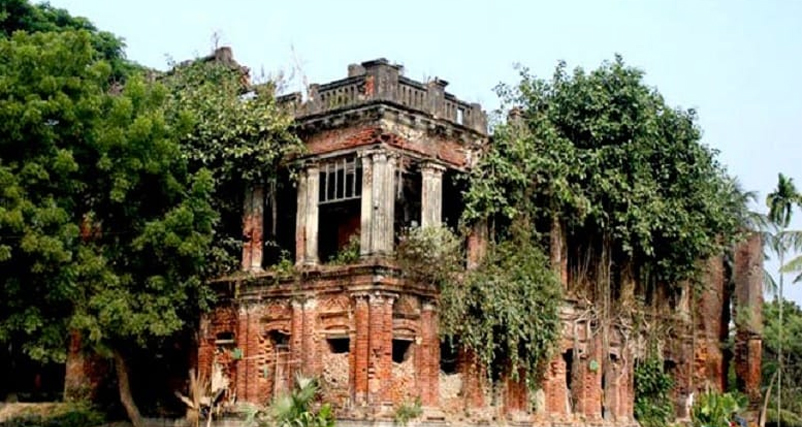
Blessed with a rich tapestry of history and tradition, Chandpur district stands as a repository of knowledge, culture, and ancient architectural landmarks left behind by various Zamindars. Historic residences and royal structures naturally evoke a deep sense of fascination among travelers and history enthusiasts. While iconic Zamindar houses in certain districts remain household names, many remarkable estates across Chandpur are often overlooked by visitors who mistakenly believe Rupsha Zamindar House and Trimohona are the region's sole attractions.
A closer look at Chandpur’s lesser-known historic Zamindar houses reveals a wealth of forgotten heritage that demands urgent preservation.
Rupsha Zamindar House
Situated in the Rupsha Union of Faridgang Upazila, the Rupsha Zamindar House is arguably Chandpur's most iconic and well-known heritage site. Unlike many dilapidated estates across the country, this property—built in the mid-18th century by Ahmad Raza Chowdhury—has been meticulously restored and maintained, retaining much of its original grandeur. Located right beside the bustling Rupsha market, the estate comprises three main residential buildings, a Kachari house (administrative office), a mosque, a graveyard, and a scenic pond bank. Descendants of the original owners still reside here. Historically, the family was renowned for supporting freedom fighters and sparing local subjects from oppressive taxation.

Ludhua Zamindar House
Located in Ludhua village under Matlab Upazila, this estate was established in the mid-17th century by Shirapdi Miyaji, an affluent and eccentric landlord who maintained a large stable of horses and held sway over most of northern Matlab. Currently in a state of advanced decay, only two damp, dark structures remain standing, frequented by bats, while other buildings have been broken down and modified by local occupants.
Boalia Zamindar House
Situated in Boalia village within South Matlab Upazila and established in 1793 following the Permanent Settlement, this estate was jointly run by the Roy Majumdar and De Chowdhury families. Renowned for their philanthropy, the landlords donated land for mosques, temples, schools, markets, and post offices. While parts of the expansive estate have vanished, descendants who stayed behind after Partition continue to live amidst the surviving remnants and historic brick-paved pond ghats.

Balaikhal Zamindar House
Located in Balaikhal village under Hajiganj Upazila, this 12.51-acre estate was founded in the early 19th century by Jogendra Roy Narayan Chowdhury, succeeded by his sons Surendra and Devendra Narayan Chowdhury. Noted for their charitable contributions—including land grants for the Balaikhal J.N. High School and local railway tracks—the estate features four exquisite, intricately carved statues at the entrance.

Barkul Zamindar House
Also known locally as the Bhagiyata House in Hajiganj Upazila, this estate was built in the Mughal architectural style by Zamindar Padmalochan Saha. Spanning roughly four acres, the eccentric landlord reportedly had the bed of a nearby pond paved with brick to prevent mud from touching his mother's feet during ritual baths. Descendants maintain the property in a clean and orderly state.

Karoitali Zamindar House
Located in Faridgang Upazila and locally called the "Babu House," this estate was founded in Bengali year 1220 by Harish Chandra Basu, who originally hailed from Barishal. Reputed for their strict autocracy, the landlords historically prohibited commoners from walking past their estate wearing shoes or carrying open umbrellas. Following Partition, the family migrated to West Bengal's 24 Parganas district in 1948, culminating in the estate's decline under the final Zamindar, Gobind Basu. Today, the overgrown complex features a haunted ambiance, complete with remnants of three buildings, a Durga temple, a large tank with a masonry ghat, and a secret underground tunnel known as Adhar Manik.

Sholla Zamindar House
Popularly known as the Chowdhury House in Sholla village of Faridgang Upazila, this estate was established around Bengali year 1281 or 1297. While the original founder's identity remains obscure, records from the Sholla School and College indicate that local landlords—including Abdul Samad Chowdhury, Noab Ali Chowdhury, Yusuf Ali Chowdhury, Mohammad Abdul Ghafoor Chowdhury, and Mohammad Hanif Chowdhury—donated 47 decimals of land for educational development. Parts of the estate have been renovated, though older sections remain in crumbling decay.

Lohagarh Zamindar House
Also situated in Faridgang Upazila near the Dakatia River, the Lohagarh estate is famous for its ancient math (monuments) built by landlords named Loh and Gahar, who governed several centuries ago. Originally featuring five soaring architectural towers (maths) adorned with gold pinnacles on their spires, only three structures survive today amid local legends of tragic accidents befalling treasure hunters seeking buried gold after the abolition of the Zamindari system.

Pathoir Zamindar House
Located in Pathoir village under Kachua Upazila and established around 200 years ago by Zamindar Ray Bahadur Sarat Chandra Sen Chowdhury, this abandoned estate features a swing temple, Shiva temple, Durga temple, and a vast central pond. Following the 1971 Liberation War, the family migrated to India, leaving the compound in a desolate, haunted state.

Sachar Zamindar House
Situated in the commercial hub of Sachar in Kachua Upazila and established 250 to 300 years ago by Ganga Govind Sen, the main royal building of this estate currently houses the Pathoir Union Land Office, though severe lack of maintenance has rendered the ancient structure hazardous.

Darashahi Tulpai Zamindar House
Founded approximately 250 years ago by Zamindar Nuruzzaman Chowdhury in Kachua Upazila, this historic Muslim Zamindari estate faces severe decay and neglect due to the absence of royal descendants.
Bhuyara Zamindar House
Located in Kachua Upazila and over two centuries old, this estate was established by three sons of Mrityunjoy Lod, with administration later led by Sarat Lod and Nabin Lod. The family donated lands for the local Bhuyara school and an ancient Manasa temple associated with regional folklore.
Haripur Zamindar House
Situated in Haripur Madna village under Chandra Union of Sadar Upazila, this estate was founded by Ali Raja Chowdhury, who constructed nine single- and double-storied residential buildings named after his seven sons (such as Moti Raja Chowdhury and Umed Raja Chowdhury). The buildings are heavily overgrown with moss and vegetation due to a lack of upkeep.
Sahapur Zamindar House
Located in Shahraasti Upazila and dating back to the 15th century, this estate served as the capital of the ancient Meher Pargana and was founded by Raja Shibananda Kha or Shibananda Roy, the founder of the Dashraj dynasty. Once a fortified citadel featuring ramparts, watchtowers, temples, and a theatre, only a single two-storied building, two grand gateways, and temple ruins survive today.
Call for Preservation
Historians and heritage advocates emphasize that these scattered Zamindar estates across the district require urgent government intervention and conservation. Without structured preservation initiatives, future generations will be deprived of witnessing these invaluable architectural milestones and chapters of regional history firsthand.
-EM

Loading...
Loading...
Also read







Editor : Iqbal Sobhan Chowdhury
Published by the Editor on behalf of the Observer Ltd. from Globe Printers, 24/A, New Eskaton Road, Ramna, Dhaka.
Editorial, News and Commercial Offices : Aziz Bhaban (2nd floor), 93, Motijheel C/A, Dhaka-1000.
Phone: PABX- 41053001-06; Advertisement: 41053012; 01793317829, 01550707291, 01550707296
E-mail: [email protected], [email protected]. [email protected], [email protected], [email protected], [email protected], Online-email: [email protected]


