



| HEADLINE |

|

Dollar hits one-month low after Republicans lose midterm elections


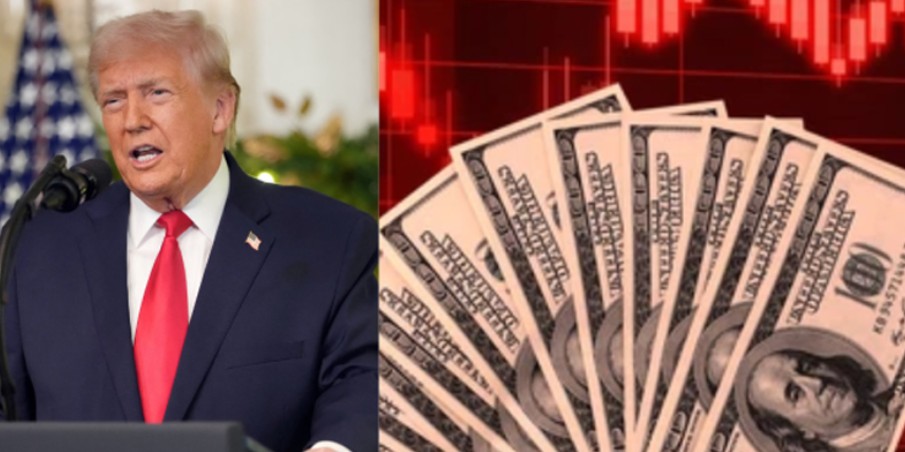
The US dollar fell to its lowest level in a month on Wednesday after President Donald Trump’s Republican Party suffered a major defeat to the Democrats in the US midterm elections.
Investors are concerned that the Democrats’ gains in Congress could lead to tighter regulation of the artificial intelligence (AI) sector and restrictions on data centre projects, potentially slowing economic growth.
The dollar weakened against several major currencies, with the euro climbing to its highest level in nearly two weeks and the British pound reaching a seven-week high.
The Democrats secured majorities in both chambers of Congress – the House of Representatives and the Senate – and also won in states traditionally considered strongholds of conservative voters.
The results have raised concerns that opposition to data centres could gain momentum, affecting investment in AI-related infrastructure. A significant share of US economic growth has been driven by spending in the AI sector.
A slowdown in economic growth could reduce the dollar’s appeal and ease pressure for further interest rate increases. Higher interest rates generally strengthen a country's currency by making its assets more attractive to investors.
The dollar index, which measures the US currency against a basket of six major currencies, fell to 101.41, its lowest level in a month.
On Wednesday, the euro rose 0.4 per cent to $1.1236, while the British pound gained 0.46 per cent to $1.3475.
The dollar also weakened against traditional safe-haven currencies. It fell 0.54 per cent against the Swiss franc to 0.8162 and 0.38 per cent against the Japanese yen to 158.09 yen.
The yield on 10-year US Treasury bonds declined by nearly three basis points to 4.921 per cent.
Carol Kong, a currency strategist at Commonwealth Bank of Australia, said she was also monitoring the risk of further escalation in the Middle East, as Trump had not ruled out the possibility of resuming military operations.
Meanwhile, currency traders are watching the Bank of England’s monetary policy announcement scheduled for Thursday. The bank’s Monetary Policy Committee is expected to raise interest rates for the first time since August 2023.
China’s offshore yuan fell 0.1 per cent to 6.6755 against the dollar. The currency continued to face pressure after China’s central bank raised the foreign currency reserve requirement for financial institutions to slow its appreciation.
Bitcoin edged up to $78,315.53, although it has remained under pressure in recent days following reports of a $6.3 billion theft involving Binance, one of the world’s largest cryptocurrency exchanges.
sks









Published by the Editor on behalf of the Observer Ltd. from Globe Printers, 24/A, New Eskaton Road, Ramna, Dhaka.
Editorial, News and Commercial Offices : Aziz Bhaban (2nd floor), 93, Motijheel C/A, Dhaka-1000.
Phone: PABX- 41053001-06; Advertisement: 41053012; 01793317829, 01550707291, 01550707296
E-mail: [email protected], [email protected]. [email protected], [email protected], [email protected], [email protected], Online-email: [email protected]


