



| HEADLINE |

|

Solar Systems Needed in Poultry Farms: BDT 5,000 Crore Required
Published : Tuesday, 10 November, 2026 at 12:03 AM
Toriqul Islam Sumon


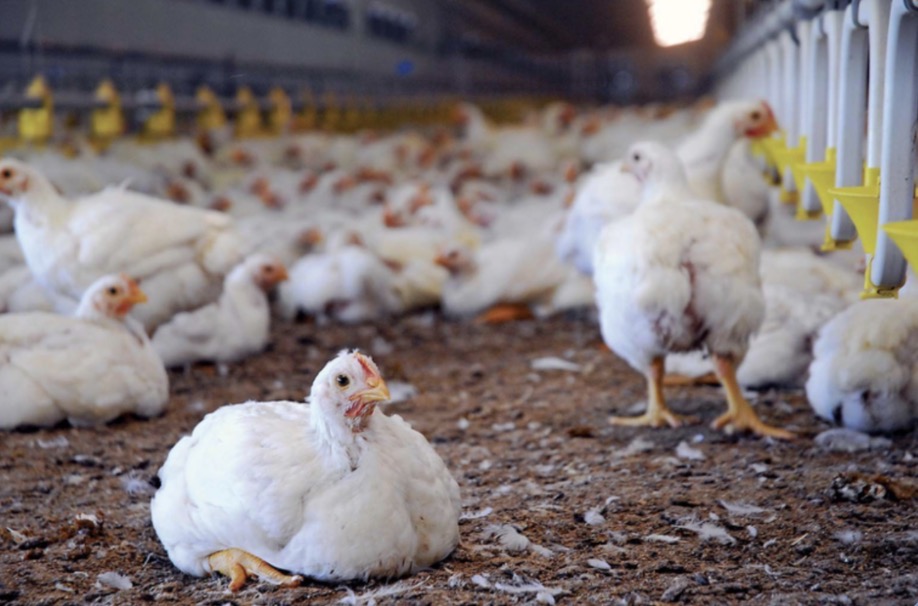
The poultry industry stands as one of the most vital and promising sectors within Bangladesh's growing economy. Beyond meeting the nation's demand for animal protein, boosting the rural economy, and ensuring nutritional security, this sector makes a significant contribution to the national Gross Domestic Product (GDP).
However, in recent years, entrepreneurs in this industry have faced a challenging period due to power shortages, rising fuel prices, and increased production costs.
To overcome these crises and achieve Sustainable Development Goals (SDGs), installing renewable energy or solar panels across the country's poultry farms has become an urgent imperative. Utilizing solar energy in the poultry sector not only reduces production costs but also creates an unprecedented opportunity to supply surplus electricity to the national grid.
According to the latest statistics from the Bangladesh Poultry Industries Central Council (BPICC) and the Department of Livestock Services (DLS), there are currently around 130,000 to 150,000 commercial and family-run farms across the country, both large and small.
Among them, roughly 60,000 to 65,000 are medium and large commercial farms operated through automated or semi-automated systems. The remaining farms are scattered across rural areas at marginal and small scales.
Over the past few decades, total private sector investment in this industry has surpassed approximately BDT 40,000 to 45,000 crore. This massive infrastructure encompasses poultry feed mills, breeder farms, hatcheries, and commercial layer and broiler farms.
The poultry sector has established itself not merely as a food production hub, but as one of the country's largest employment generators, directly and indirectly supporting the livelihoods of nearly 5 to 6 million people. Its role in the economic empowerment of rural women is particularly incomparable.
The Crisis and Solution in Rural Farms
Conversations with farmers reveal that arranging reliable electricity for solar installations can be difficult on their own. While large-scale farmers can independently manage solar panels or generators to ensure 24-hour electricity, marginal and small-scale farmers suffer the most—particularly for equipment such as incubators, brooders, temperature controls (fans and cooling pads), and automated feed and water supply systems.
A medium to large poultry farm requires a significant amount of electricity daily. Installing rooftop solar systems on farm roofs and unused land can meet 70 to 80 percent of a farm's own electricity demand. Moreover, the surplus electricity generated from solar panels during daylight hours can be fed into the national grid via 'net metering' systems.
According to sector experts, if solar panels are installed across all medium and large poultry farms in the country, several hundred megawatts of electricity could be added to the grid, contributing immensely to overall energy security.
Estimates by BPICC and expert circles suggest that an initial investment of roughly BDT 3,000 to 5,000 crore is required to set up effective rooftop solar and mini-grid systems across Bangladesh's poultry farms.
Individual costs can range from BDT 500,000 to several hundred thousand taka depending on the farm's size and power demand. However, experts believe that because electricity bills will drop by 70 to 80 percent in the long run, this investment can be recovered within 3 to 5 years.
Government Policy and Initiatives
The government places special emphasis on installing solar systems in poultry and agro-based industries to ensure national energy security and expand the use of renewable energy. The government has set a target to achieve a significant share of total electricity generation from renewable sources by 2030.
State Minister for Fisheries and Livestock Sultan Salahuddin Tuku stated, "Our poultry sector is self-reliant today. However, in this era of climate change and energy crises, we must pivot toward sustainable technologies. Installing solar systems to ensure uninterrupted electricity in rural farms is now the demand of the time. The Ministry of Livestock is working on a framework of technical assistance to encourage farmers to adopt solar technology."
A top official of the Ministry of Fisheries and Livestock, speaking on condition of anonymity, noted, "Most of our large farms have already installed solar panels. The challenge lies in setting up solar panels on the farms of marginal producers. However, the ministry has held multiple meetings with farm owners on this matter."
Industry Leaders Call for Policy Support
Bangladesh Poultry Association (BPA) President Mosharraf Hossain Chowdhury said, "The importance of the poultry industry to national development is immense. Electricity is required 24 hours a day in this sector, but power shortages cause heavy losses for farmers. Installing solar panels is most crucial for the country's marginal farmers.”
“The main obstacle here is capital investment. While large farmers can install solar panels on their own initiative, it is not feasible for everyone. Power issues are also driving up product prices. The government must step forward to help marginal farmers install solar panels" , he added.
Commerce Minister Khandaker Abdul Muktadir stated, "To keep poultry product prices stable in the domestic market, reducing production costs is vital. High electricity and fuel prices create extra pressure on our entrepreneurs. Utilizing solar panels or green energy in the poultry sector will significantly decrease production costs, benefiting both general consumers and entrepreneurs. The government is seriously considering low-interest loans and tax exemptions for this sector."
World's Poultry Science Association–Bangladesh Branch (WPSA-BB) President Shamsul Arefin Khaled remarked that Bangladesh's poultry sector has undergone extraordinary transformation over the decades, with eggs and chicken meat serving as primary, affordable animal protein sources.
However, rising production has brought new challenges, such as electricity costs, heatwaves, production expenses, waste management, and environmental pressure.
He further noted that many poultry sheds feature large roofs suitable for solar power generation.
Electricity generated during the day can run fans, lights, water pumps, and other equipment. Especially for breeders, large layers, and modern broiler farms, uninterrupted power is critical. Solar power is not just a way to cut electricity bills, but a potential medium to mitigate production risks.
Under Bangladesh's 2025 net metering policy, there are provisions to install rooftop solar systems and supply surplus electricity to the grid.
Arefin Khaled added that an investment of BDT 500,000 to 700,000 is a major decision for a small farmer, whose income depends on chick prices, feed prices, market selling prices, disease outbreaks, and production outcomes.
Taking long-term investment risks amidst such uncertainties is difficult, and high-cost solar and battery systems designed for large farms may not be equally profitable for small operations, which simply require simple, reliable setups to keep essential fans, lights, and water supplies running.
Director General of the Department of Livestock Services Md. Shahjaman Khan stated that the current government emphasizes installing solar panels to meet electricity demand.
Consequently, new government-led projects are prioritizing solar installations on state farms first, followed by wider expansion. Marginal farmers are being encouraged, and consultations with various farmer associations are underway to provide guidance.
According to data from the private research organization Centre for Policy Dialogue (CPD), utilizing solar energy in the poultry sector is not only eco-friendly but could also be a landmark step in safeguarding the country's macroeconomy.
Despite its enormous potential, Bangladesh's poultry sector often faces heavy losses due to high energy costs and power outages. To counter this, Bangladesh Bank and commercial banks must step forward so that farmers can access long-term 'green loans' at an interest rate of just 4 to 5 percent.

Loading...
Loading...
Also read








Editor : Iqbal Sobhan Chowdhury
Published by the Editor on behalf of the Observer Ltd. from Globe Printers, 24/A, New Eskaton Road, Ramna, Dhaka.
Editorial, News and Commercial Offices : Aziz Bhaban (2nd floor), 93, Motijheel C/A, Dhaka-1000.
Phone: PABX- 41053001-06; Advertisement: 41053012; 01793317829, 01550707291, 01550707296
E-mail: [email protected], [email protected]. [email protected], [email protected], [email protected], [email protected], Online-email: [email protected]


